Lagerstroemia indica 'Dynamite' in summer flower, Diaplant nursery.
Lagerstroemia indica offers summer flowers, decorative bark and autumn colour. Learn about cultivars, aspect and care.
Lagerstroemia indica stands out for flowering in summer, when many ornamental trees have already finished their main flowering period. The bark, the form of the trunk and the autumn colour carry the interest beyond July and August.
The range Diaplant works with includes names such as ‘Coccinea’, ‘Violacea’, ‘Nivea’, ‘Rosea’ and DYNAMITE. These selections differ in flower colour, size and behaviour, so the full name should accompany each specimen. DYNAMITE is the trade name associated with the cultivar ‘Whit II’.
Flowering
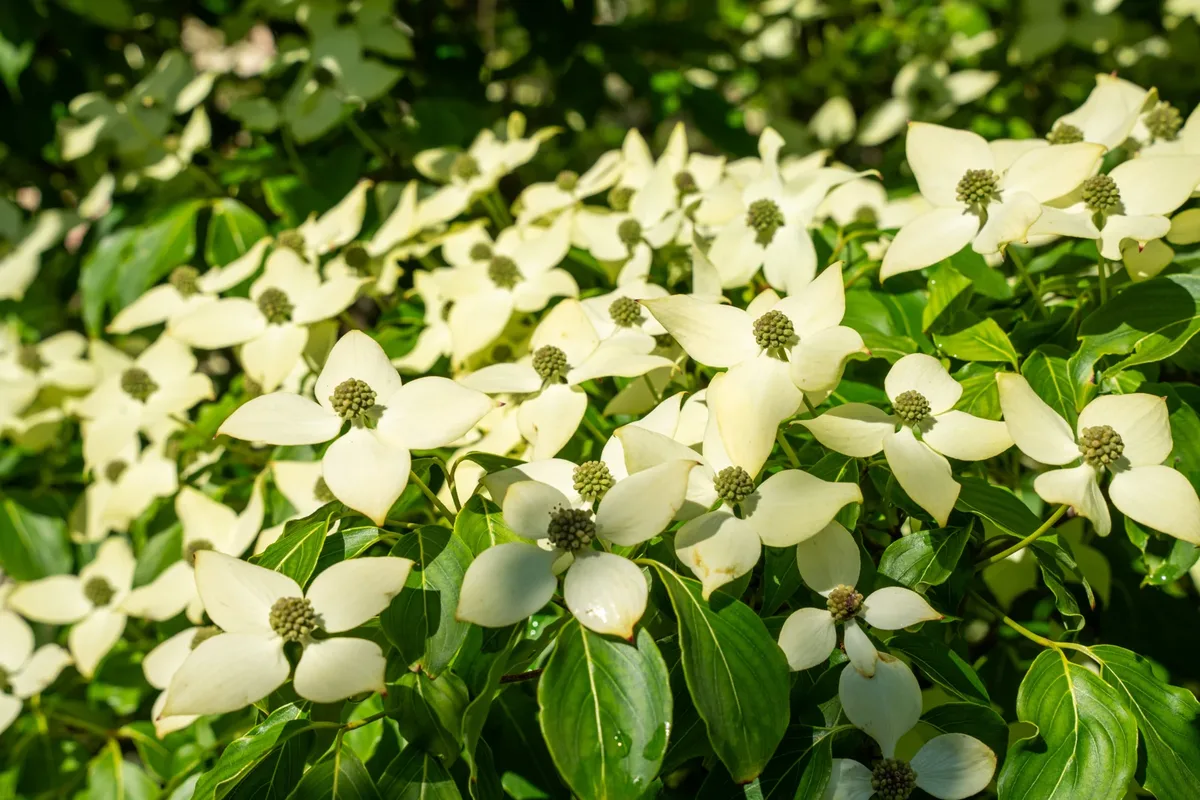
The inflorescences appear on the current year’s growth and form large panicles. The colour ranges from white through pink and red to purple, depending on the cultivar.
In Portugal, flowering is generally concentrated in July and August, although when it starts and how long it lasts depend on the climate and the selection.
Sun, heat and vigour influence the amount of flower. A tree in partial shade can grow, but it tends to flower less densely.
Colour in a photograph should not be the only thing compared. Size, hardiness, form and season can vary between cultivars.
Bark and trunks
As the tree matures, the bark comes away in plates and reveals lighter, brownish or greyish surfaces.
This effect is particularly visible in a multi-stem, where several axes start at the base. In a standard tree, the bark creates interest along a cleaner trunk and allows people to pass beneath the crown.
Protection during transport and maintenance is important. Knocks from machinery and wires can mark a bark that is part of the ornamental value.
Autumn colour
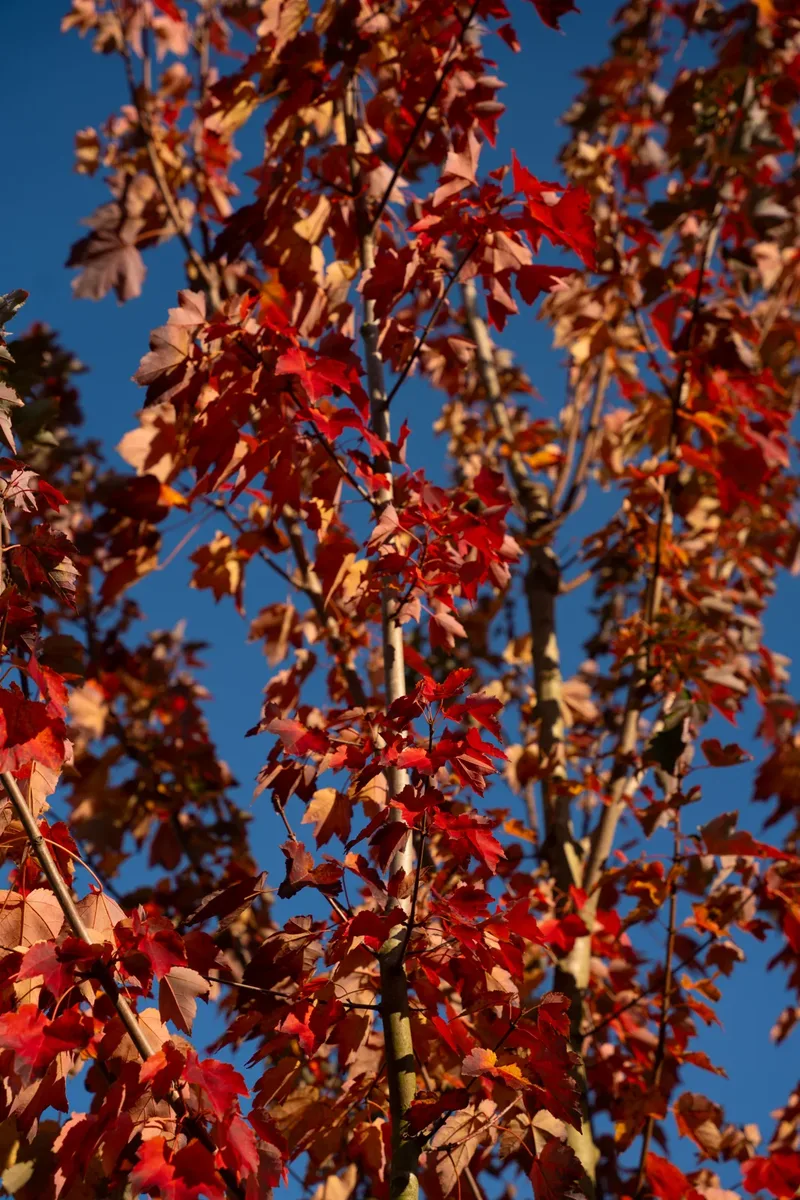
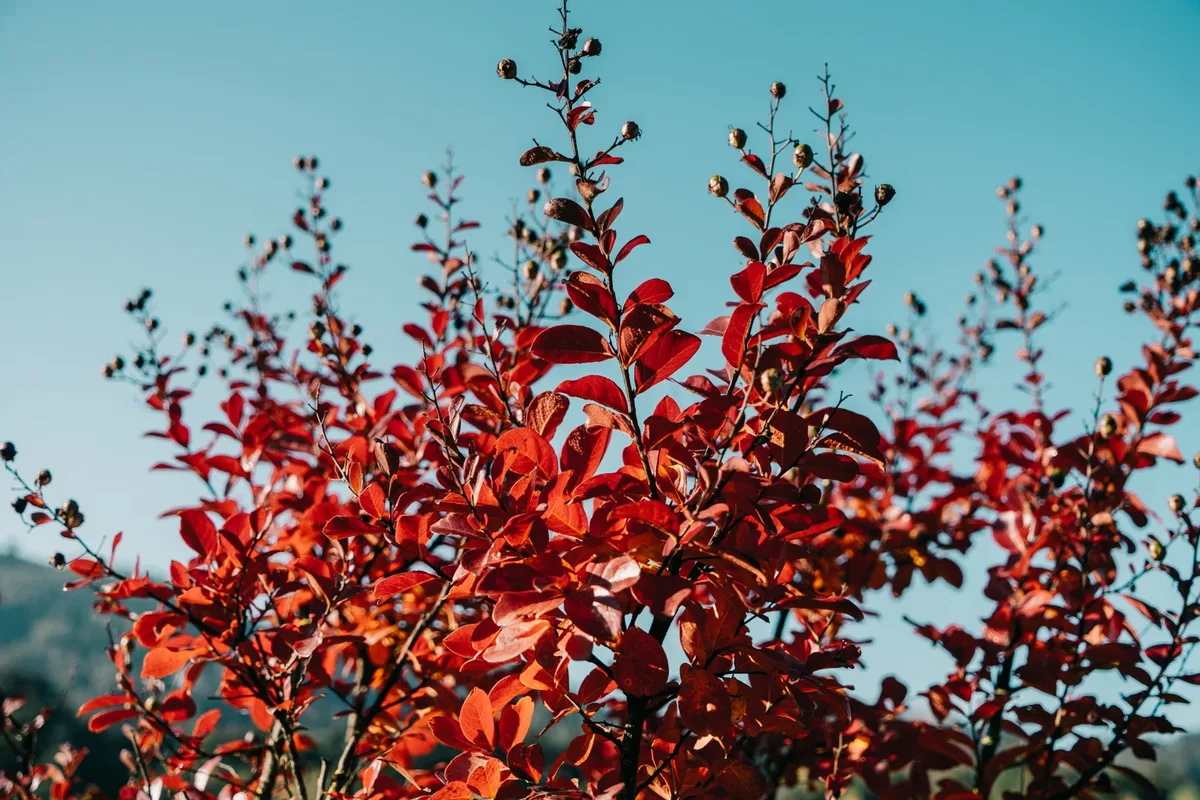
The leaf can pass through yellow, orange and red before it falls. The intensity depends on the cultivar and on the conditions of the year.
A tree that has suffered prolonged drought may lose its leaves early. Summer watering therefore influences the quality of the autumn and not just the flowering.
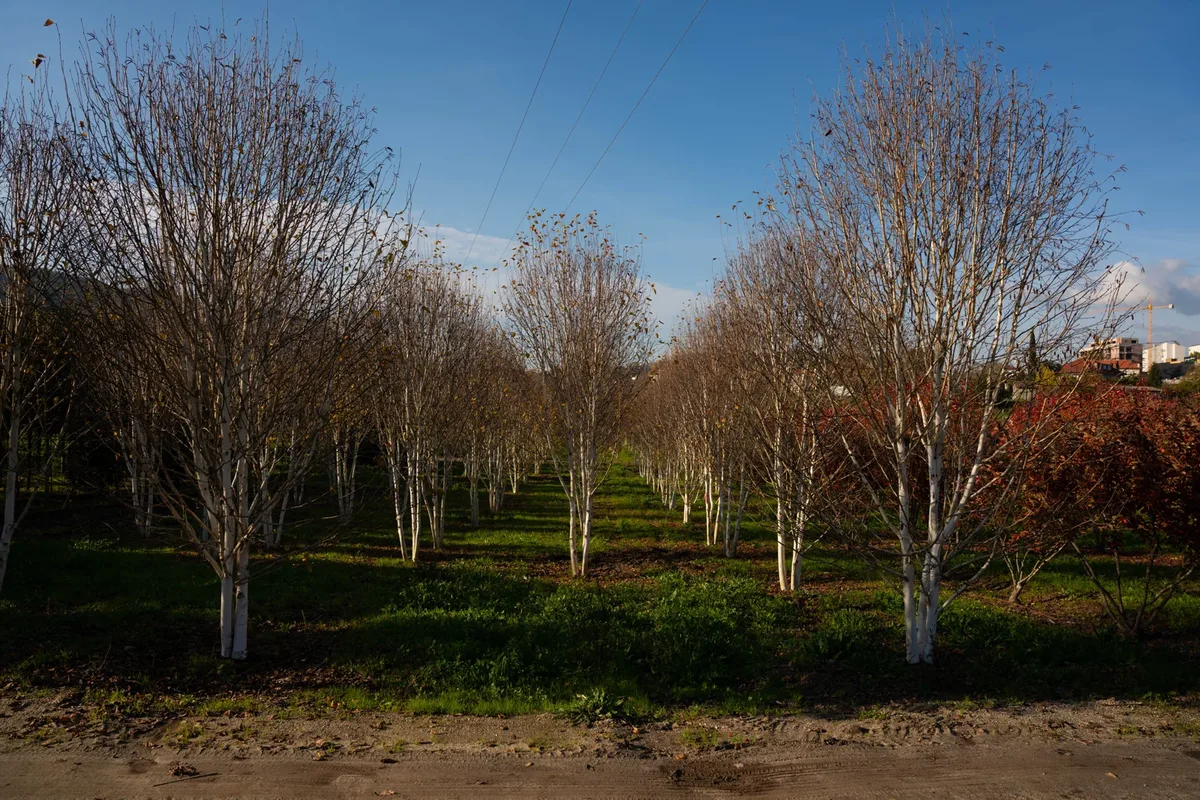
In winter, the absence of leaf leaves the bark and the branch structure visible.
Size and form
Lagerstroemia indica can be produced as a standard tree or as a multi-stem. There are also cultivars of different sizes, from compact forms to larger trees.
In small streets or gardens close to buildings, the moderate scale can be an advantage. Even so, the crown needs room to open out.
The multi-stem works well as a specimen to be seen at close range. The standard tree is more suitable where people need to pass or a more formal reading is wanted.
Soil and aspect
The species prefers sun and heat during the growing season. Well-drained soils, with regular moisture during establishment, favour vigour.
Once established, it tolerates dry spells better than several cool-climate trees, but it should not be treated as a plant with no need for water. Flowering and crown density decline under stress.
Persistent waterlogging is unfavourable. On clay, check that water drains away before planting.
Cold
Hardiness varies between cultivars and with the maturity of the branches. In cold areas, young shoots can suffer and the choice of microclimate becomes more important.
A position against a façade can offer shelter, but it increases heat in summer. The plant needs enough soil to balance these two effects.
Use in the project
Flowering at the height of summer makes the species useful in hotels, gardens used in summer, entrances and spaces where the aim is to extend seasonal interest.
It can be used on its own, in small groups or in avenue planting. In a batch, selection should consider crown height, colour and vigour.
The fall of flowers and leaves is part of the cycle. Beside swimming pools and very pale paving, it should be allowed for in the maintenance plan.
Pruning
Lagerstroemia flowers on new growth, but that does not justify severe annual cuts at the same points.
The practice of repeatedly cutting back the main branches until thick knuckles form causes long regrowth, weak unions and loss of structure.
Formative pruning defines the leader, crown height and distribution. After that, damaged branches are removed and justified reductions are made, without turning the tree into a short framework every winter.
Planting and aftercare
The tree is planted with the root collar at the surface and the soil prepared over a wide area. The first watering wets the rootball and the surrounding ground.
In the first and second summer, water should be monitored because flowering coincides with the period of greatest demand.
An organic mulch reduces evaporation, and the staking is checked so that it does not mark the trunks.
Confirming the cultivar
Flower colour, size and trade name should be checked before ordering. ‘Rosea’ and ‘Violacea’, for example, can turn up in different commercial contexts and need to be clearly matched to the material available.
The identification of the cultivar should accompany the order and the selection of the specimen. The availability of each selection varies with the batches and with the production cycle.
Lagerstroemia indica is a tree of several seasons. The flowering draws attention, but the bark and the form are what keep the plant relevant for the rest of the year.
Related content
Sources and supporting references
- Royal Horticultural Society — entries for Lagerstroemia indica and for DYNAMITE (‘Whit II’).
- Plants of the World Online, Royal Botanic Gardens, Kew.
- Diaplant’s production and varietal identification records.
Tags