

Diaplant nursery · Amarante
Nursery of mature trees and shrubs
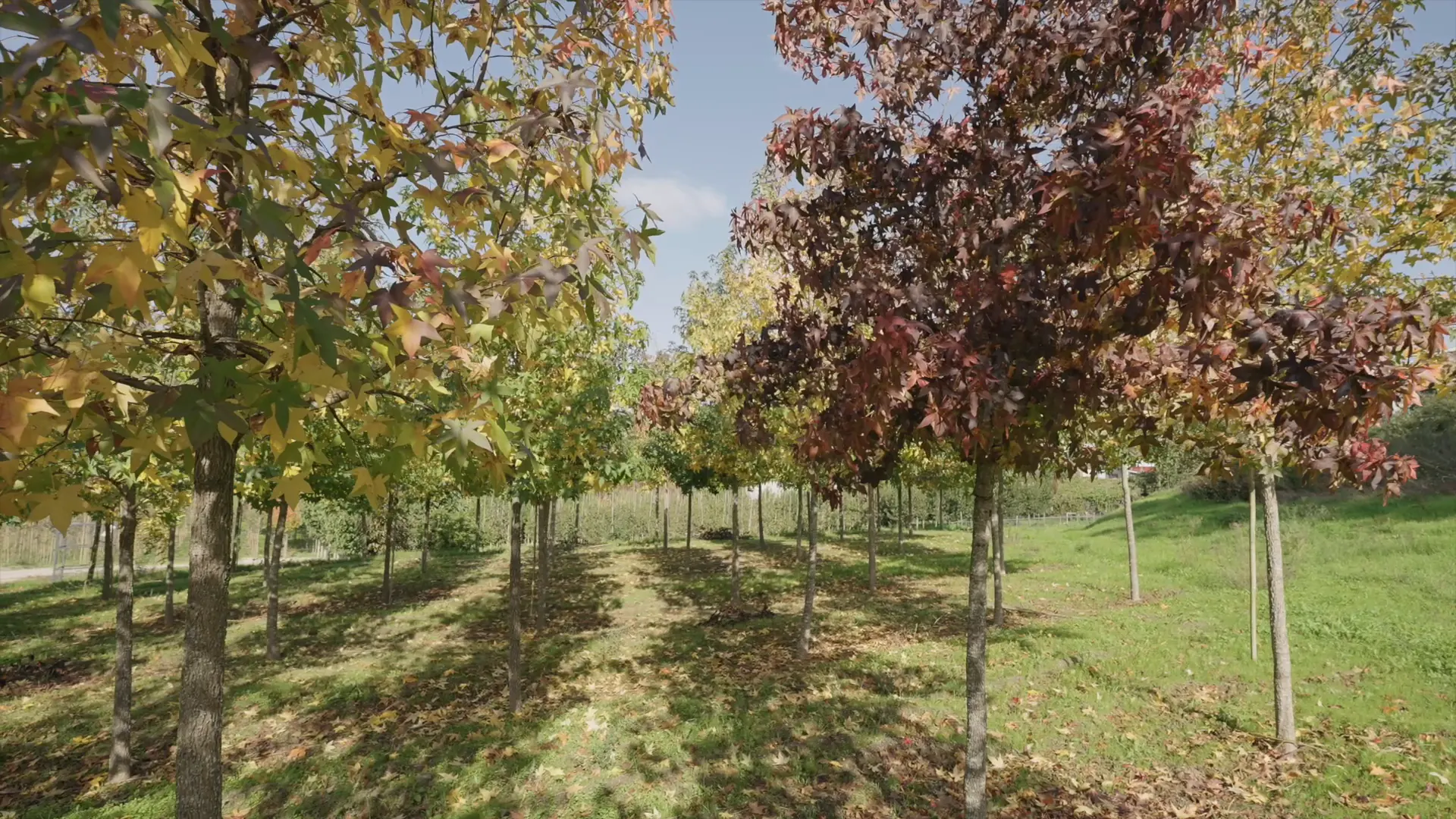
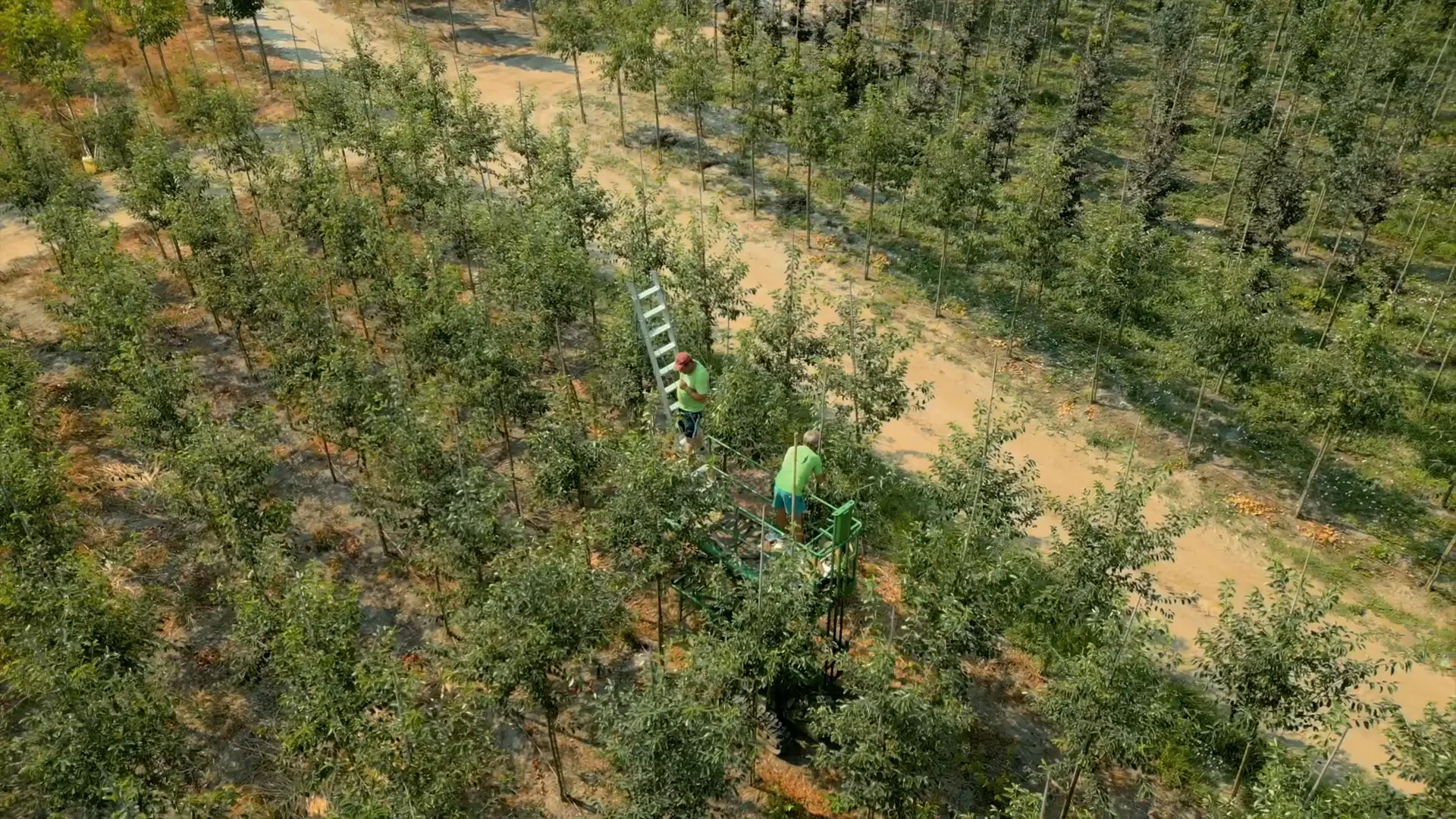
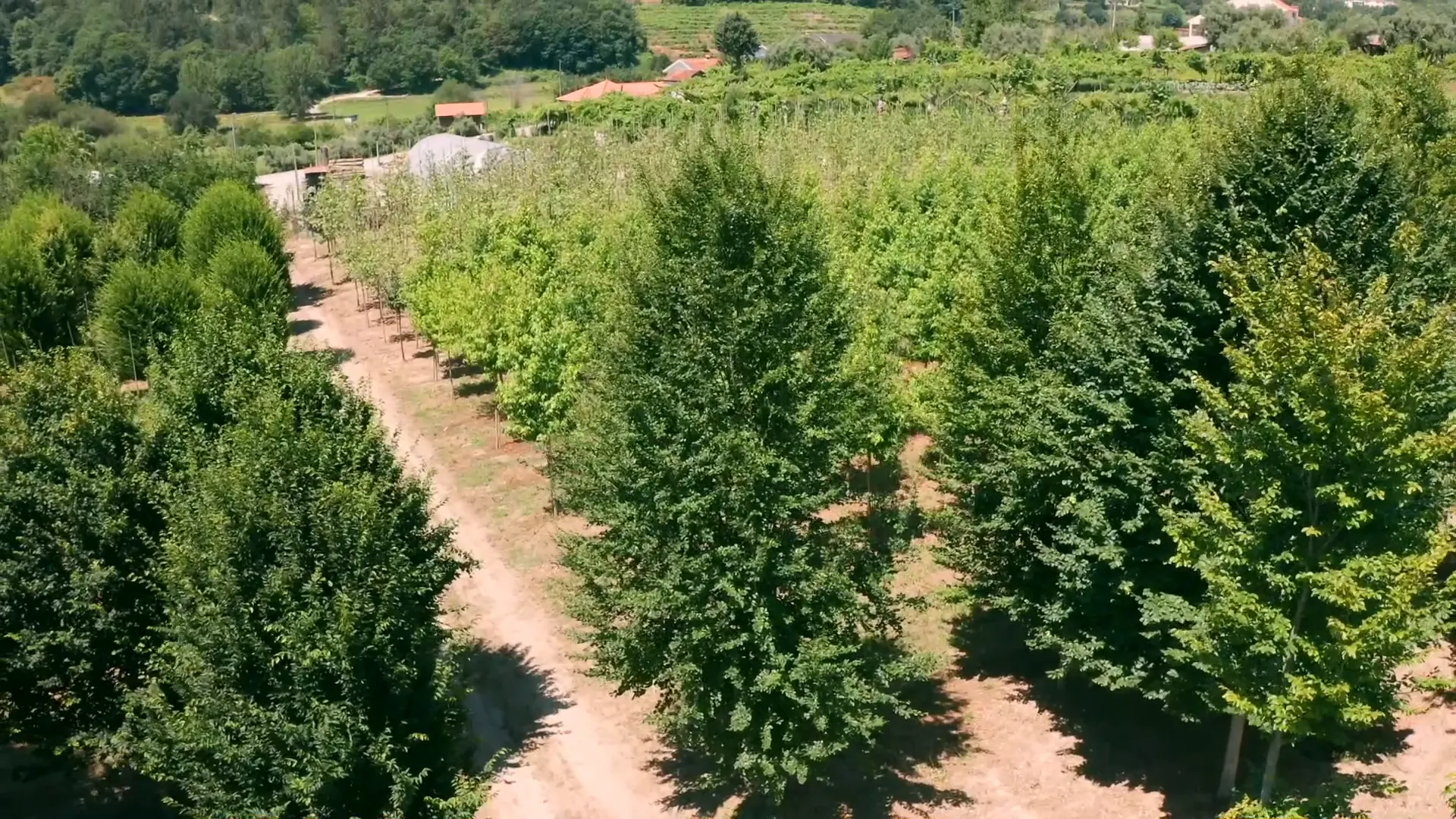
On our 33 hectares and three production sites in Amarante, we form mature trees and shrubs, mostly in the open field. Specimens prepared over several years to bring scale, shade and presence to the spaces where they will be planted.
- 33 ha
- of production in Amarante
- 3
- production sites
- +150
- species and cultivars of our own production
We do not just produce large trees. We form mature trees.
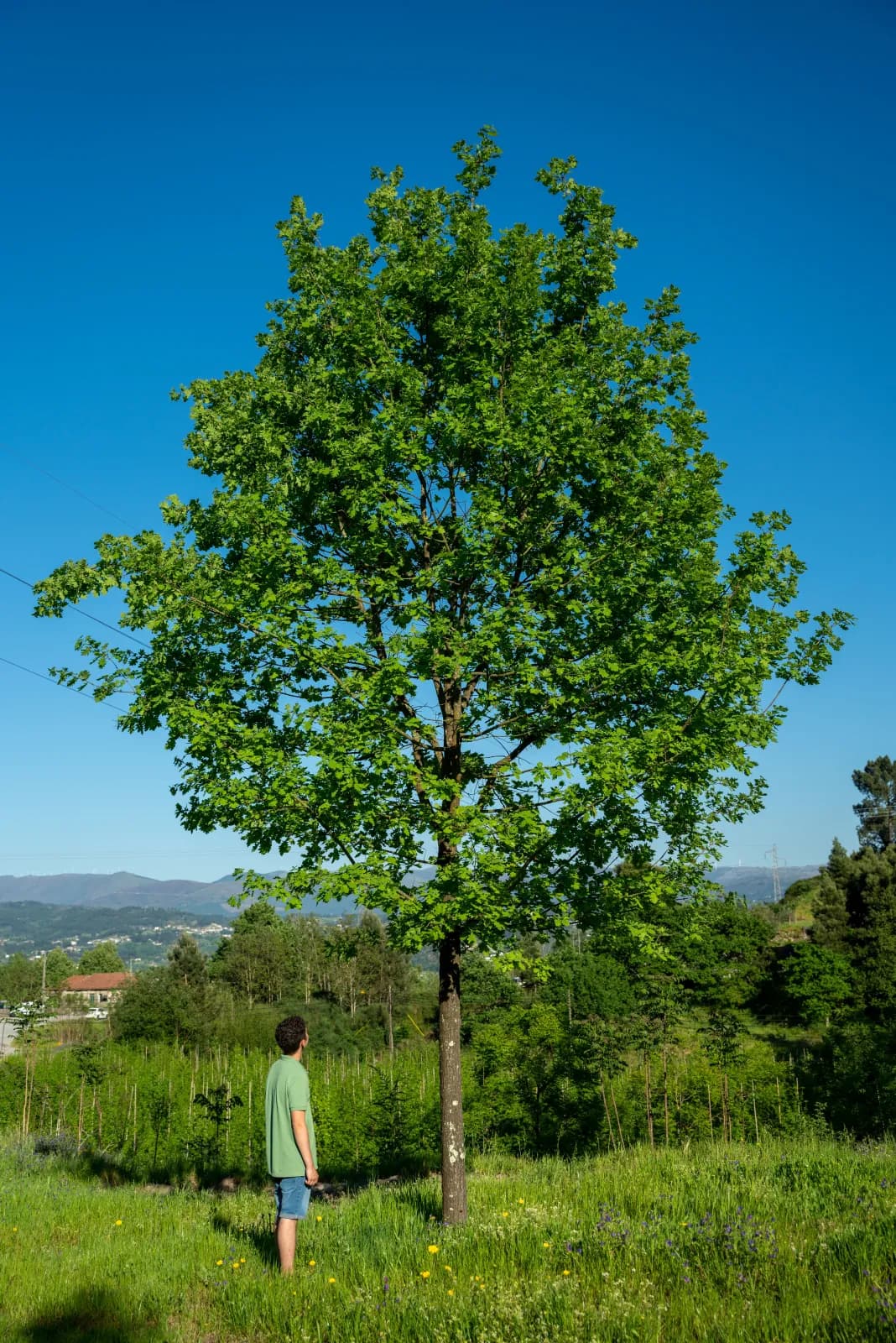
A mature tree is not measured only by its height or the girth of its trunk. It is measured by the time it spent in the field, the structure it consolidated, the transplantings it received and the balance between root, trunk and crown.
Size is seen at once. Preparation is built over the years.
Production of mature trees in the open field
The time a tree brings with it
A mature tree is not prepared at the moment of sale. It is formed over years, through a sequence of choices, transplantings, prunings, corrections and periods of growth.
- Year zero
Choosing what deserves time
Species and cultivars with aesthetic, functional and landscape value.Explore this stageCloseWe select the species and cultivars we take into production considering their form, flowering, foliage, seasonal colour, capacity to create shade and function in the space.
The choice also considers adaptation to increasingly demanding climatic conditions, such as high temperatures, periods of lower water availability and greater sun exposure.
- In the open field
Growing in the soil
Space to form root, trunk, crown and proportion.Explore this stageCloseProduction is carried out mostly in the open field, in contact with the soil, the seasons and the real conditions of the land.
The field offers space to develop large trees and to work on a more natural relationship between root system, trunk and crown.
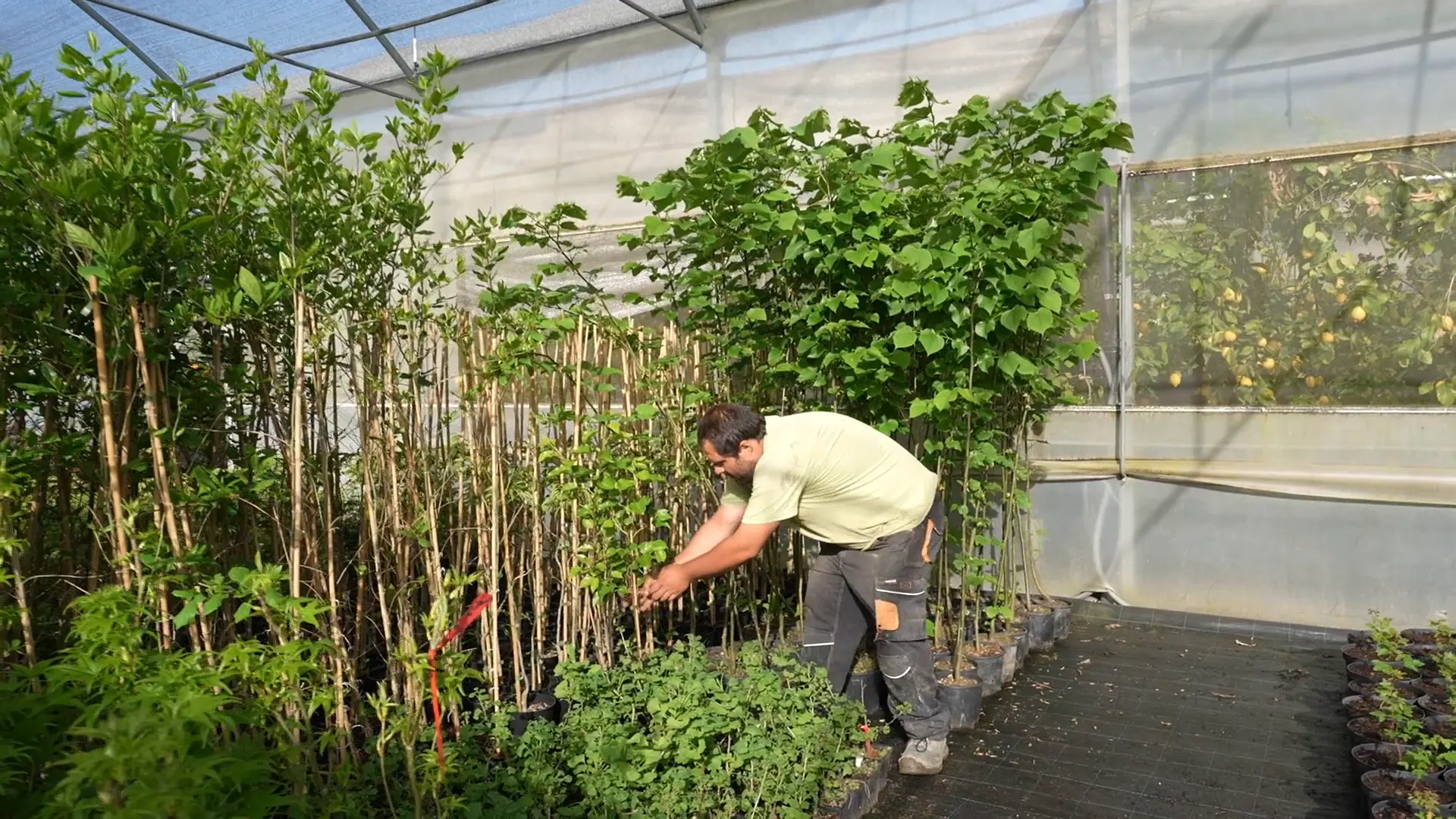
Container production is residual. We use the container mainly as a transition stage between our fields and the client’s garden, when the species, the planting season or the project justifies it.
- 3 to 5 years
Preparing the root
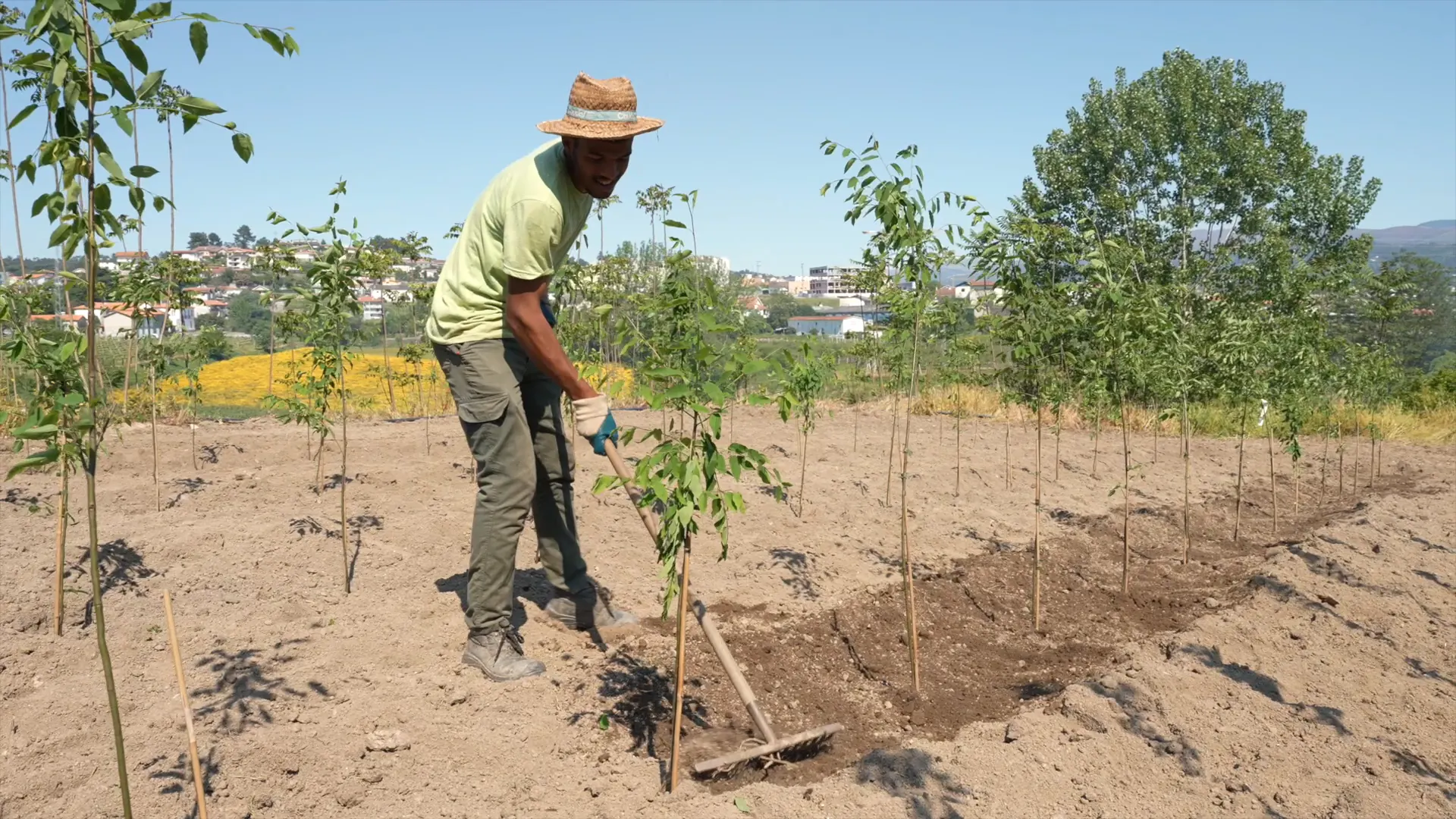
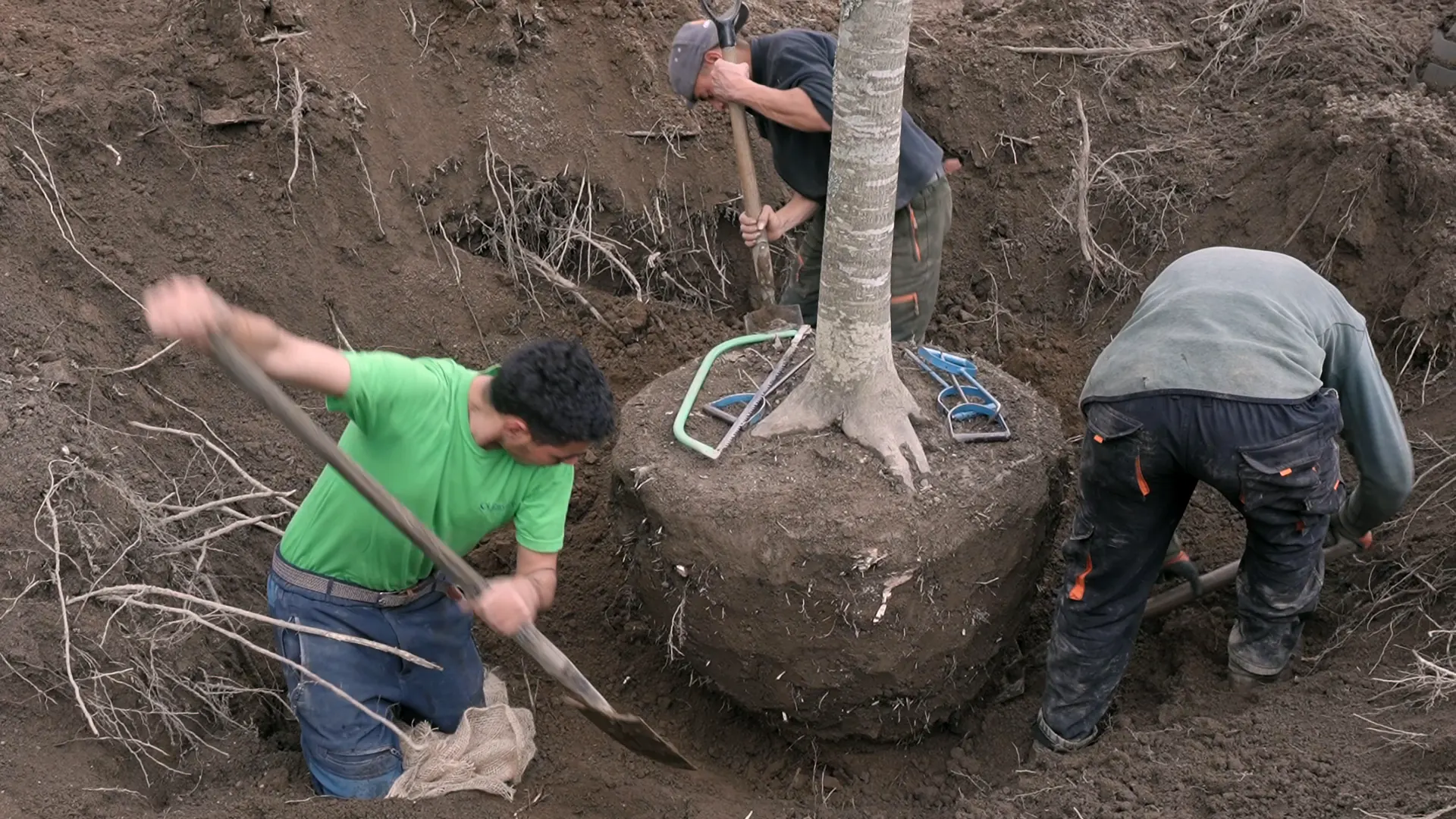
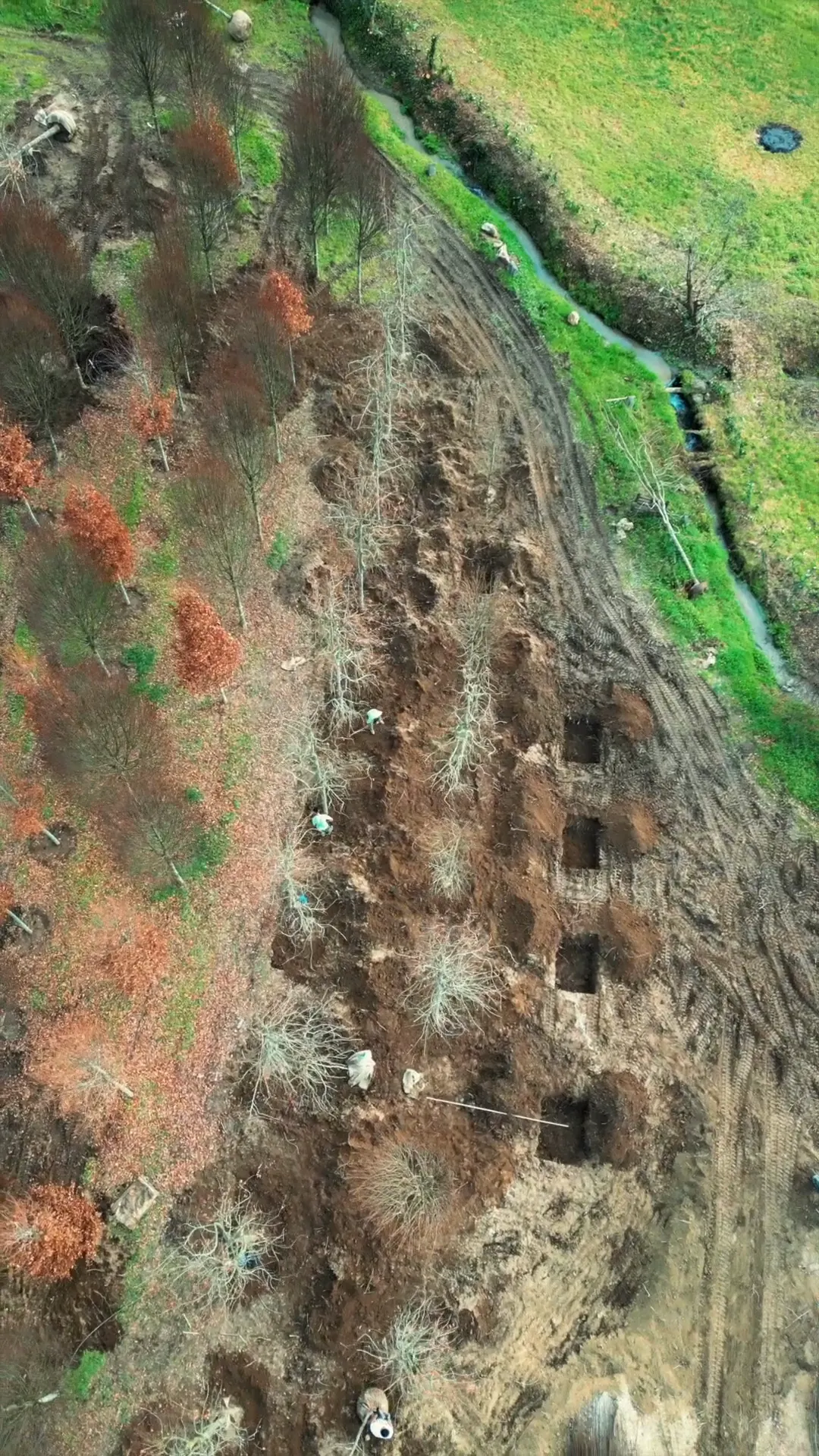
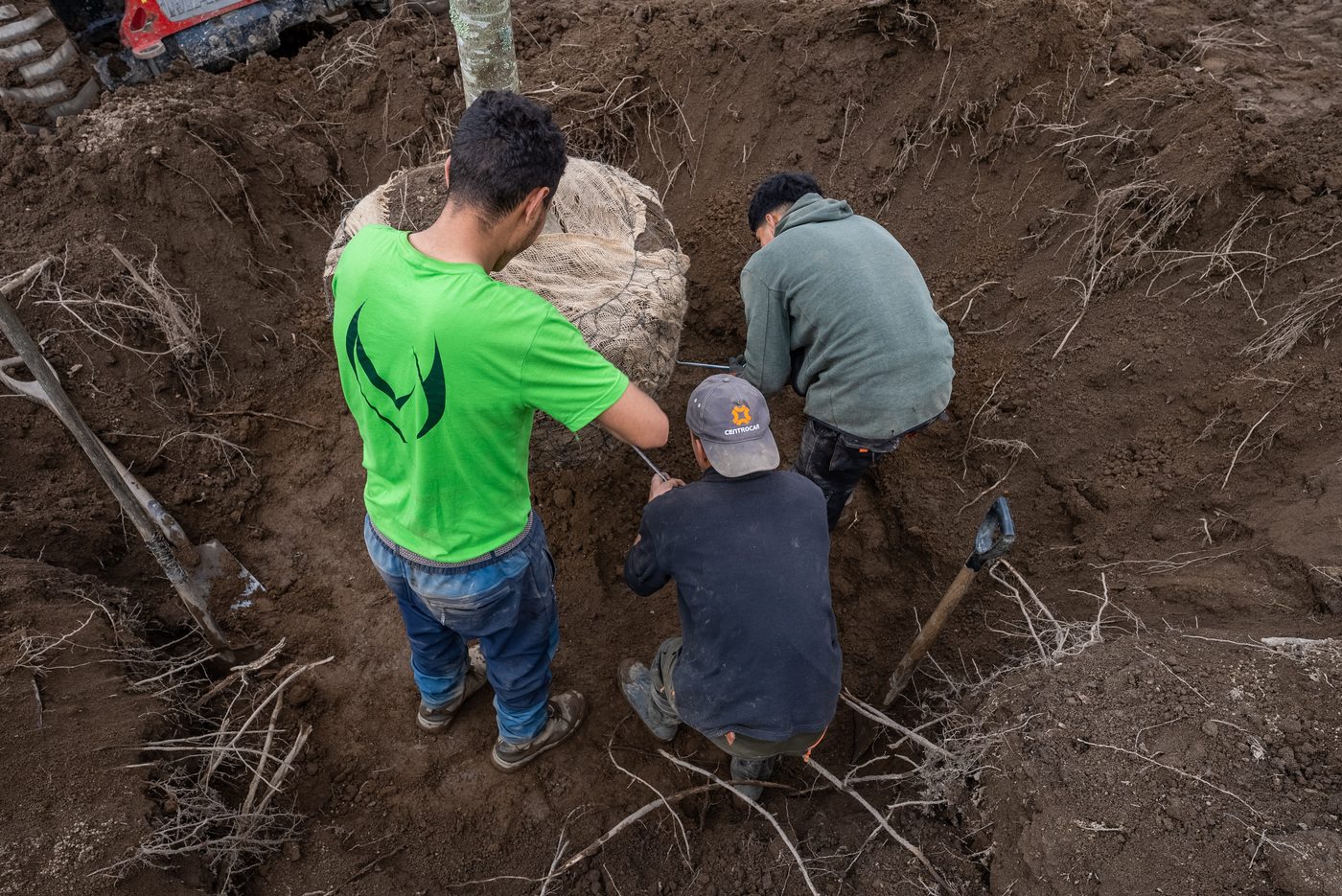
Each transplanting brings the root closer to the future rootball.Explore this stageCloseAll trees undergo successive transplantings within the nursery, at intervals of 3 to 5 years. Each transplanting increases the root memory of the rootball and reduces the stress induced by transplanting. Root pruning interrupts the growth of long roots and stimulates the formation of new, fine roots close to the root collar.
This process concentrates the most functional part of the root system in the future rootball, preparing the tree to be transplanted and transported.
- Every year
Forming the tree
The structure is not corrected at the end. It is built every year.Explore this stageCloseWe carry out annual pruning to form the architecture of the tree, correct imbalances and consolidate a proportionate relationship between trunk, branching and crown.
Formation is accompanied by staking, fertilising, watering and continuous observation. The aim is not to produce uniform trees, but specimens that are structurally balanced, compliant and prepared for the function they will fulfil.
- 6 to 20 years
Giving time
A minimum formation before the first sale. Many more years to reach true maturity.Explore this stageCloseAll trees spend a minimum of six years in production in our fields. This is the time needed to carry out the basic formation, consolidate the structure, work on the architecture of the plant and complete at least two transplanting cycles in the nursery.
On average, the plants begin to be sold from ten years of age. Most of our range consists of specimens around 15 to 20 years old.
Some batches remain in production for much longer periods. They continue to grow, to be transplanted, pruned and monitored until they become truly mature specimens, with greater size, maturity and character.
- One by one
Assessing each specimen
Not all trees are ready at the same time.Explore this stageCloseBefore a tree is considered ready, we observe its maturity, structure, vigour, crown architecture, root quality and the proportion between the above-ground part and the future rootball.
A tree may already have commercial height or girth and need to stay longer in the field. That additional period is not a delay: it is formation.
- In the field
Choosing at real scale
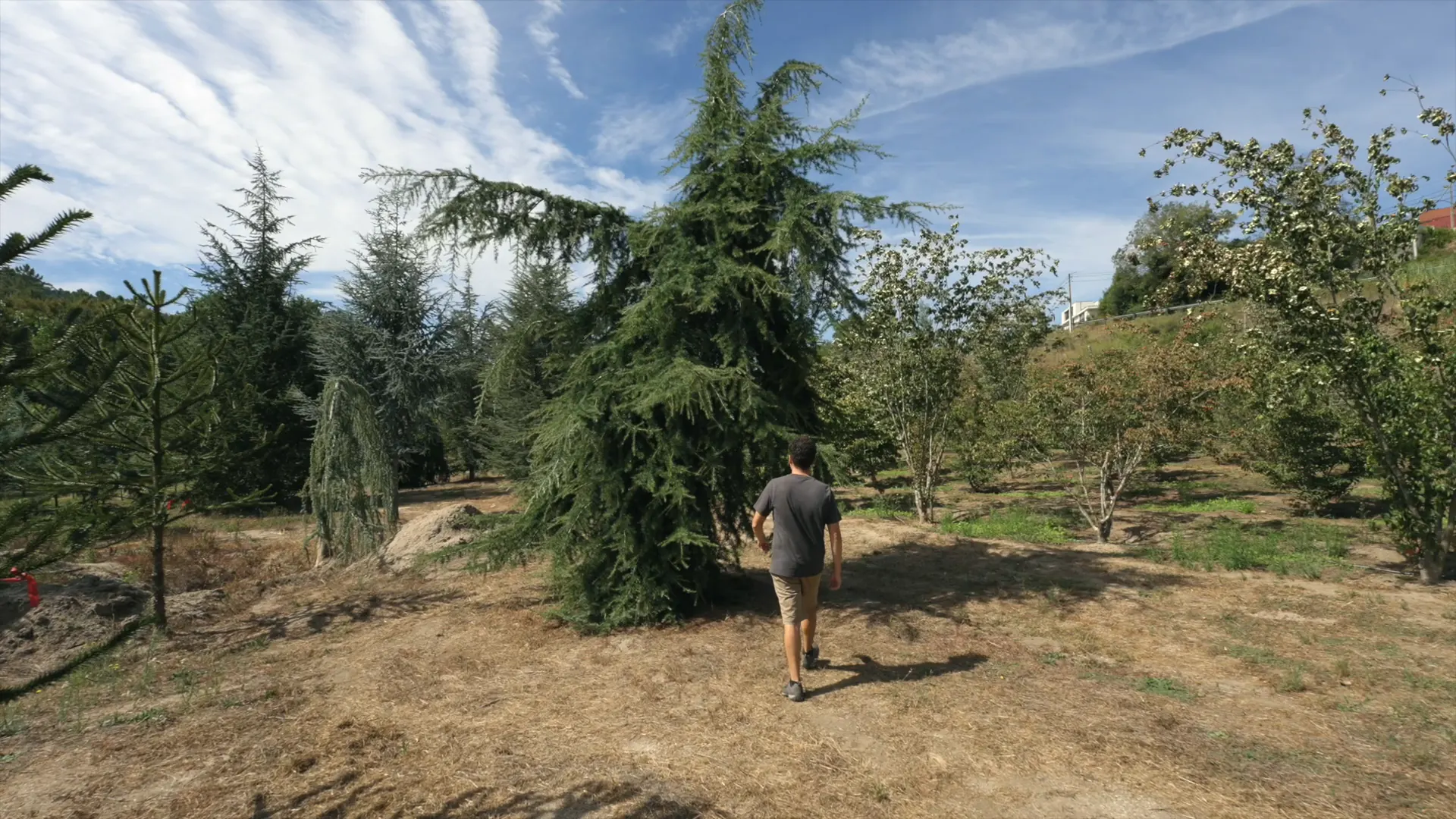
The photograph helps you search. The field helps you choose.Explore this stageCloseThe choice can be made by our technical team or in person at the nursery.
With mature trees, multi-stems and singular specimens, observing the crown, the trunk, the shade, the orientation and the proportion at real scale makes it possible to understand what a photograph can hardly convey in full.
We can select individual specimens or uniform batches, according to the language and needs of each project.
- Nov — Apr
Preparing to leave the field
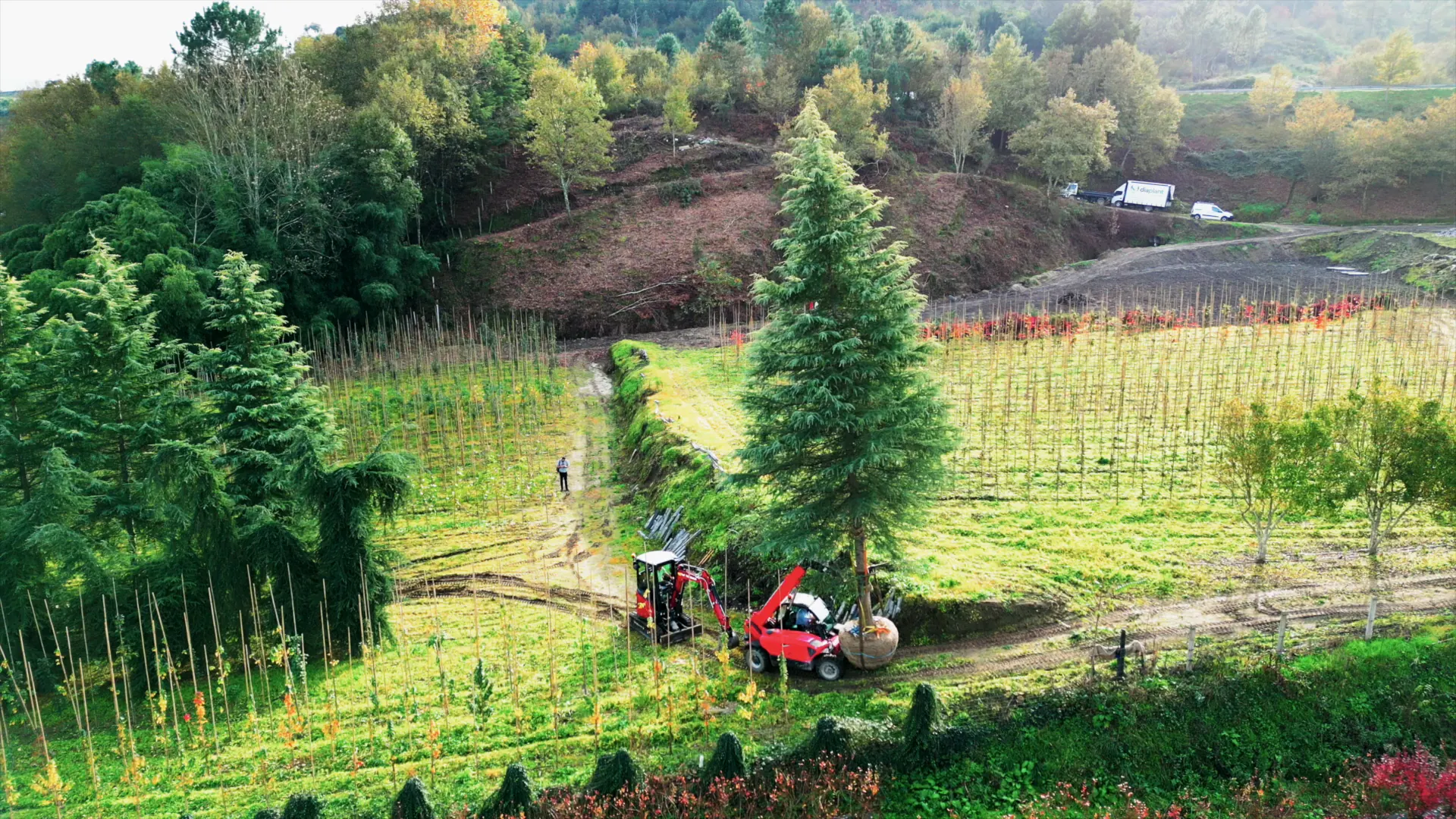
Between November and April, respecting the plant’s timing.Explore this stageCloseThe dispatch and planting of specimens produced in the open field take place mainly between November and April, during dormancy.
This is the period when the plant’s activity is lowest, the stress associated with transplanting is reduced and conditions are more favourable for beginning adaptation to the new site.
During the remaining months, the specimens continue to be prepared, selected and organised so that the logistics of the following planting season respect the rhythms of the plants and the conditions of each project.
Preparation includes
- lifting the specimen
- forming the rootball
- protecting the rootball with wire mesh and biodegradable hessian
- protecting and tying in the crown
- transplant pruning
- preparing and protecting the trunk
- loading
When contracted, the service can continue through
- transport
- unloading
- planting
- staking
- first watering
The visible enchants. The invisible sustains.
What you see
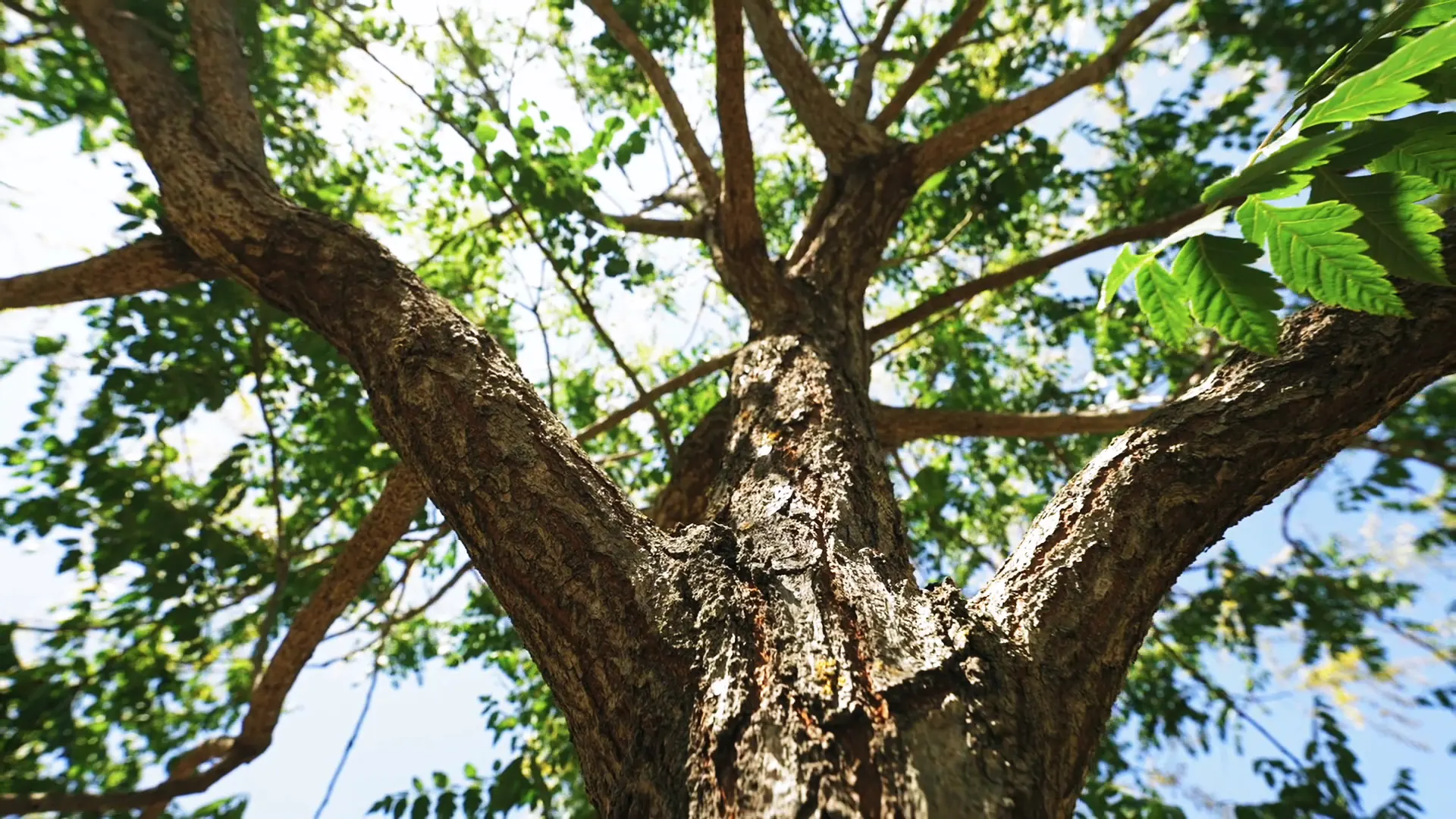
- crown architecture
- trunk expression
- foliage and flowering
- scale
- maturity
- character
- presence in the space
What sustains it
- minimum production period
- successive transplantings
- fine roots
- prepared rootball
- annual pruning
- consolidated structure
- choice of dispatch season
The crown creates the first impression. The root, the rootball and the years of formation give the tree the conditions to carry on.
Plant consultancy and plant supply
The full scale of the landscape
Our own production of mature trees and shrubs is at the centre of the Diaplant offer. When a project calls for other species, cultivars, forms or sizes, our purchasing department provides plant consultancy and looks for the most suitable batches from specialist growers in Portugal and other European countries.
The team interprets the project’s needs, supports the choice of plants, proposes alternatives when necessary and assesses the batches according to criteria of quality, uniformity, suitability, availability and logistics.
In this way, we bring together more than 600 species and cultivars for sale, from ground cover and subshrubs to mature trees and Boutique specimens.
- up to 12 m
- Ground cover and subshrubs
- Herbaceous plants and climbers
- Shrubs
- Trees and multi-stems
- Mature trees
- Boutique
Different origins. The same knowledge and selection criteria.
Diaplant Boutique
Specimens with a presence that is never repeated
The Boutique brings together Diaplant’s most special plants.
Many are selected in our own fields, where they stand out for their maturity, character, architecture and sculptural habit. Others are sought from different origins, because they add history, rarity or exceptional formative work.
The collection ranges from striking specimens of Diaplant production to centuries-old olive trees from the Alentejo and macro-bonsai with around 60 years of training in Japan.
- 20 to 500
- years of age
- 12 m
- in height, at the limit
- 250 cm
- in girth
They are not just large plants. They are specimens chosen to define the identity of a place.
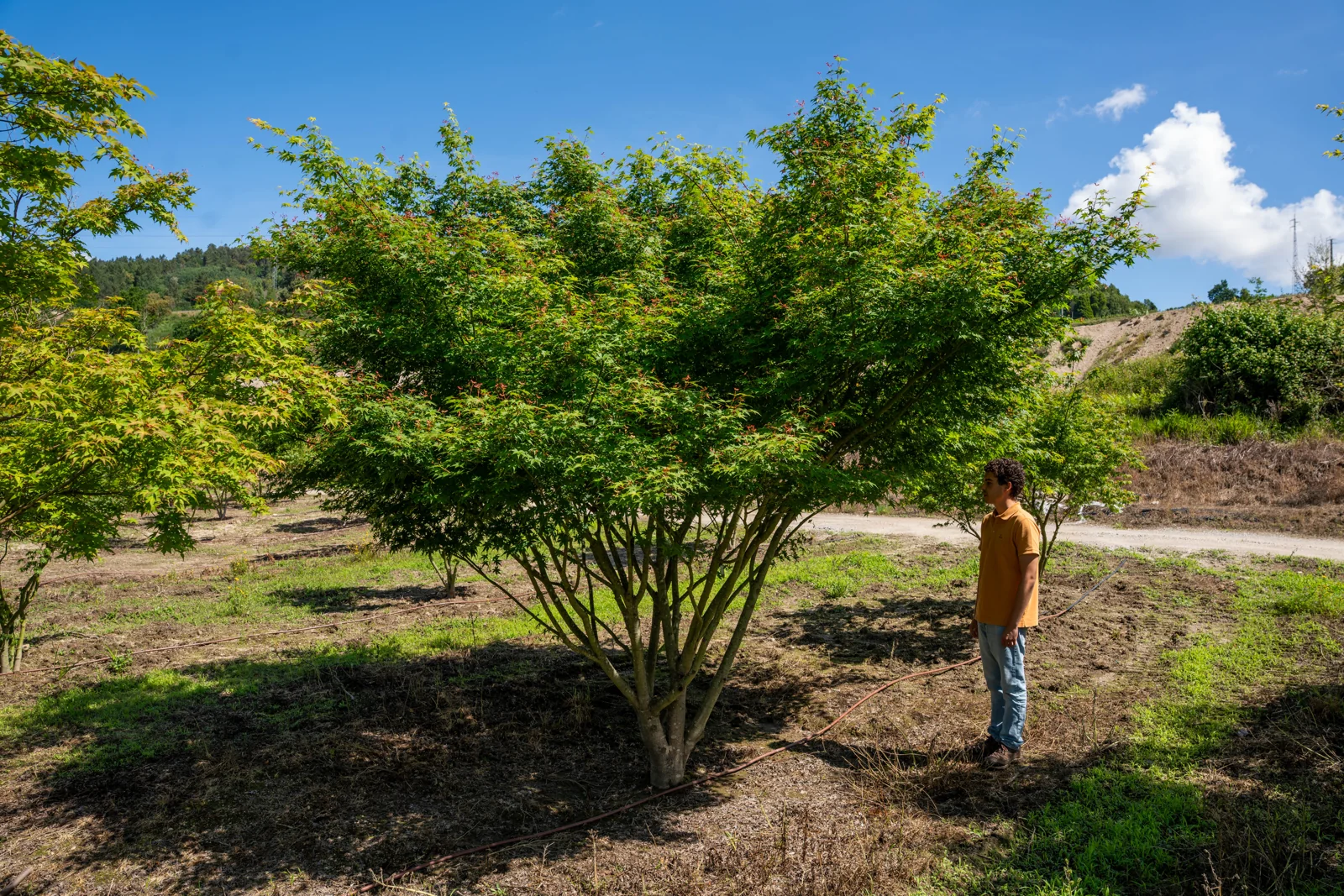
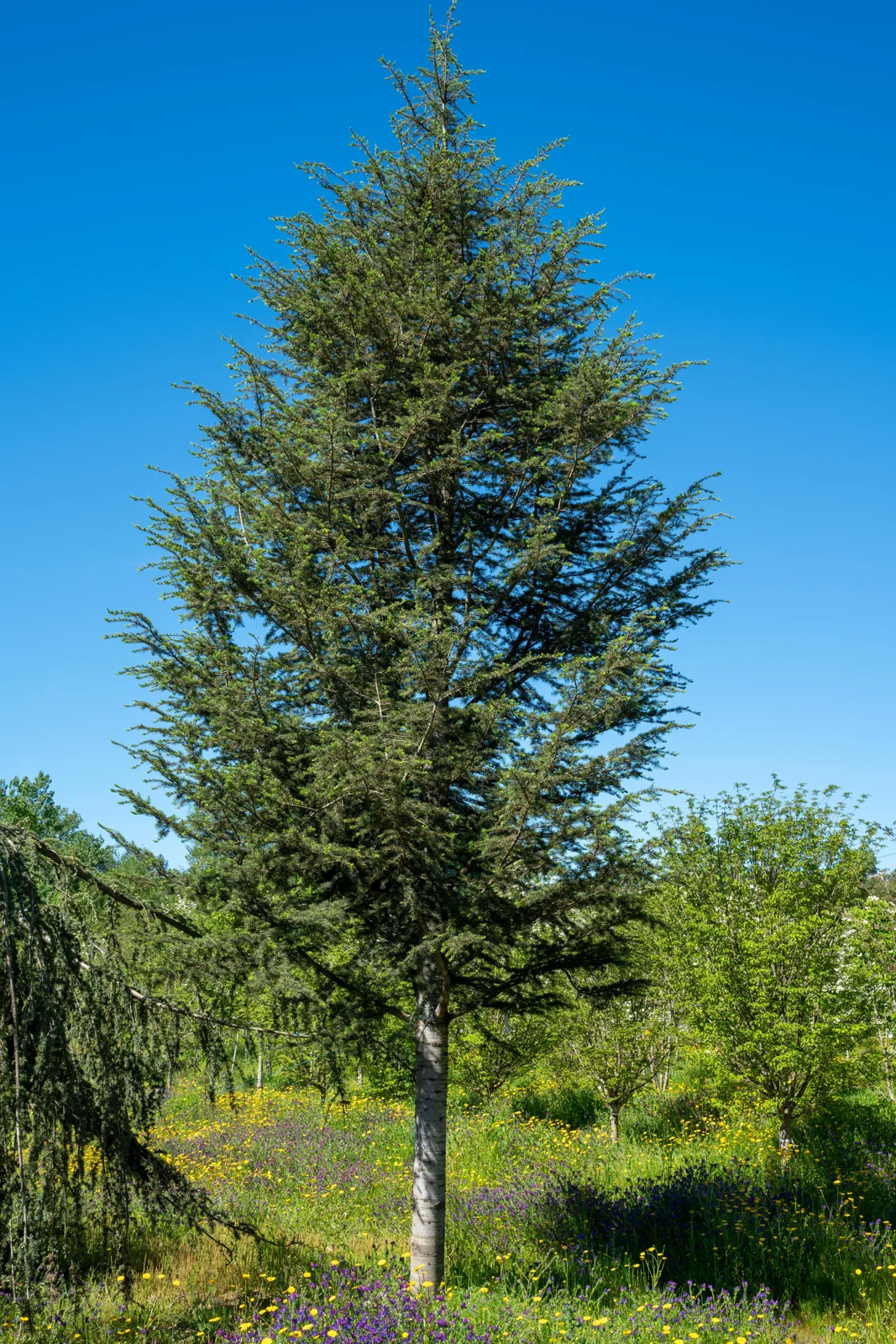
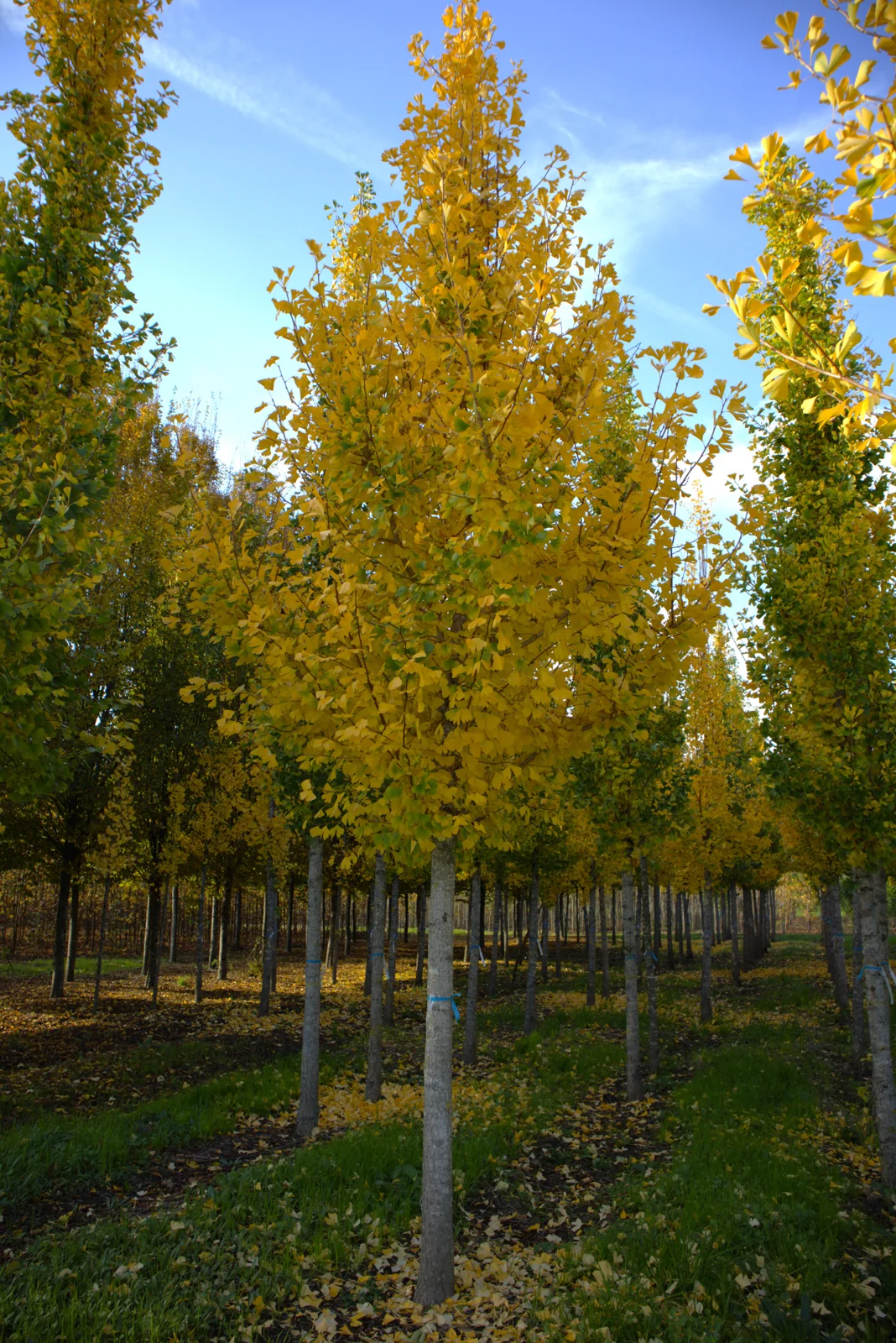
Acer palmatum
In our fields
The nursery as a living space
Aerial images of the three production sites, trees at different ages, fields throughout the year, crowns, trunks, flowering and foliage, pruning and staking, transplanting, forming and protecting the rootballs, visits and specimen selection, load preparation and the team in the field.
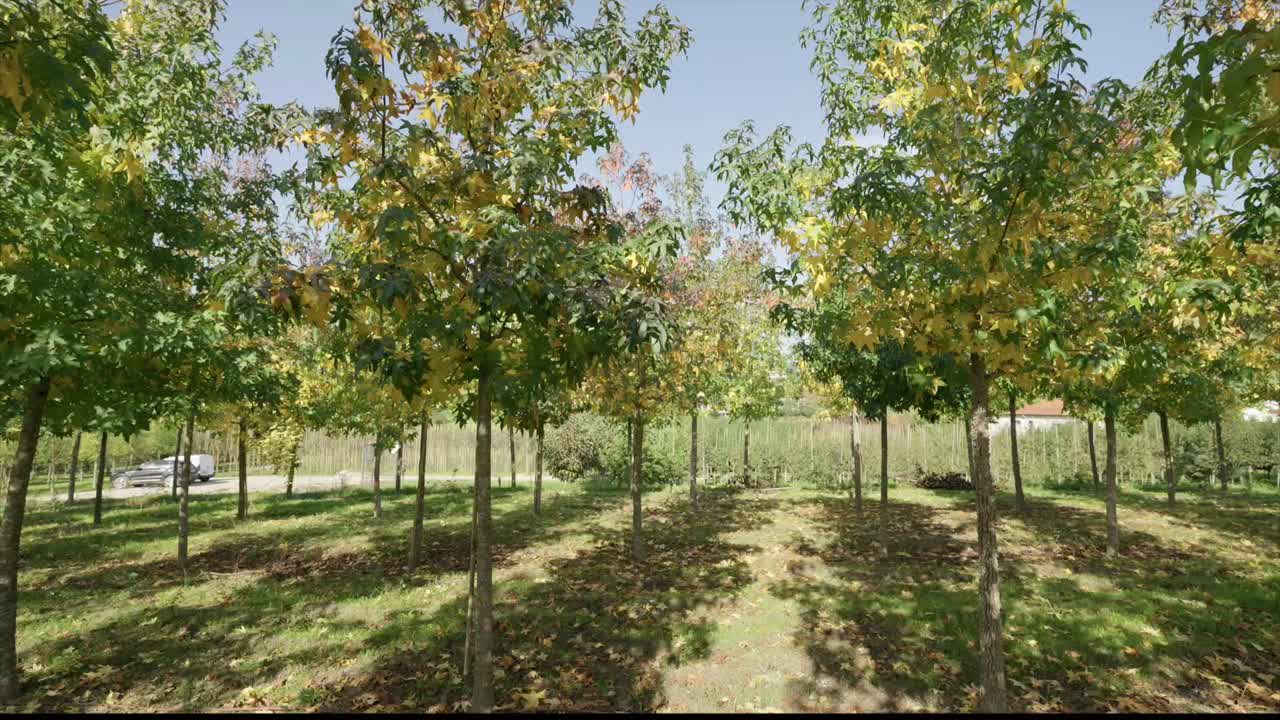
The photograph shows the species. The field shows the tree.
A visit begins with a conversation about the space, the intended function, your tastes and the point the project has reached.
Then we walk the fields to look at real trees, compare forms, crowns and maturities, and understand what an image cannot fully show: scale, shade, proportion, texture and character.
Come and see the trees at real scale.
The visit does not oblige you to contract design, planting or construction.
You can count on us for
- select a tree
- validate a batch
- see the production
- receive plant advice
- choose specimens for a project
- discover the Diaplant Boutique