Diaplant
Shade, privacy, structure and flowering call for different characteristics. See how to turn the function you want into selection criteria.
Selecting plants by function helps to avoid decisions based only on a photograph or a short period of flowering. Before choosing the species, it is useful to define what the planting needs to do in the space.
A tree can give shade, structure a view and flower. It rarely maximises all these functions at once. Identifying the priority makes it possible to accept compromises and to combine several layers when a single plant does not solve the problem.
Creating shade
For shade, the width, density and height of the crown matter, but so does the position in relation to the sun.
A broad tree placed far from the seating area may not give protection at the critical time. The design should study the orientation and the movement of the shade in summer.
Deciduous trees let light in during winter. Evergreens keep up protection all year round, but can make a space excessively gloomy in the cold months.
The water available influences performance. A tree under stress reduces transpiration, sheds leaves and may not develop the crown expected.
Building privacy
Privacy depends on the height at which the view needs to be blocked. A tall standard tree leaves the lower level open, even when the crown is dense.
Multi-stems, evergreens and shrubs can give screening from the base. In many cases, the best solution is a layered composition: trees for the upper view and shrubs for the near level.
A very narrow hedge, or one planted too close to the boundary, may need frequent cutting. There should be room for its mature thickness and for maintenance access.
It is also useful to decide whether you want an opaque barrier or partial filtering. Trunks and branching can give protection without closing the garden off completely.
Giving the space structure
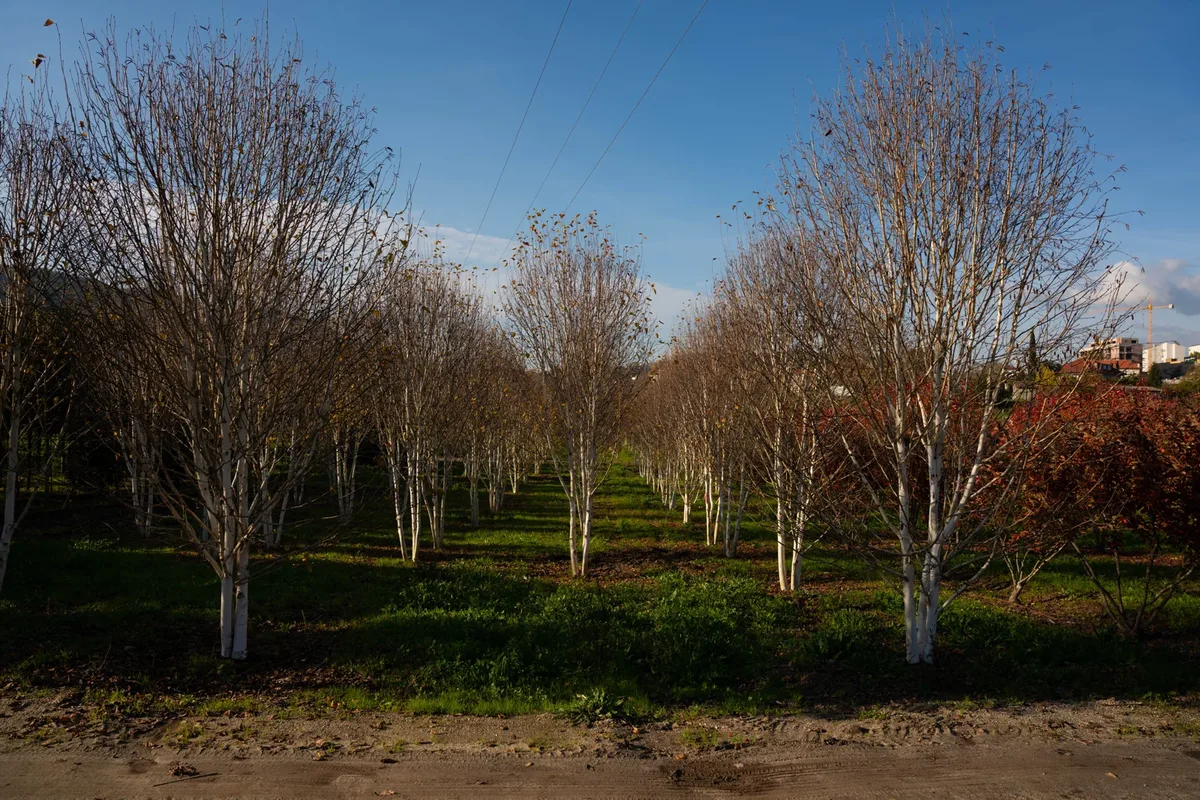
Some plants organise the garden all year round. Trees, evergreen masses, hedges and grasses define axes, boundaries and transitions.
Structure does not depend on size alone. Repetition and position can have more effect than one very large specimen.
In gardens with strong seasonality, it is worth keeping elements that stay legible in winter. Trunks, bark, crowns and evergreen masses stop the whole composition disappearing when the perennials go dormant.
Marking an entrance or an important point
A singular tree can mark an arrival, a change of direction or a seating area.
The choice should consider how it will be seen on approach and the distance available. A highly detailed specimen can lose its effect when seen from afar; a simple, bulky form may work better.
Lighting, the orientation of the crown and the planted or architectural backdrop all influence how it reads.
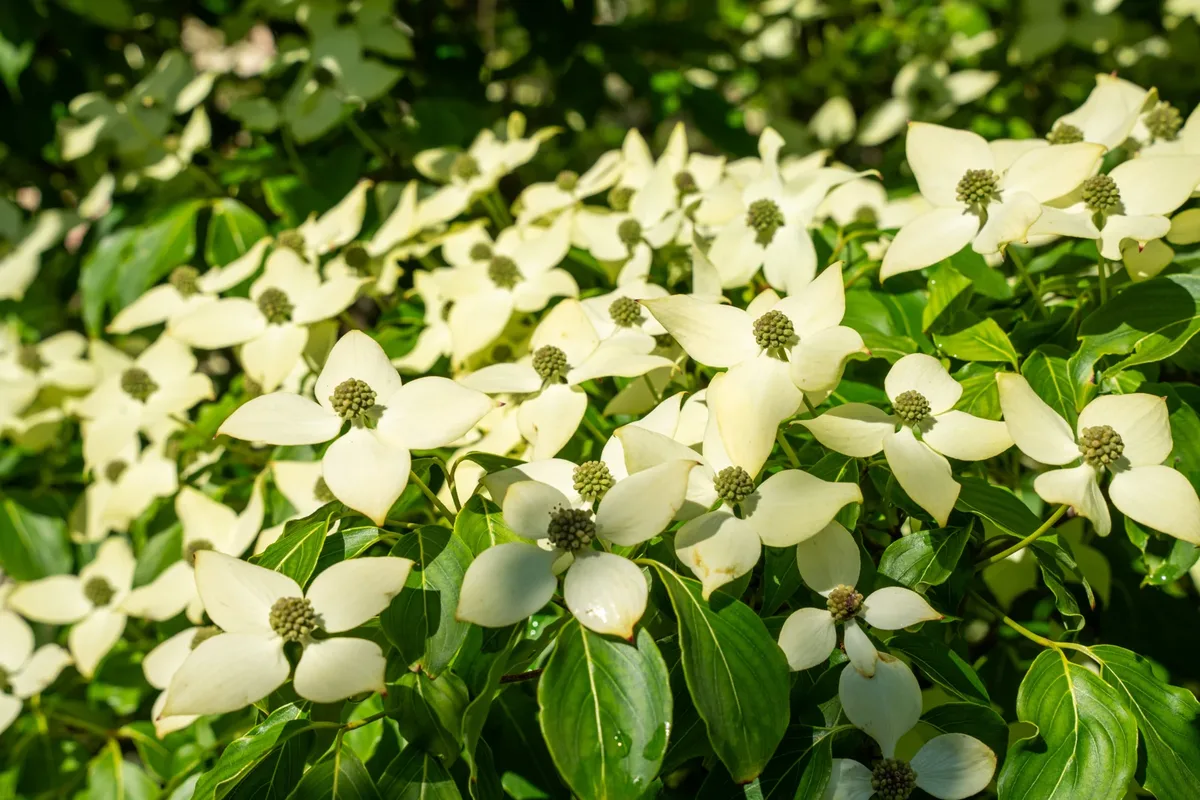
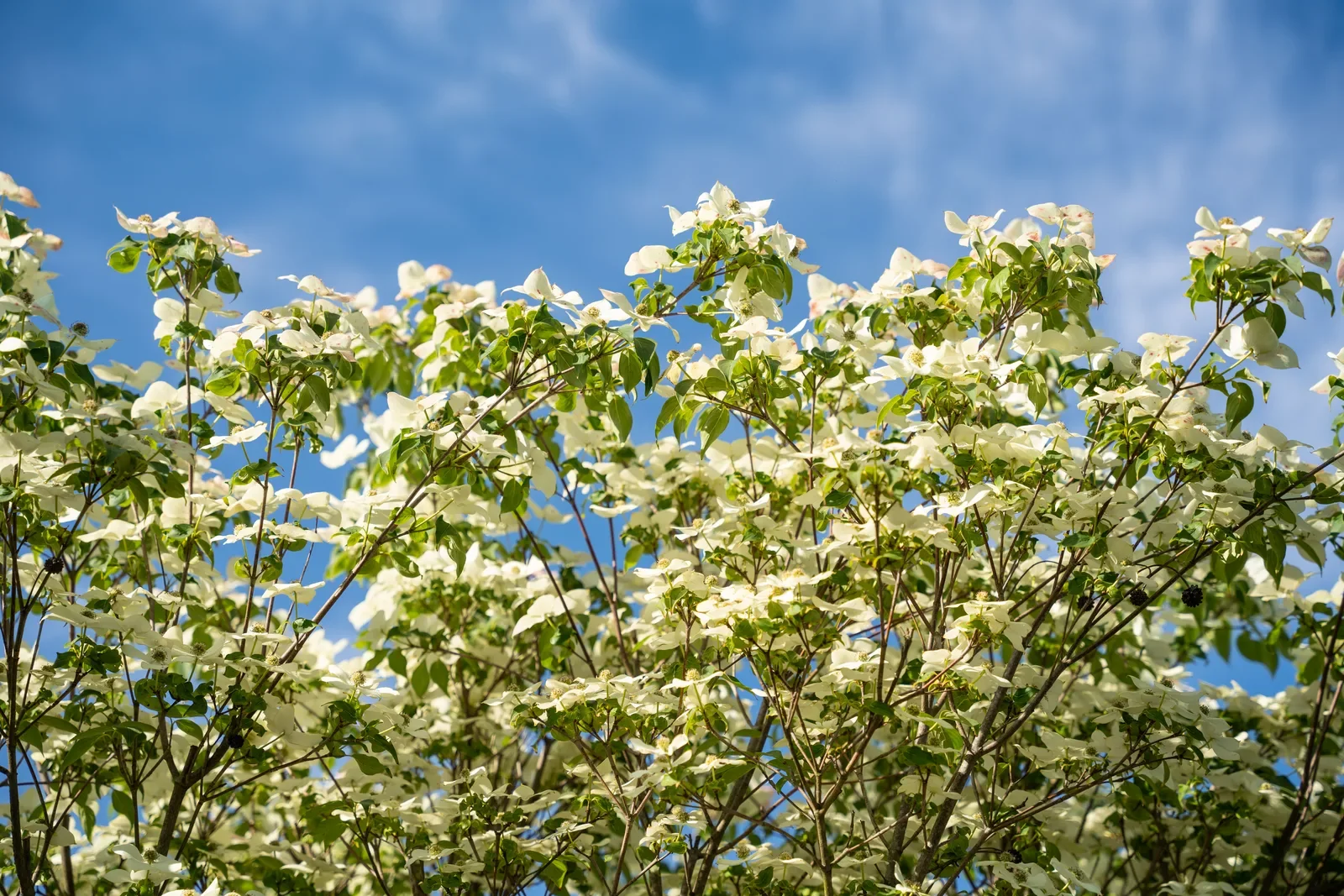
Flowering
Flowering is temporary. Its duration can be cut short by rain, wind or heat, and its intensity varies from year to year.
When selecting, what matters is when it occurs, how it relates to the use of the garden and what value the plant keeps afterwards. Bark, fruit, autumn colour or form can extend the interest.
Spreading flowering through the year creates a more consistent calendar than concentrating all the species in the same month.
The maintenance associated with falling petals, fruit or flower heads should also be assessed, especially near pools and paving.
Colour and seasonality
Red, variegated or yellow foliage can create contrast, but it loses force when overused.
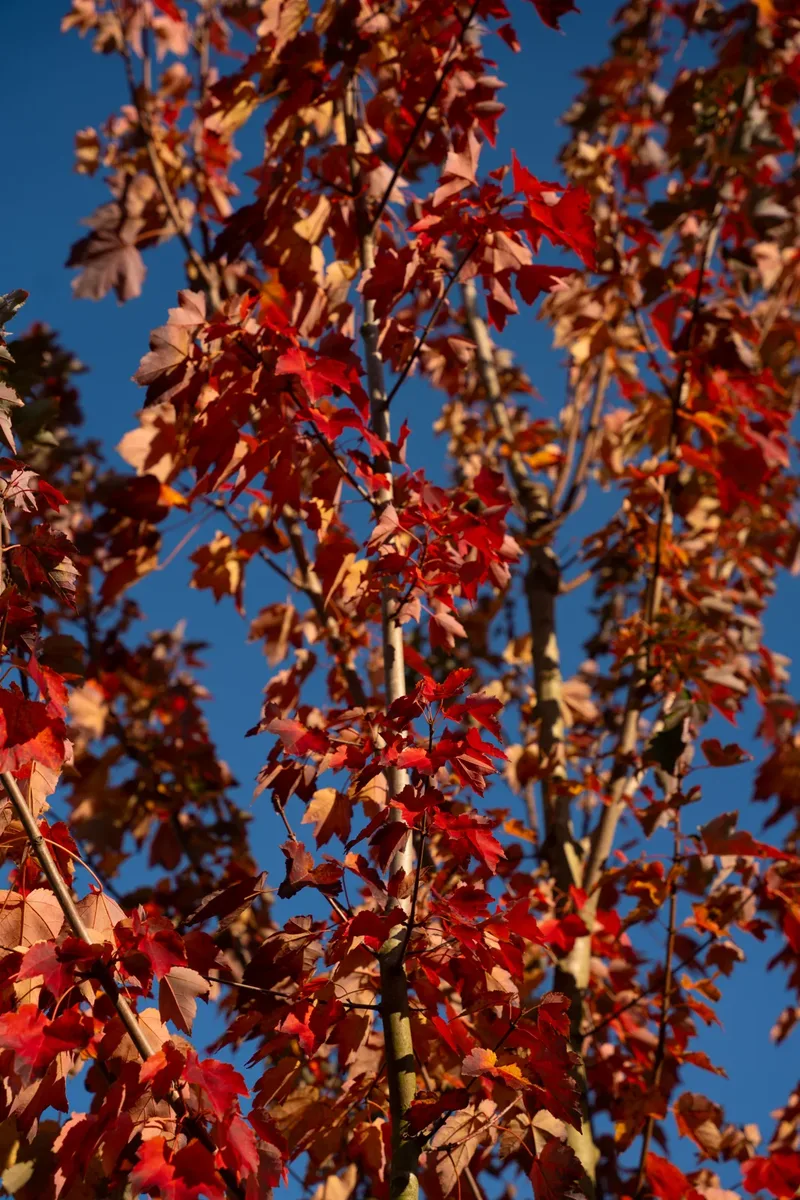
Colour changes with aspect and season. Some Acer palmatum turn greener in shade; several trees only develop good autumn colour when they reach that season with water and healthy leaves.
Selection should start from behaviour over the year and not from a single image.
Biodiversity and habitat
When the function includes supporting wildlife, it is important to consider nectar, pollen, fruit, shelter and the relationship with local species.
An ornamental plant can have value for pollinators, but the composition should avoid depending on a few species or on very short flowering periods.
Continuity between trees, shrubs and the herbaceous layer increases the diversity of habitats. The use of products and the maintenance matter as much as the plant list.
Reducing maintenance
‘Low maintenance’ does not correspond to any one species. It comes from plants compatible with the soil, correct spacing, ground cover, efficient watering and access.
A trained form may fulfil the function perfectly, but need regular cutting. A free-growing species may be less work if it has enough room.
Choosing small plants to fill in quickly through excessive density can mean more pruning and replacements later.
Combining functions
A garden works better when different plants share the work. A deciduous tree can give shade; an evergreen mass can screen the view; shrubs and perennials can provide flowering and cover.
This combination means each element can be chosen for what it does best, without requiring a single species to meet every expectation.
Turning the function into a specification
Once the aim is defined, the design translates the function into criteria: crown height, spread, leaf persistence, flowering time, growth rate and maintenance.
Only then are the available species, cultivars and forms compared.
Function guides the choice, but the place sets the limits. A shade tree still needs soil and space; a privacy plant cannot block circulation or essential light.
Related content
- Selecting plants by place
- How to choose the right tree for each place
- Species, cultivar and horticultural form
Sources and supporting references
- Principles of planting design and landscape composition.
- BGCI — resources on tree diversity and selection.
- Royal Horticultural Society — ornamental and functional characteristics of plants.
Tags