Diaplant
Choosing a tree should start from the place: space, soil, water, aspect, function and maintenance. See the criteria before you select the species.
Choosing a tree starts with understanding the place where it will grow.
Species, cultivar, form and size should answer to the space available, the soil, the drainage, the aspect, the water and the intended function. Only then does it make sense to compare specimens at the nursery.
A tree can be very attractive and well grown, yet not suit a small garden, a saturated soil or a site with strong wind. The choice improves when it stops starting from the image of the tree in flower alone and begins to consider how it will develop over the years.
The crown’s future space
The size today is not the final size.
Even a mature tree goes on growing after planting. The crown expands, branches get closer to buildings and the shade changes through the day and the seasons.
Before selecting, assess the distance to façades, walls, swimming pools, access routes, overhead lines and other trees. It also matters whether people will pass beneath the crown and how much clearance is needed.
A broad-crowned species may work in a park and become difficult in a narrow courtyard. A columnar form takes up less width, but can reach a considerable height. A multi-stem has presence from the ground up, though it needs more room sideways and can restrict passage.
The answer is not always to choose a small species. It may lie in changing the position, the form or the relationship with the other elements of the design.
The volume of soil available
A tree needs soil beyond the original planting hole.
In gardens with continuous open ground, roots can explore a wide area. In streets, courtyards and heavily paved areas, the available volume may be limited by foundations, service chambers, walls or compacted layers.
The size of crown a tree can sustain is linked to its capacity to develop roots. A large specimen planted in too small a volume may keep going for a while on its rootball and reserves, but it will struggle to establish.
The assessment should cover usable depth, lateral continuity and any obstacles. Where soil is limited, the design may need to enlarge the permeable area, link tree pits or allow for purpose-built construction that supports paving without compacting the root zone.
Texture, compaction and drainage
Calling a piece of ground ‘good’ or ‘bad’ is not much use.
Cultivated farmland offers different conditions from an area of fill or a platform compacted by machinery. Clay soils hold more water and may drain slowly; sandy soils lose water faster and have less capacity to retain it.
Drainage has to be observed on site. A drought-tolerant species may not stand water sitting around its roots. Nor does a tree associated with damp habitats necessarily grow well in a soil that is permanently saturated and starved of oxygen.
Where there are doubts, examining the profile and running infiltration tests help to understand the problem. The choice of species should not be used to get round ground preparation that is still needed.
Water available
Water needs vary between species and also over the course of establishment.
A mature tree needs deep watering in its first years, even when the species is regarded as drought-resistant once established. The rootball holds only a limited part of the root system and can dry out before the surrounding ground looks dry.
Before choosing, you need to know whether there is an irrigation system, whether watering by hand is possible and whether someone can keep watch through the hottest spells.
Availability is not just a matter of annual volume. What matters is regularity, water quality and how the water spreads through the soil. Frequent shallow watering may benefit only the top layer and never reach the rootball.
Species with high water needs may suit a deep, moist site, but be unrealistic on dry ground with no permanent irrigation.
Sun, shade and reflected heat
The aspect given on a plant sheet is only a general guide.
Sun on an open hillside is different from the heat that builds up against a façade or in a paved courtyard. Wind, reflection, orientation and water availability change the real intensity of the exposure.
Some species tolerate full sun when they have a cool, moist root run, but suffer on dry, shallow ground. Others accept partial shade, though they produce fewer flowers or a thinner crown.
Shade changes through the year too. A deciduous tree can shield a façade in summer and let light in during winter. An evergreen keeps the screening, but may cast permanent shade in a space where it is not wanted.
The decision should consider seasonal behaviour, not just the conditions on the day of the visit.
Wind and exposure
Wind affects water loss, stability and the shape of the crown.
On an open site, an evergreen species keeps a larger area exposed through the winter. A broad or very dense crown takes different loads from a more open form.
Resistance does not depend on species alone. Structural quality, the balance between root and crown and the way the tree was planted all carry significant weight.
In particularly exposed areas, it may be necessary to start with a smaller size, choose forms that offer less wind resistance or reinforce the anchoring temporarily. The way the crown is oriented at planting can also help the specimen to fit in.
The function the tree has to perform
A tree may be chosen to give shade, frame a view, create privacy, mark an entrance or structure a space.
Each aim leads to different criteria. For shade, what matters is the width, density and position of the crown. For privacy, what counts is whether the foliage is evergreen and the height at which branching begins. In avenue planting, uniformity and compatibility with passing traffic become more important.
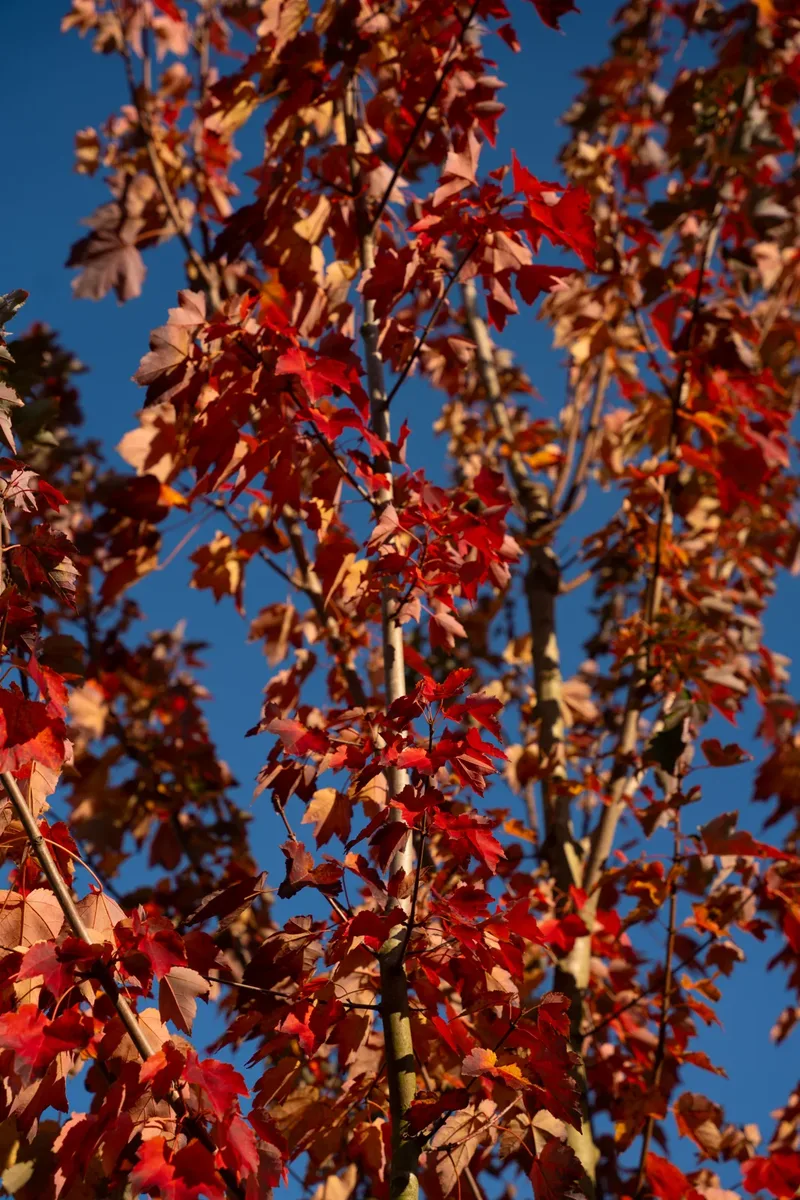
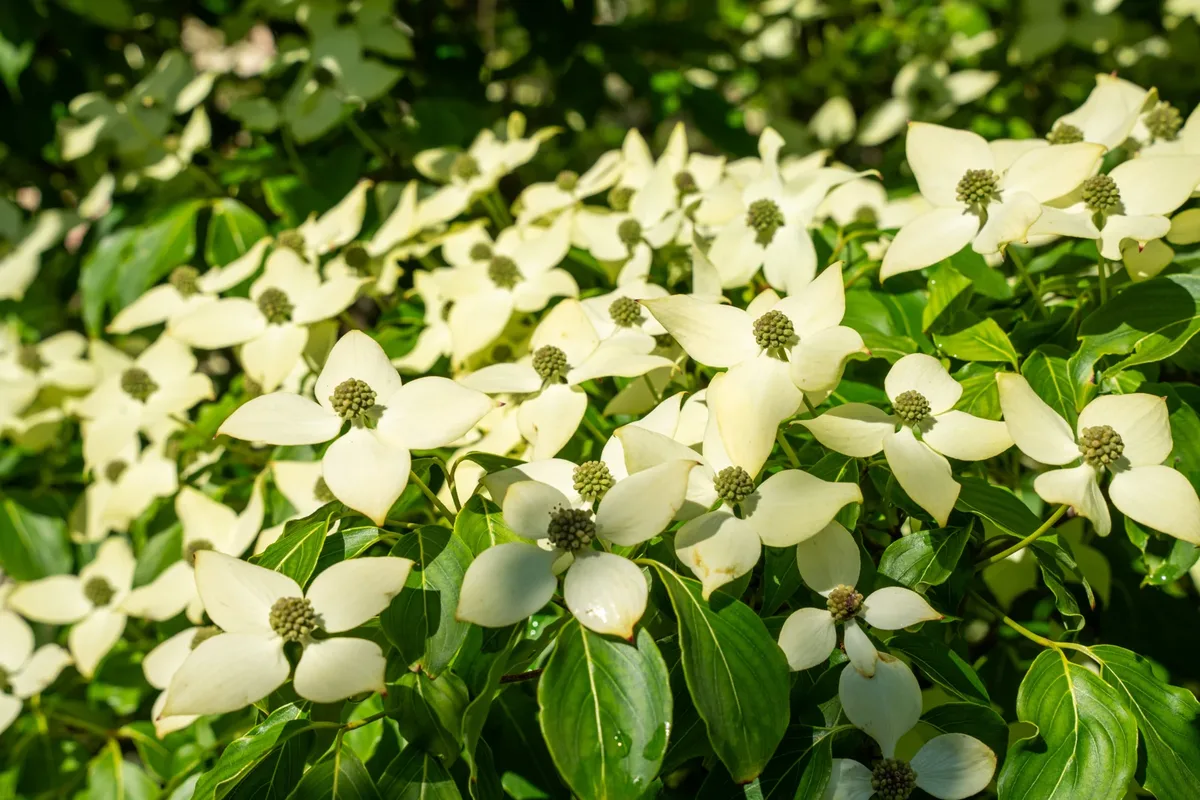
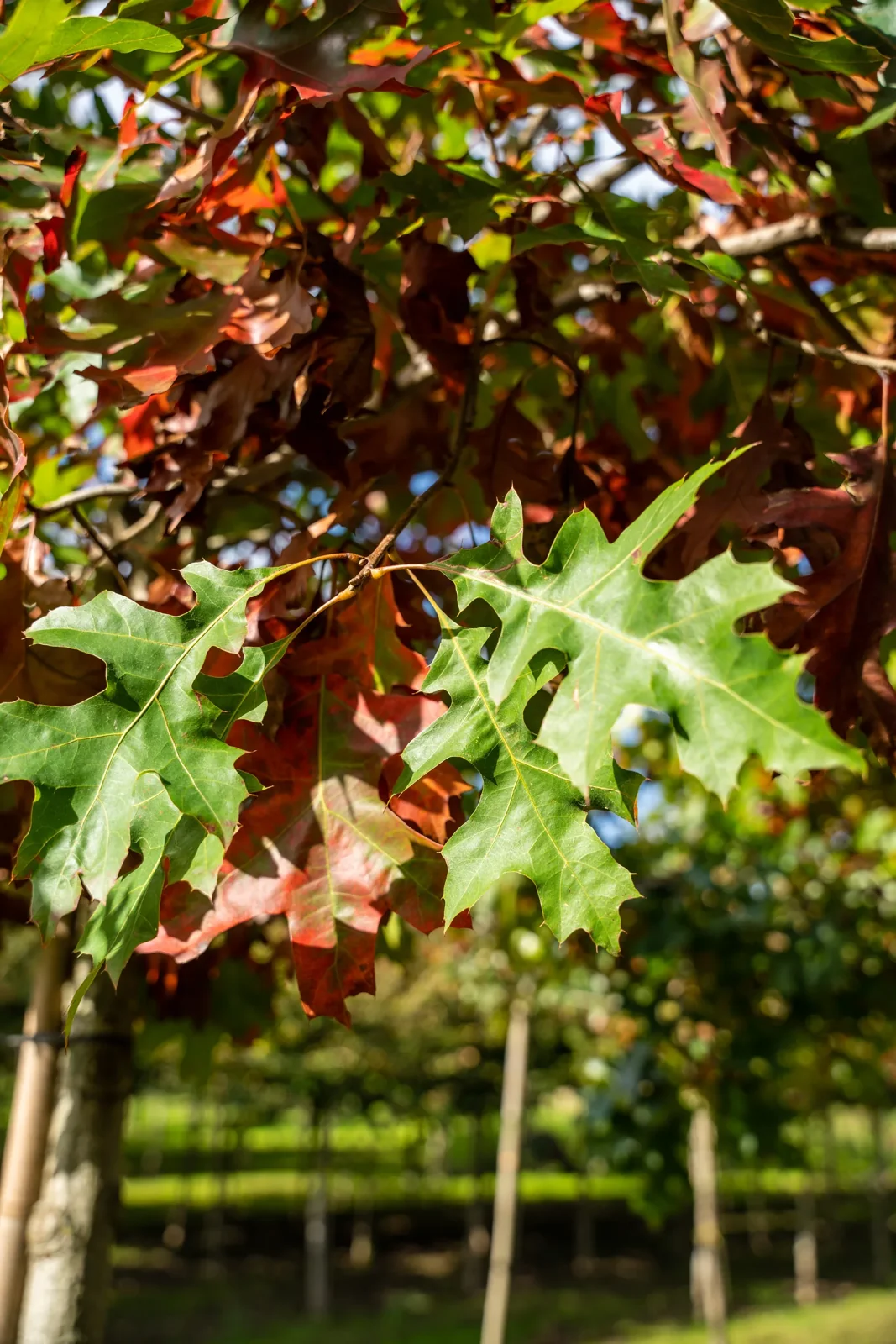
Flowering and autumn colour can be decisive, but they should not be the only criteria. They are seasonal effects within a structure that will be there all year round.
In many projects, the tree performs several functions. What matters is to define which come first and accept the trade-offs the choice involves.
Deciduous or evergreen
The decision changes the light, the privacy, the maintenance and the way the space reads through the seasons.
Deciduous trees let in more light in winter and reveal the branch structure. Their leaf fall is concentrated, which needs to be taken into account near swimming pools, roofs or paving.
Evergreens keep their green mass and screening, but also their shade and wind exposure all year round. Some renew their leaves gradually, so they are not necessarily plants that drop nothing.
There is no cleaner or easier choice in absolute terms. It depends on the site and on how the space is expected to be used.
Species, cultivar and form
Within the same species there may be cultivars that differ widely in size, colour, flowering and habit.
A broad-crowned maple and a columnar cultivar do not occupy space in the same way. A grafted variety may hold a globe or weeping form that does not match the typical development of the species.
The production form also changes the result. A standard tree frees up space beneath; a multi-stem builds volume from the base. Trained crowns call for specific maintenance.
The full name and the form should be confirmed before choosing. Working only from the genus or a common name raises the risk of specifying a different plant from the one intended.
Today’s climate and the years ahead
The choice should answer to the local climate and to the way conditions can be expected to change.
Maximum temperatures, heatwaves, dry spells and frosts still vary between regions and within the same municipality. Altitude, orientation and proximity to the sea make a considerable difference to exposure.
It is not enough to choose a species classed as resilient in an international catalogue. The provenance of the stock, the soil and the availability of water also influence how it behaves.
In projects with a long horizon, it makes sense to favour diversity and avoid depending on a single species in large numbers. A broader mix reduces vulnerability to pests, diseases and particular weather events.
Maintenance and capacity for aftercare
Some trees need regular pruning to keep their shape. Others produce fruit, seed or blossom that adds to the maintenance in certain spaces.
The choice should be compatible with the resources available. A roof-trained tree can meet a need for shade very well, but it will not keep its geometry without work. A vigorous species next to a façade may call for interventions that a different position would have avoided.
In the first years, all mature trees need aftercare. Watering, staking, observation and early corrections should not be mistaken for optional maintenance.
After establishment, the demands become more specific to the species and the function.
Access and planting
A tree can be right for the place and impossible to get into position.
The weight of the rootball, the width of the crown, the capacity of the crane, lorry access and the presence of cables or buildings have to be assessed before reserving.
In projects with restricted access, it may be better to choose a smaller size, use a multi-stem that allows different logistics or plant before certain phases of construction.
The sequence of works has a strong bearing on feasibility. Leaving the planting of large trees until the end may prevent the necessary equipment from getting in.
Choosing the specimen
Once species, form and size are settled, selection moves on to the individual tree.
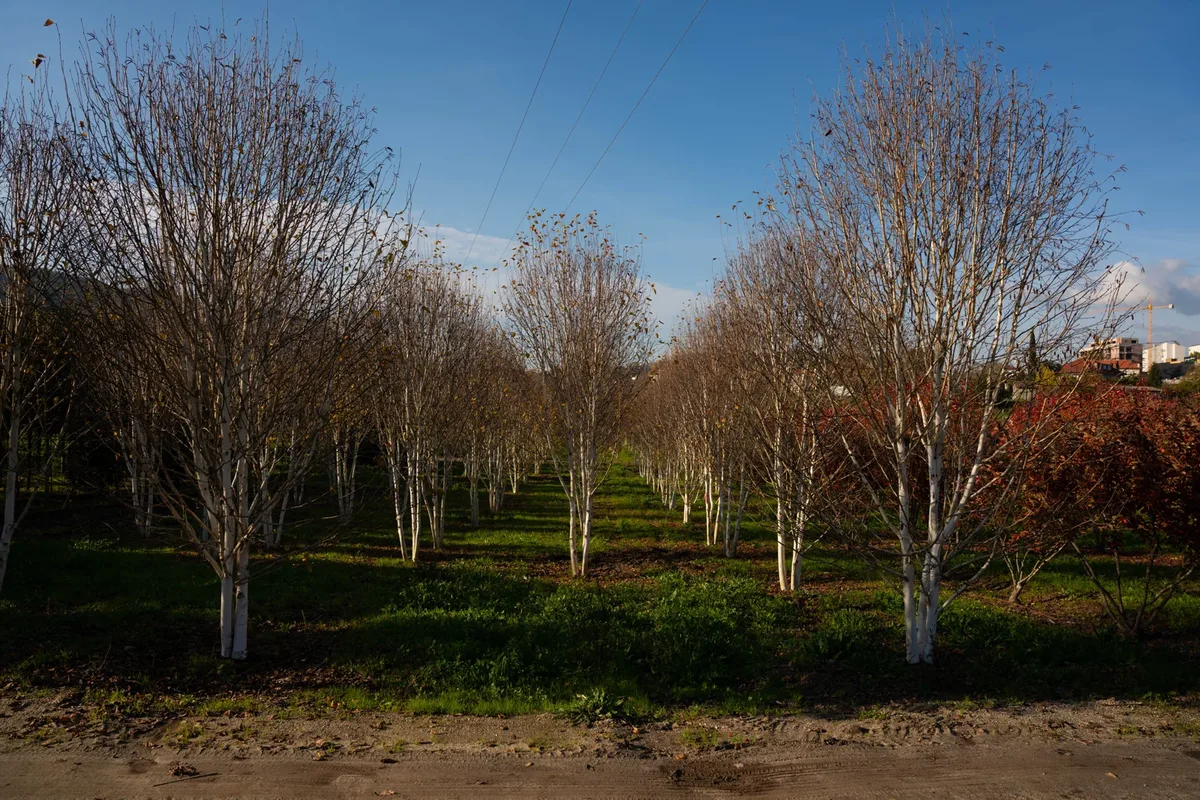
At the nursery, we look at the crown from several angles, the relationship between trunk and branches, the rootball, the vigour and the orientation. For avenue planting, the group is compared as a whole; for gardens, you may be looking for a specimen tree.
The visit also allows decisions to be adjusted. A form available in the field may serve the design better than the solution first drawn.
The choice is safer when the design and the nursery stock are looked at together.
Help with selection
Diaplant helps with the choice of species and specimens, taking into account the place, the design, the logistics and the maintenance planned.
Book a visit to the nursery Talk about a project
Related content
- Selecting plants by place
- Selecting plants by function
- How to assess the quality of a mature tree
- How to choose a specimen at full scale in the nursery
Sources and supporting references
- European Arboricultural Standards (2022). European Tree Planting Standard.
- Scharenbroch, B. C. et al. (2017). “A Rapid Urban Site Index for Assessing the Quality of Street Tree Planting Sites”. Urban Forestry & Urban Greening, 27, 279–286.
- McPherson, E. G.; Berry, A. M.; van Doorn, N. S. (2018). “Performance Testing to Identify Climate-Ready Trees”. Urban Forestry & Urban Greening, 29, 28–39.
- Allen, K. S. et al. (2017). “A Review of Nursery Production Systems and Their Influence on Urban Tree Survival”. Urban Forestry & Urban Greening, 21, 183–191. DOI: 10.1016/j.ufug.2016.12.002.
Tags