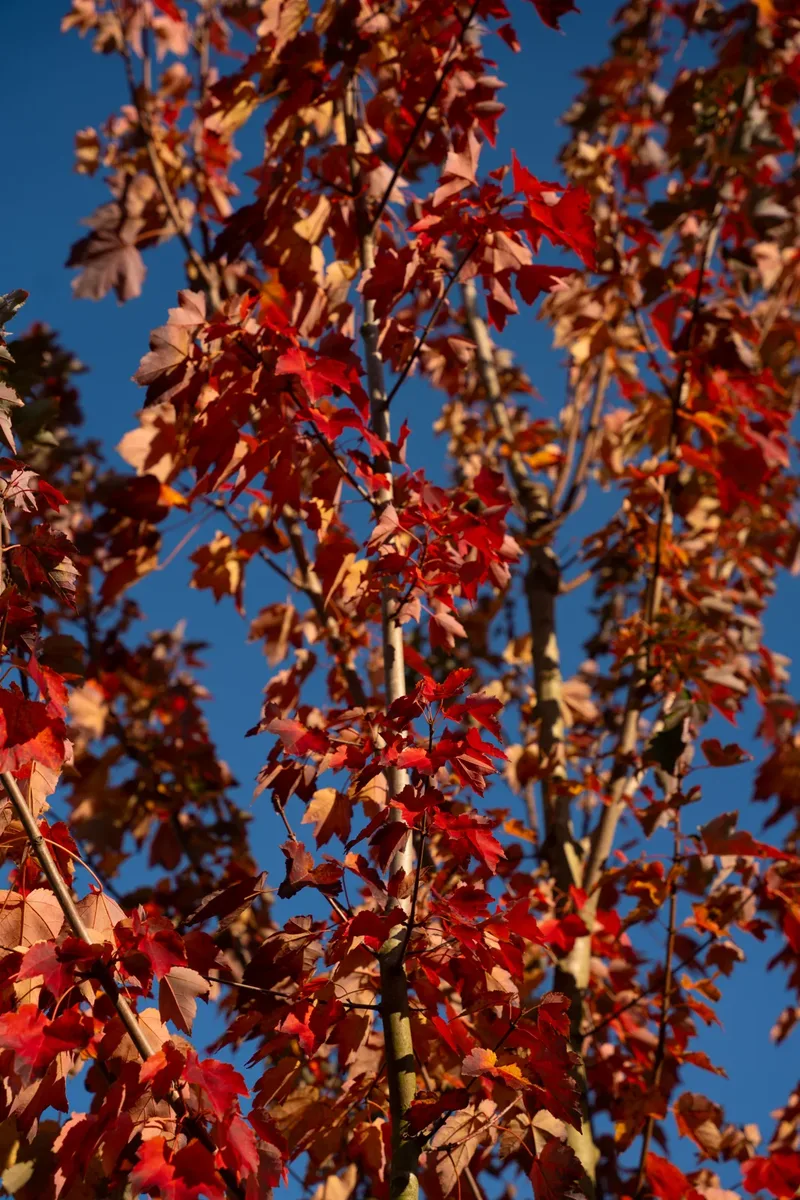
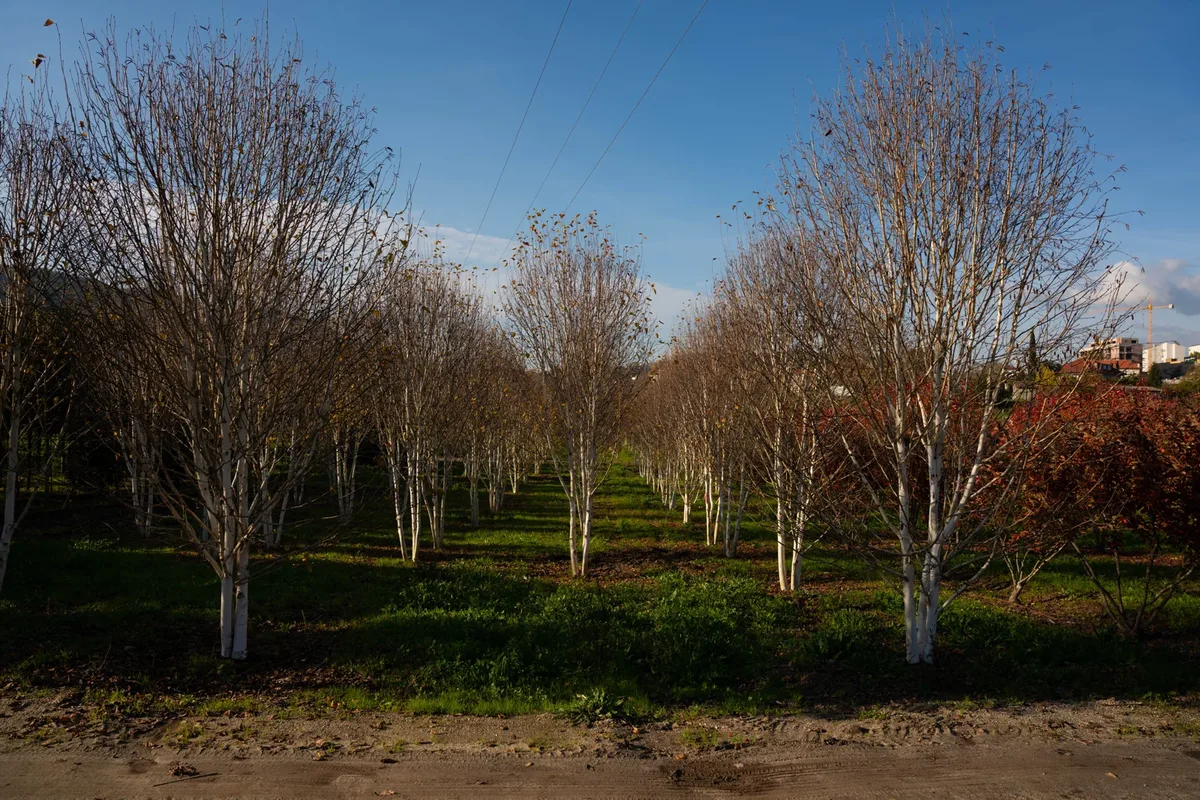
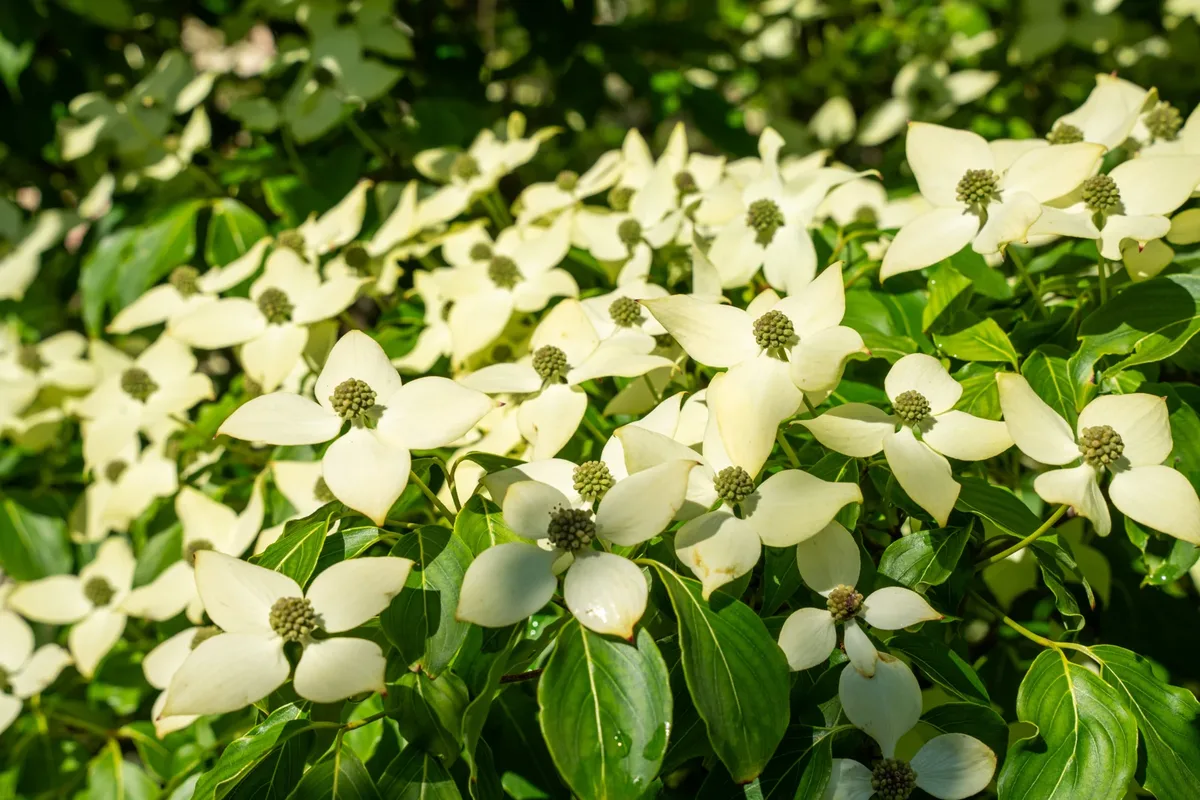
A visit to the nursery lets you compare crown, trunk, rootball, orientation and scale. Find out what to bring and what to look at before reserving a tree.
Choosing a mature tree in the nursery lets you see what a photograph or a list cannot fully show. The true spread of the crown, the direction of the branches, the proportion of the trunk and the individuality of the specimen become clear as you walk the field.
The visit is most useful when there is information about the project. Without a plan, measurements and photographs of the site, the choice tends to settle on the tree that simply catches the eye. The aim is to select the one that works best in the place where it will go on growing.
Preparing the visit
A simple plan with the intended position, the main distances and the orientation is enough to improve the conversation. Photographs of the house, the access and the views help to understand the scale.
The function of the tree should also be known: shade, privacy, framing, avenue planting, flowering or a single striking presence. When there are several priorities, it is worth identifying the main one.
Access cannot be left to the end. The width of gates, the position of the crane, the load-bearing capacity of the ground and the distance to the planting hole limit the size that can reach the site.
Comparing more than the measurements
Girth, height and spread matter, but they do not describe the form. Two trees of the same species and size class can have very different crowns.
One may be denser, another may open to one side or have a more expressive trunk. In a garden, this individuality can be an advantage. In avenue planting, the specimens need to be more closely matched.
The comparison should be made from several angles. A tree that looks balanced from the front may show a significant gap when seen from the side.
Looking at the base and the trunk
The root collar, the taper and the soundness of the trunk are part of the assessment. In grafted trees, the graft union is checked too. In multi-stems, it is worth seeing how the stems leave the base and whether there is space between them.
Production marks should not automatically be mistaken for serious defects. What matters is the location, the size and how they are developing. A small wound that is healing means something different from an extensive injury near the base.
The protection applied in the nursery may temporarily hide part of the trunk. Where necessary, the team checks the area before the reservation.
Reading the crown for the project
The crown should be related to its future orientation. A more open side can be turned towards the view or the seating area. A denser part can protect a boundary.
It is also important to understand where the main weight lies. A tree with an asymmetric crown can work very well if it has room for that development and is oriented correctly.
In avenue planting, crown height, leader, volume and vigour are compared. The tree that is most expressive on its own is not always the best for forming a group.
Confirming the root preparation
The roots stay in the ground, but the production history helps to assess the preparation. At Diaplant, trees in the mature range receive at least two transplantings and spend a minimum of six years in our fields.
Before the tree leaves, the rootball will be sized to suit the species and the size of the tree. The visit makes it possible to anticipate the diameter, the weight and the equipment needed.
When the tree is in a container, we check whether the mass is properly rooted and whether there are signs of circling roots or of too long a stay.
In assessing maturity, two transplantings are the minimum preparation. In batches with 15 to 20 years of production, the history may include, as a general rule, up to five cycles, always adjusted to the needs of the species.
Recording the choice
The tree should be identified unambiguously. Photographs from several sides, the specimen code and notes on orientation reduce the risk of confusion.
In projects with several specimens, the record includes the intended position of each one. This is especially useful when the crowns have differences that were chosen on purpose.
The selection may also remain subject to a final check before lifting, because the tree is still alive and may change.
Linking specimen and logistics
A tree that suits the design may be impossible to transport. The weight of the rootball rises quickly with the diameter and can change the crane, the vehicle and the preparation of the planting hole.
The technical site visit should confirm the route overhead and on the ground. Cables, eaves, walls and slopes can reduce the space available.
In some cases, the solution is to plant before the works close off the site, choose a smaller size or select another form with a more favourable transport volume.
The final decision
Choosing in the nursery does not mean looking for the perfect tree according to an abstract model. It means comparing real specimens and seeing which one has the right structure, scale and character.
A distinctive tree may justify a small adjustment to the design. In other cases, the place demands greater regularity and limits the choice.
The visit brings design and production closer together. That relationship makes the selection more precise and allows transport and planting to be prepared before the tree leaves the field.
Related content
- How to assess the quality of a mature tree
- When a project needs uniform batches
- Access, crane and unloading
Sources and supporting references
- European Arboricultural Standards. European Tree Planting Standard.
- Selection, tagging and logistics criteria used by Diaplant.
Tags