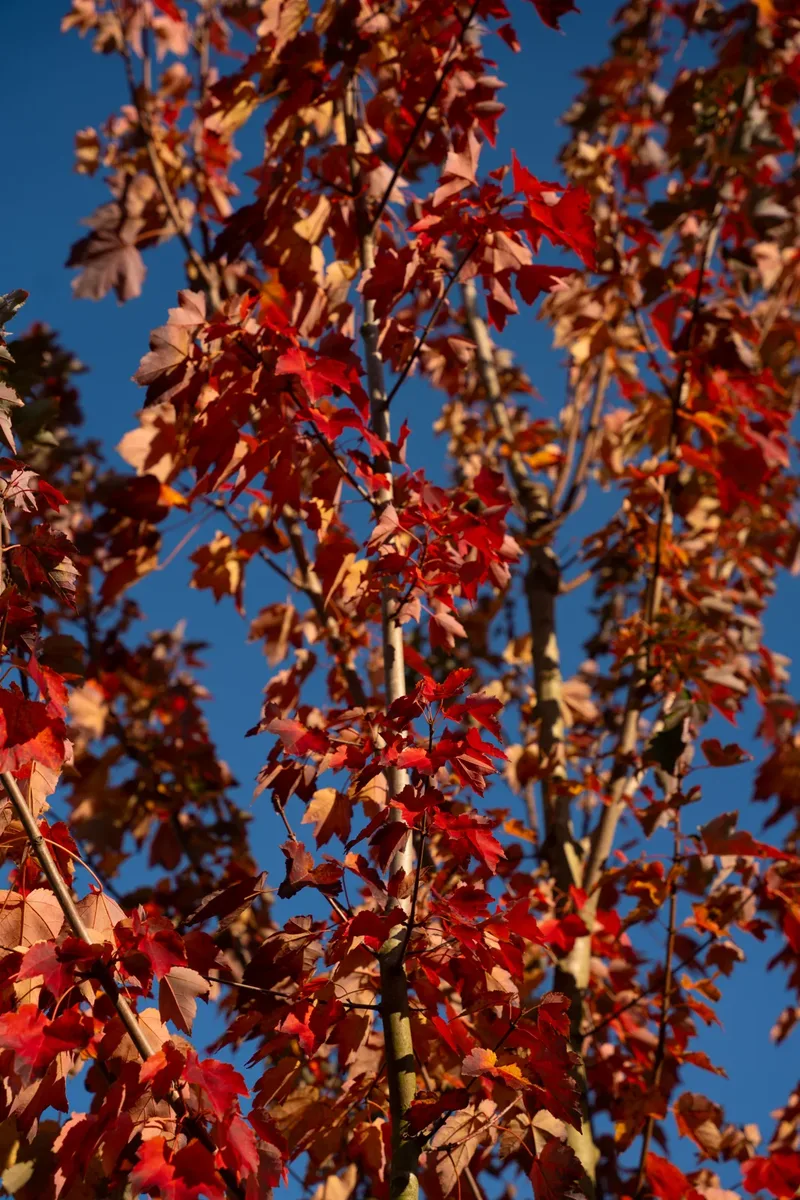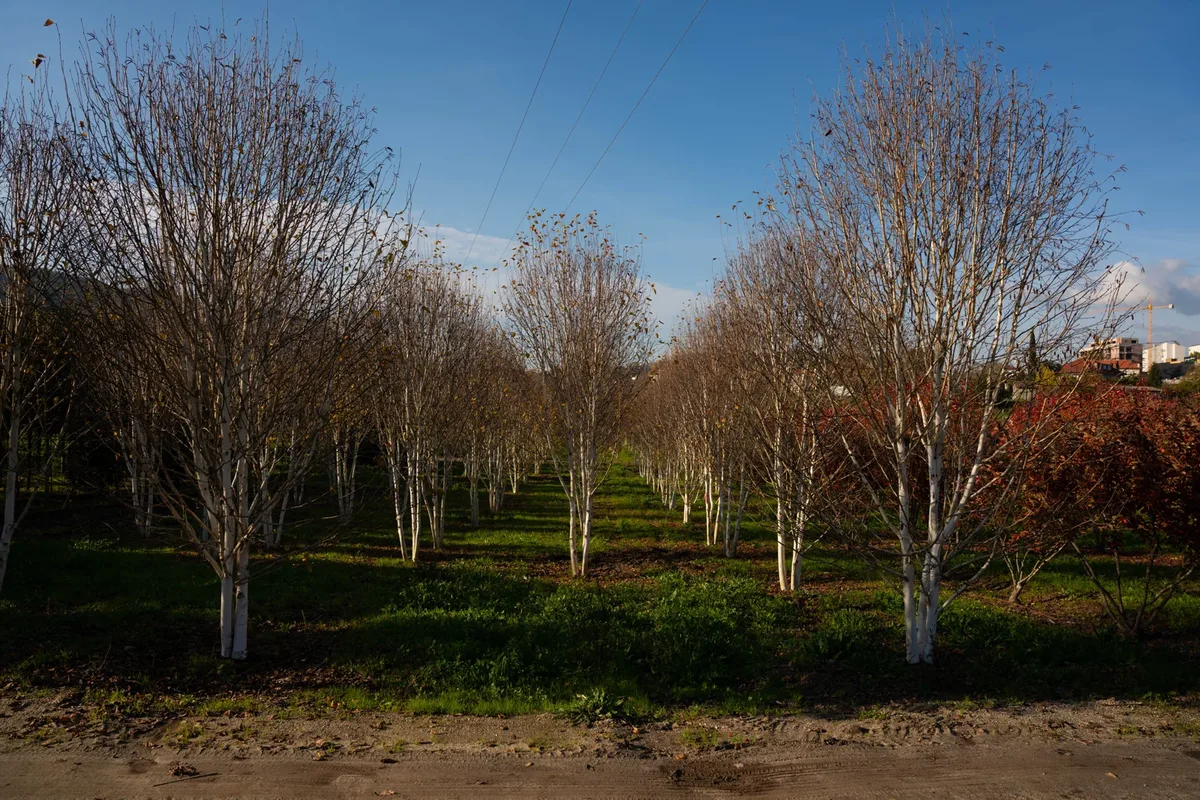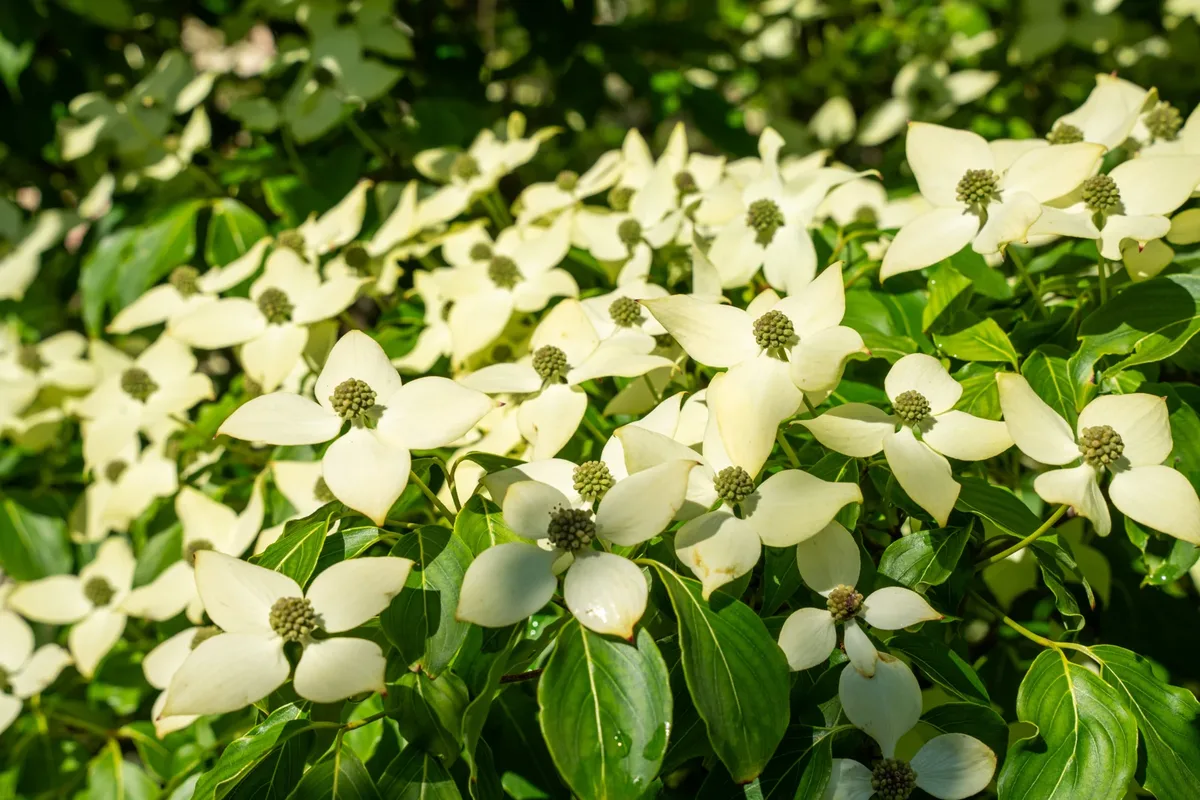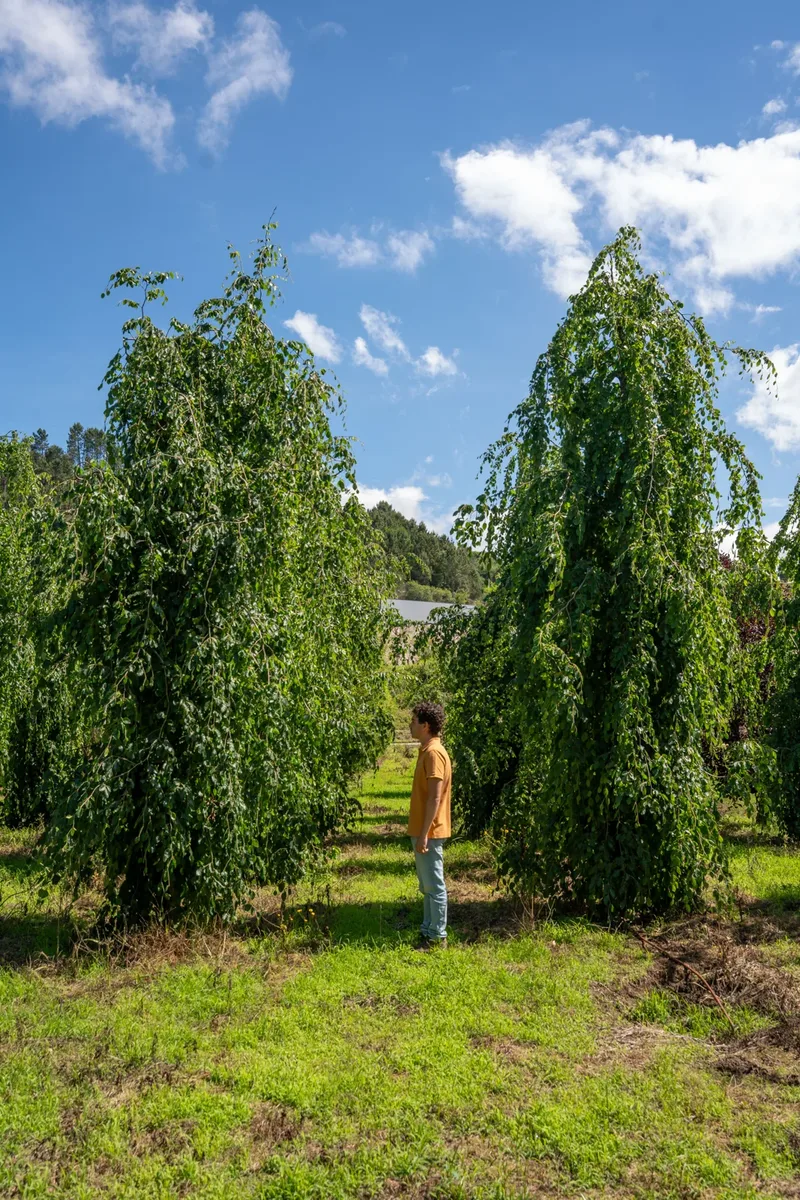
Fagus sylvatica 'Pendula' — an example of a pleached crown. The article compares four forms.
Crown form shapes shade, width, views and maintenance. Learn the differences between natural, globe, columnar and pleached crowns.
The form of the crown determines the width the tree takes up, the position of the shade, the transparency and the relationship with buildings. Terms such as natural, globe, columnar or pleached describe very different behaviours and should be read together with the species, the cultivar and the height at which the crown is formed.
A columnar crown does not solve every narrow space. A globe crown can increase a good deal in diameter. A pleached form offers geometric control, but demands regular maintenance. The name helps to start the choice; it does not allow you to conclude it.
Natural crown
With a natural crown, the tree develops the architecture characteristic of its species, accompanied by formative pruning and occasional corrections. It does not mean an absence of work. The nursery watches the leader, crossing branches, imbalances and the distribution of the branches, but it does not try to maintain a rigid geometry.
The form may be oval, pyramidal, broad, weeping or irregular. A Parrotia persica, an Acer palmatum and a magnolia have very different natural crowns.
This option usually suits gardens where there is space and where the tree is meant to keep its individual character. Later maintenance tends to be less than with a trained form, provided the size has been correctly anticipated.
Globe crown
A globe crown forms a rounded volume. It may result from the natural habit of a cultivar, from grafting at the top of a stem or from regular pruning.
It is a clear form and easy to integrate into courtyards, entrances and formal compositions. It casts concentrated shade and creates a legible point of reference. However, ‘globe’ does not mean small. Some cultivars gain several metres in width as they mature.
When the effect depends on grafting, the height of the graft union determines the position of the crown. The trunk below that point will not go on growing in height as it would in a young tree with a free leader.
Maintenance depends on the origin of the form. A naturally globe-shaped cultivar needs less containment than a crown kept geometric by cutting.
Columnar or fastigiate form
Columnar trees develop mainly in height and keep a narrower width than open forms. They can be useful next to façades, in narrow avenue planting or when the aim is to reinforce verticality.
The width goes on increasing with age. Some cultivars start very tight and open up gradually. The description should be accompanied by figures for mature size and by observation of mature specimens.
The shade is narrower and moves quickly through the day. If the main aim is to cover a seating area, a columnar crown may not give the expected effect.
The root system is not columnar. The tree still needs enough soil, even when it takes up little space above ground.
Weeping crowns
In weeping forms, the branches grow downwards and form a crown close to the ground. Several Acer palmatum of the Dissectum group, beeches and mulberries can show this habit.
These trees work well beside water, on gentle banks or as specimens to be seen at close range. They need width to open out. Pruning them to keep the lower zone permanently clear can destroy the form that justified the choice.
The height often results from the graft union or from early training. From there, the volume grows mainly in width and in a cascade.
Pleached forms and roof-trained crowns
On pleached trees, the branches are trained over a frame to create a vertical or horizontal plane. Espaliers, pleached screens and roof-trained crowns belong to this family.
The advantage lies in the ability to place shade or privacy in a very precise area. A roof-trained crown can cover a terrace without taking up the whole garden. An espalier can create a narrow green wall along a boundary.
The geometry does not keep itself. New branches need to be tied in, and the crown is cut regularly to maintain thickness and outline. The supporting frame should also be inspected.
These forms should be chosen when there is a real capacity for maintenance and not just for the initial effect.
Crown height and stem
The form above should be combined with the height at which branching starts. A globe crown on a tall stem lets people walk underneath; the same cultivar as a low standard creates a mass close to the ground.
This difference is particularly important in avenue planting and close to buildings. The specimen’s sheet should state form and crown height, not just species and girth size.
Mixing forms in the same project
A garden can combine natural, columnar and trained crowns. The question is whether each form has a clear function.
Columnar trees can mark an entrance, natural crowns can structure the main areas and a roof-trained form can shelter a dining area. When many geometries are used without hierarchy, the whole loses coherence and maintenance becomes more complex.
Repeating a form can create rhythm, but it does not require every specimen to be identical. Moderate variation keeps the natural reading of the trees.
Confirming at the nursery
The trade description does not show density, proportion or maturity. A visit lets you grasp the real scale, compare the height at which the crown is formed and check the work the crown will need after planting.
It is also possible to choose the orientation. A natural crown may have a more open side; a roof-trained tree has a defined structural direction. These characteristics should reach the site on record.
The best form is the one that fulfils the function with the development and maintenance that the project can support.
Related content
- Tree, multi-stem or shrub: how to tell them apart and choose the form
- What standard, half-standard and low standard mean
- How the architecture of the crown is formed
Sources and supporting references
- European Arboricultural Standards. European Tree Pruning Standard, February 2025 version.
- Royal Horticultural Society — descriptions of the habits and forms of ornamental cultivars.
- Criteria for forming crowns and trained forms used in the nursery.
Tags