Amelanchier lamarckii combines white flower, fruit and autumn colour in a small tree with a light crown. Learn about the conditions it needs and the ways to use it.
Amelanchier lamarckii brings several moments of interest together in one small tree or large shrub. White flowers appear in spring with the young leaves, dark fruits follow and, in autumn, the foliage can turn yellow, orange and red.
The crown is light and the scale generally more contained than that of many shade trees. This combination makes the species useful in small and medium-sized gardens, provided there is moist soil and room for its open form.
Spring
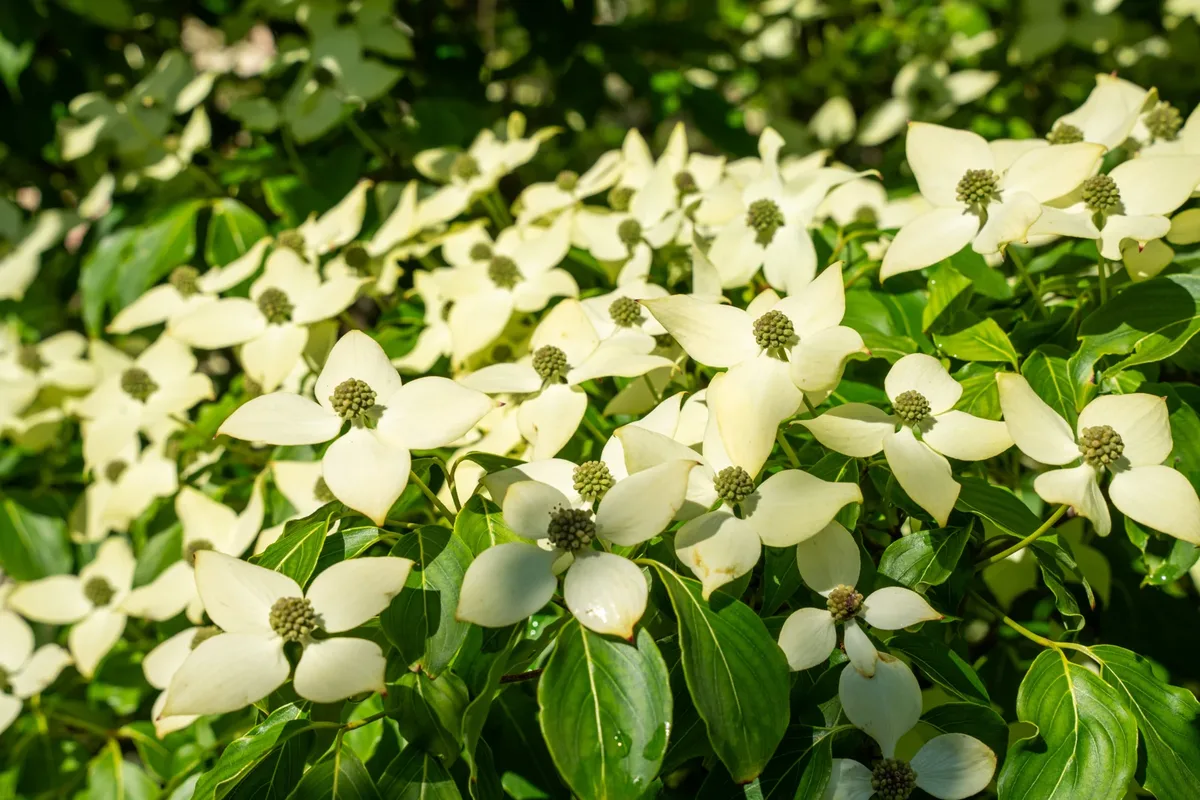
The buds open into clusters of white flowers just as the bronze-tinted leaves emerge. The contrast is delicate and less heavy than that of densely flowering ornamental cherries.
How long it lasts depends on the weather. Rain and heat alter the period, and the amount of flower varies with aspect, pruning and the condition of the plant.
After flowering, the crown turns green. The tree does not disappear visually; it keeps a fine texture that lets filtered light through.
Fruit
The fruits start pale and darken as they ripen. They are eaten by birds and can add value to gardens designed with biodiversity in mind.
They can also drop onto paving. Next to very formal areas, entrances or pale surfaces, this trait should be planned for.
The ornamental aim should not depend on the fruit staying for long, because wildlife can strip it quickly.
Autumn colour
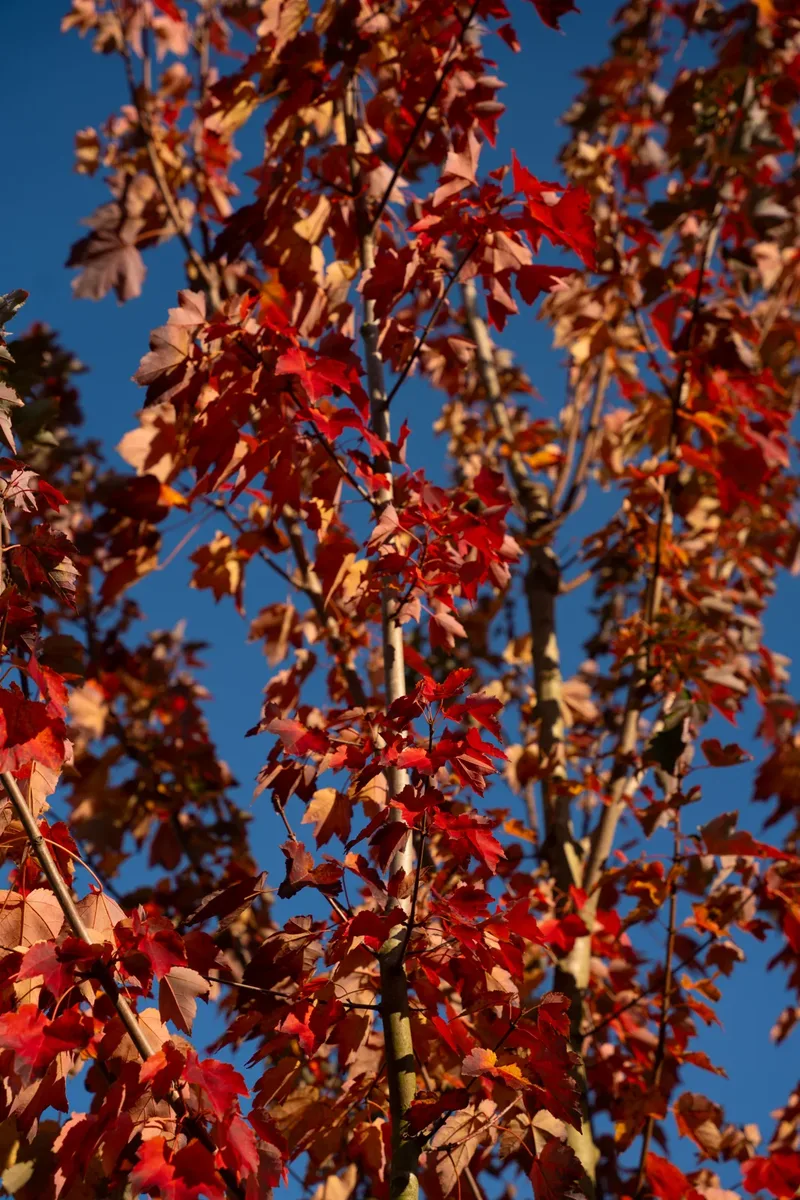
In favourable conditions, the leaf goes through a sequence of warm tones. The intensity is not the same every year.
Sun, temperatures and available water influence the effect. A plant under water stress may scorch or drop its leaves before the colour changes.
The combination of flower, fruit and autumn colour extends the season of interest, but no single moment should be promised as an exact image.
Form and habit
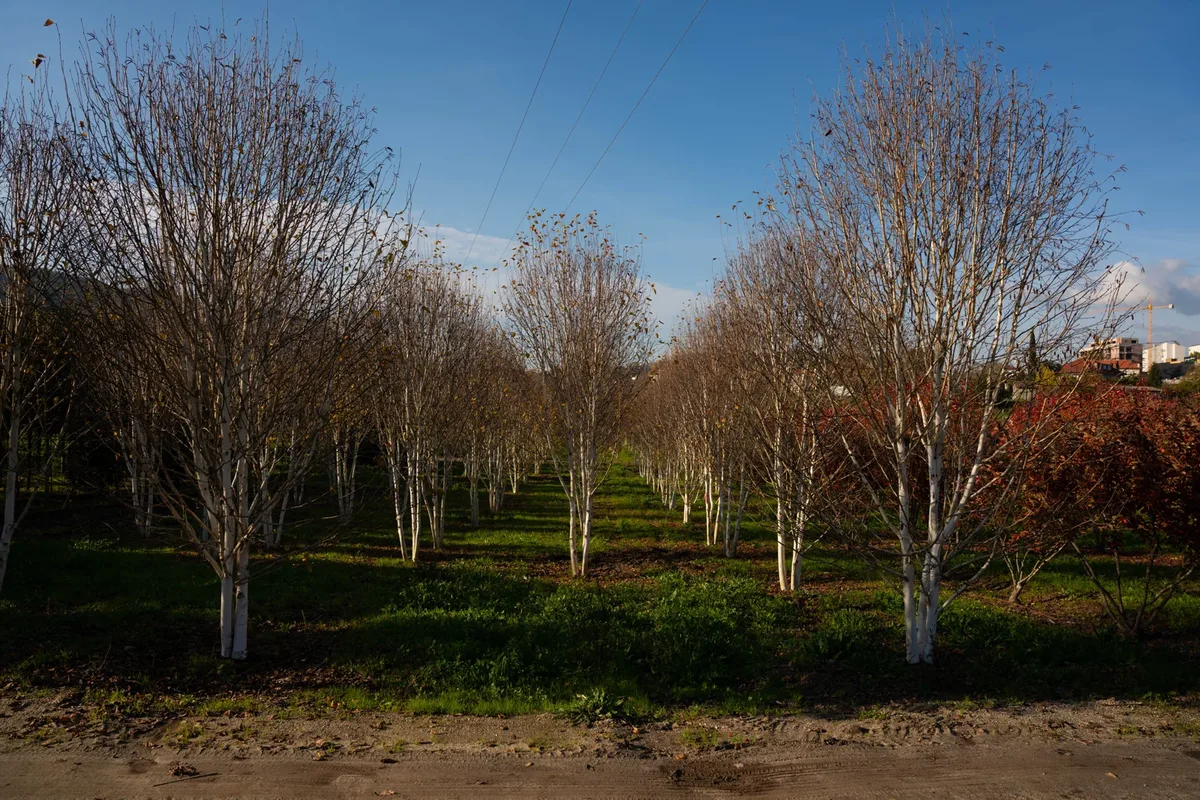
The species is often grown as a multi-stem, which emphasises its branching from the base. It can also be trained as a small standard tree.
The crown tends to open out and keep an informal look. It is not the best choice for a rigid geometry or for a space where the aim is to clip it regularly into a sphere.
In a small garden, the mature spread should still be allowed for. The fact that the tree is classed as small does not mean it will fit beside any path or wall.
Soil
It prefers soil with organic matter, steady moisture and drainage. It adapts to different textures as long as the roots have oxygen and do not keep drying out.
The RHS lists the species among plants able to grow in wet soils, but that should not be read as tolerance of permanent waterlogging.
On sandy or very exposed ground, an organic mulch and watering during establishment help to keep the crown in good condition.
Aspect
Sun or partial shade are both possible. With more light, flowering and autumn colour tend to be more expressive, provided there is water.
In deep shade, the crown can open up and reach for the light. Near larger trees, there should be enough distance for it not to be completely dominated.
Heat reflected from walls and paving increases the need for watering.
Use in the garden
It works as a free-standing specimen, in loose groups or as part of a wide border. Its scale means it can be brought close to seating areas without creating too heavy a mass.
It can make the transition between tall trees and shrubs. In a naturalistic garden, it sits well with grasses, perennials and evergreens of denser texture.
Groups have more impact in spring and autumn, but they should keep enough distance for each crown to develop.
Planting and aftercare
The root collar sits at ground level and the soil is prepared beyond the rootball. The first watering should soak in deeply.
In its first summer, the tree may show dry leaf margins if the roots are still confined. Before watering more often, check the drainage.
Covering the soil reduces evaporation and competition from lawn around the base.
Pruning
Pruning is light. Dead branches, crossing branches and stems that compromise the form are removed.
On multi-stems, new basal shoots may appear. Whether to keep or remove them depends on the volume you want, but the decision should be consistent.
Regular cuts to contain the spread remove the fine branching that characterises the species. When there is not enough room, it is better to choose another plant.
Amelanchier lamarckii offers several moments without dominating the garden. Its quality lies precisely in that changing and relatively light presence.
Related content
Sources and supporting references
- Royal Horticultural Society — Amelanchier lamarckii plant profile.
- Plants of the World Online, Royal Botanic Gardens, Kew.
- Trees and Shrubs Online, International Dendrology Society.
Tags