Pyrus calleryana ‘Chanticleer’ has an initially narrow crown, white blossom and autumn colour. Find out about its size and care.
Pyrus calleryana ‘Chanticleer’ is an ornamental pear with an initially narrow crown, white blossom in spring and foliage that can turn red, purple and orange in autumn.
Its upright shape has made the cultivar common in streets and in spaces where width is restricted. The tree does not, however, stay as narrow as a post. The RHS gives an ultimate height of over twelve metres and a spread of four to eight metres. The space it will need in future should be allowed for.
Crown and growth
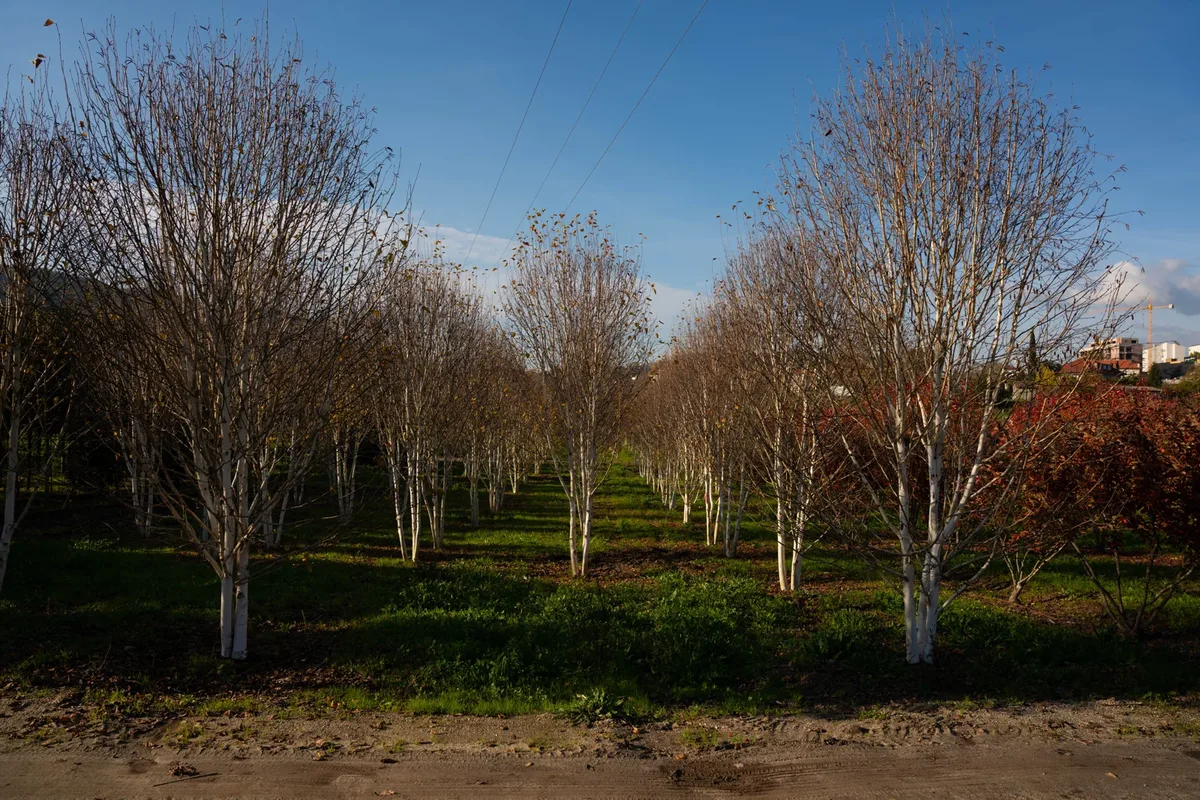
Young trees have a conical or pyramidal shape, with ascending branches. With maturity, the crown fills out and opens.
This development makes it possible to create avenue plantings that read evenly, provided crown height and structure are kept under review.
Next to façades, the distance should allow for the mature spread. Repeated pruning to keep the tree very narrow reduces its quality and provokes regrowth.
Flowering
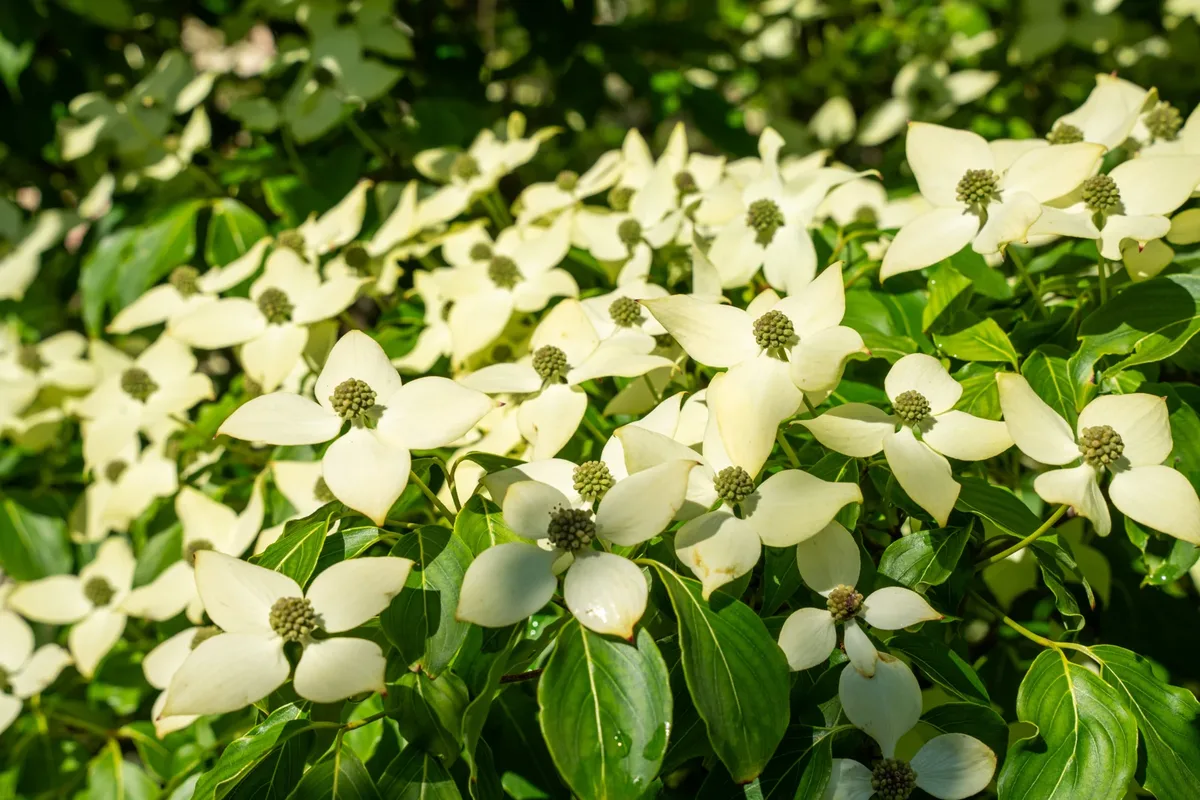
The white flowers appear in clusters in spring, before or with the leaves. The display is generous and conspicuous, but short-lived.
Rain, wind and heat shift the timing. Flowering should not be described with a fixed date.
The scent is perceived differently from person to person and should be considered in plantings very close to places where people sit or linger.
After the flowers come small, brown fruits of no value as food. The quantity varies, and the fruits may persist or drop.
Leaf and autumn
The leaf is dark green and glossy through the season.
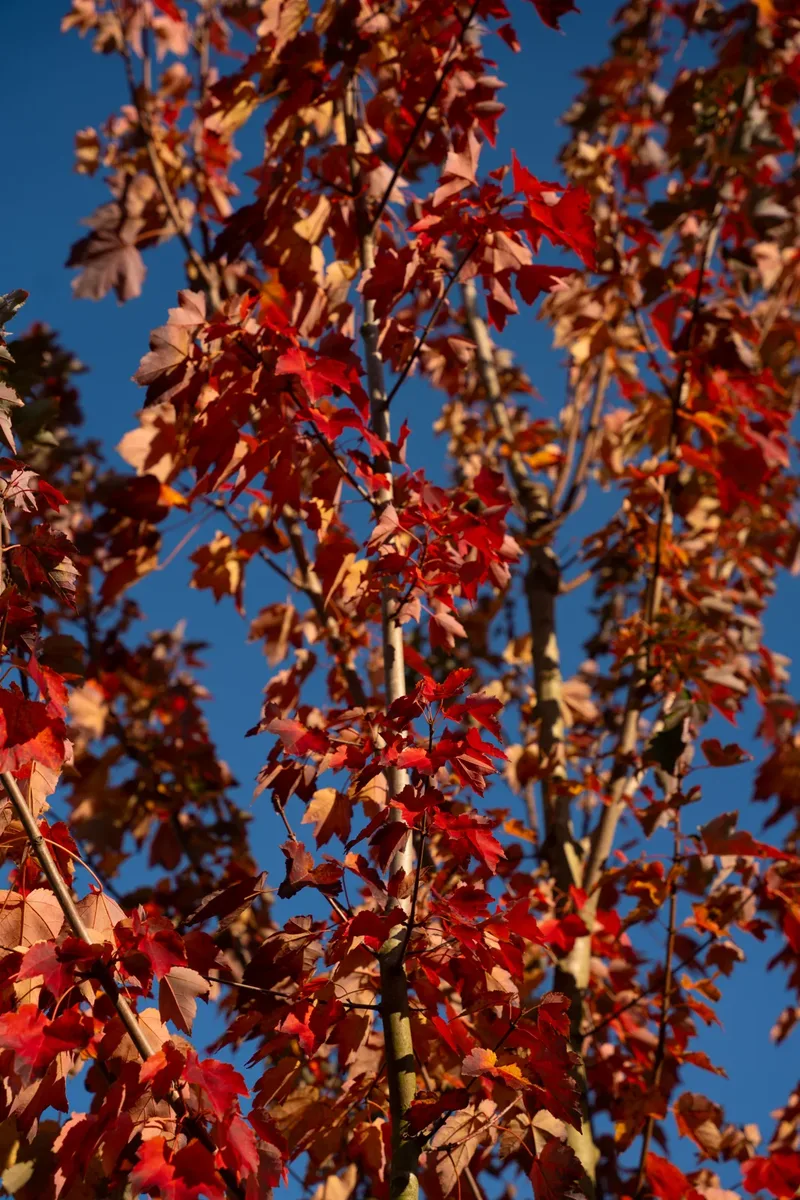
The colour change can come late, especially in mild climates. From observation, the cultivar tends to hold its leaves longer than a number of other deciduous trees.
This late leaf retention should be presented as behaviour that depends on climate, water and the condition of the tree, not as a yearly guarantee.
A prolonged drought can cause early leaf fall and wipe out the effect.
Soil
The cultivar adapts to a range of textures and pH values, provided the soil is fertile and well drained.
This tolerance partly explains its use in towns. It does not mean it will grow well in a minimal soil volume or in a compacted layer.
The rooting area should allow the roots to spread, and water needs to soak in and drain away. In heavy soils, an isolated planting hole can collect water.
Sun and exposure
Full sun favours flowering and a compact crown. The tree tolerates exposed positions, but large, newly planted specimens need suitable staking.
Urban heat and dry spells are better tolerated after establishment. In the first few years, deep watering remains essential.
Structure
Formative pruning should watch for competing branches and tight unions. An upright crown can crowd several leaders close together, and these need selecting while they are young.
In avenue plantings, the clear stem height should suit the traffic passing beneath. The crown is lifted progressively, not through heavy removal on planting day.
Once the structure is established, pruning is limited to corrections and safety.
Use
‘Chanticleer’ suits streets, entrances, car parks and gardens where an upright tree with several seasons of interest is wanted.
The shape works well in repetition. The batch should be selected by girth size, crown height and volume, without demanding completely identical trees.
In a small garden, the mature spread and height can outgrow the space. Its narrow appearance at the nursery should not hide its eventual size.
Diversity
Overuse of a single cultivar creates vulnerability and makes tree planting uniform.
Even where ‘Chanticleer’ performs well in a given street, it is wise to spread species and families across the project or the town.
Coherence can be kept through stretches and shapes, without depending on a monoculture.
Behaviour outside its native range
Pyrus calleryana behaves invasively in parts of North America, where different cultivars cross and give rise to fertile populations.
That does not automatically mean the same will happen in Portugal, but it justifies watchfulness and caution, especially near natural areas. The decision should take account of regional information and of how things develop.
Planting and watering
The rootball is set with the root collar at the surface. The soil should be prepared beyond the planting hole and connected to the surrounding soil volume.
The first watering settles the soil and wets the roots. In the first and second summers, moisture is checked at depth.
The staking is inspected, and removed once the tree is stable.
Selection
The cultivar should be identified by its label and its history. An ornamental pear with no confirmed name may have a much broader shape or a different structure.
At the nursery, look at the leader, the branch unions and the crown height. With batches, the specimens are allocated to their positions before final planting.
Pyrus calleryana ‘Chanticleer’ offers a useful shape for urban planting, but it should be chosen as a medium to large tree and not as a permanent solution for very small spaces.
Related content
Sources and supporting references
- Royal Horticultural Society — plant profile for Pyrus calleryana ‘Chanticleer’.
- Plants of the World Online, Royal Botanic Gardens, Kew.
- EPPO and regional literature on the behaviour of Pyrus calleryana outside its native range.
- Diaplant’s internal record of late leaf retention, subject to each year’s conditions.
Tags