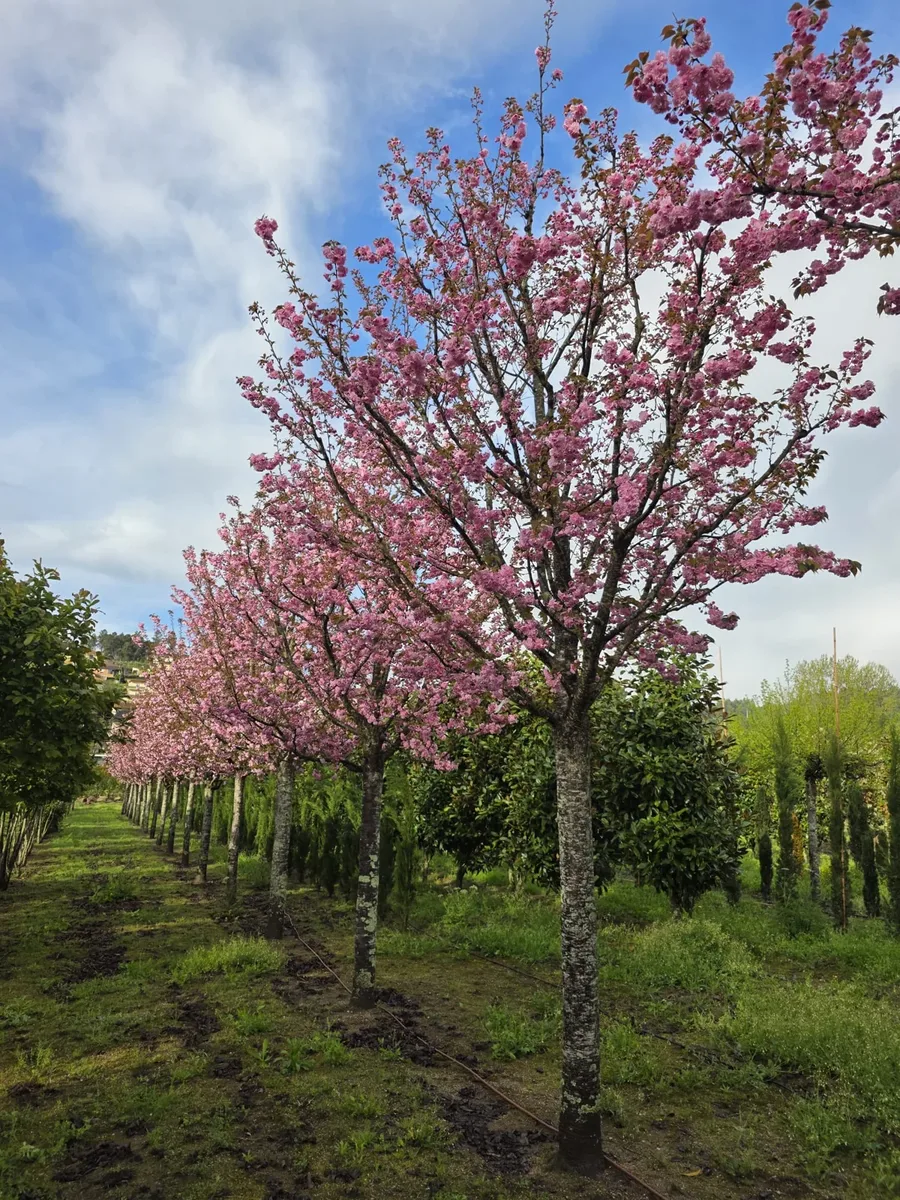
Prunus serrulata 'Kanzan' in blossom, Diaplant nursery.
Prunus ‘Kanzan’ offers intense pink blossom and a crown that opens with age. Find out what space, soil and maintenance it needs.
Prunus ‘Kanzan’ is one of the most recognisable pink-flowered ornamental cherries. It is still listed in many catalogues as Prunus serrulata ‘Kanzan’, although the RHS currently uses Prunus ‘Kanzan’ and gives other historical names as synonyms.
The tree flowers heavily in spring and develops a crown that, more upright at first, opens and broadens with age. This change should be allowed for in the design. A young cherry fits into spaces where the mature tree would already depend on frequent pruning.
Flowering
The flowers are double, pink and carried in dense clusters. They appear with the young leaves and create a concentrated effect over a relatively short period.
How long it lasts depends on the weather. Rain, wind or high temperatures can speed up petal fall. It is not possible to guarantee an exact week or the same intensity every year.
The flower should be set within a wider calendar. After spring, the tree stays in the garden with green leaf and, in favourable conditions, autumn tints.
Foliage and seasonality
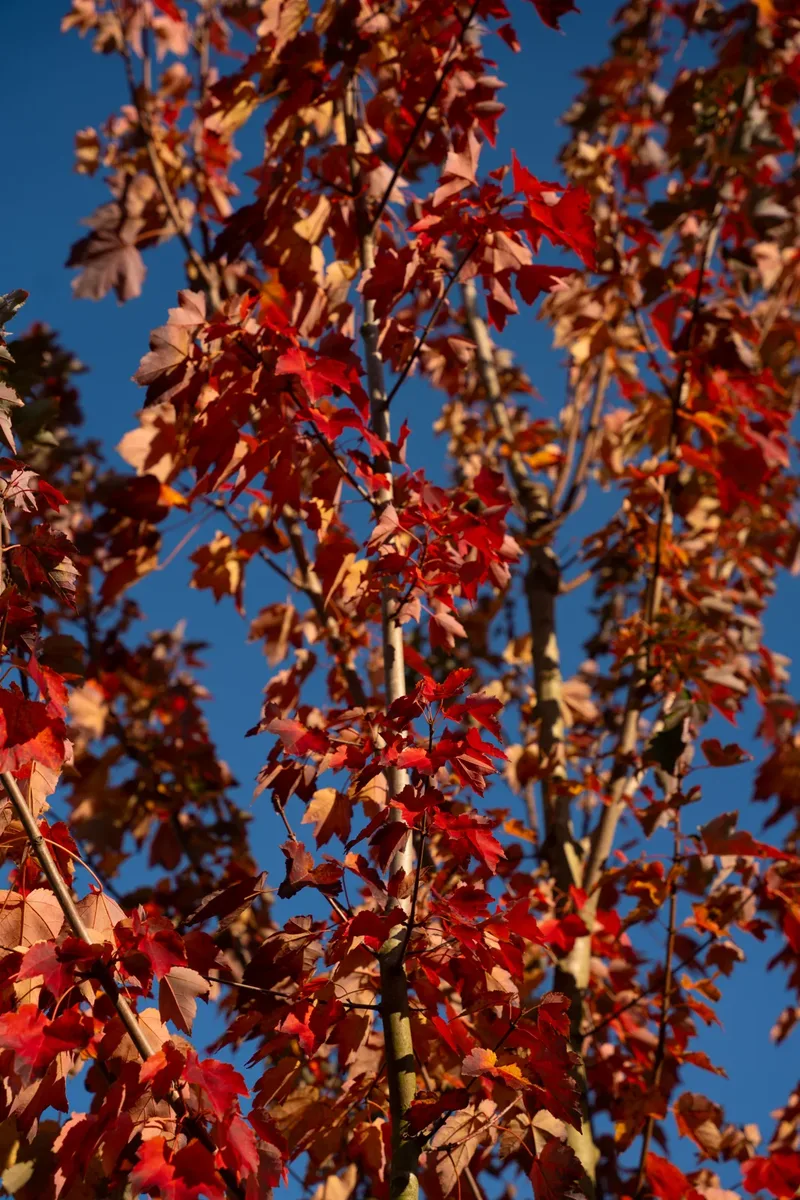
The young leaves can show bronze tones before turning green. In autumn, yellows, oranges and sometimes reds appear.
The colour varies with aspect, water and temperature. A tree that goes into late summer under stress can drop its leaves before developing the effect.
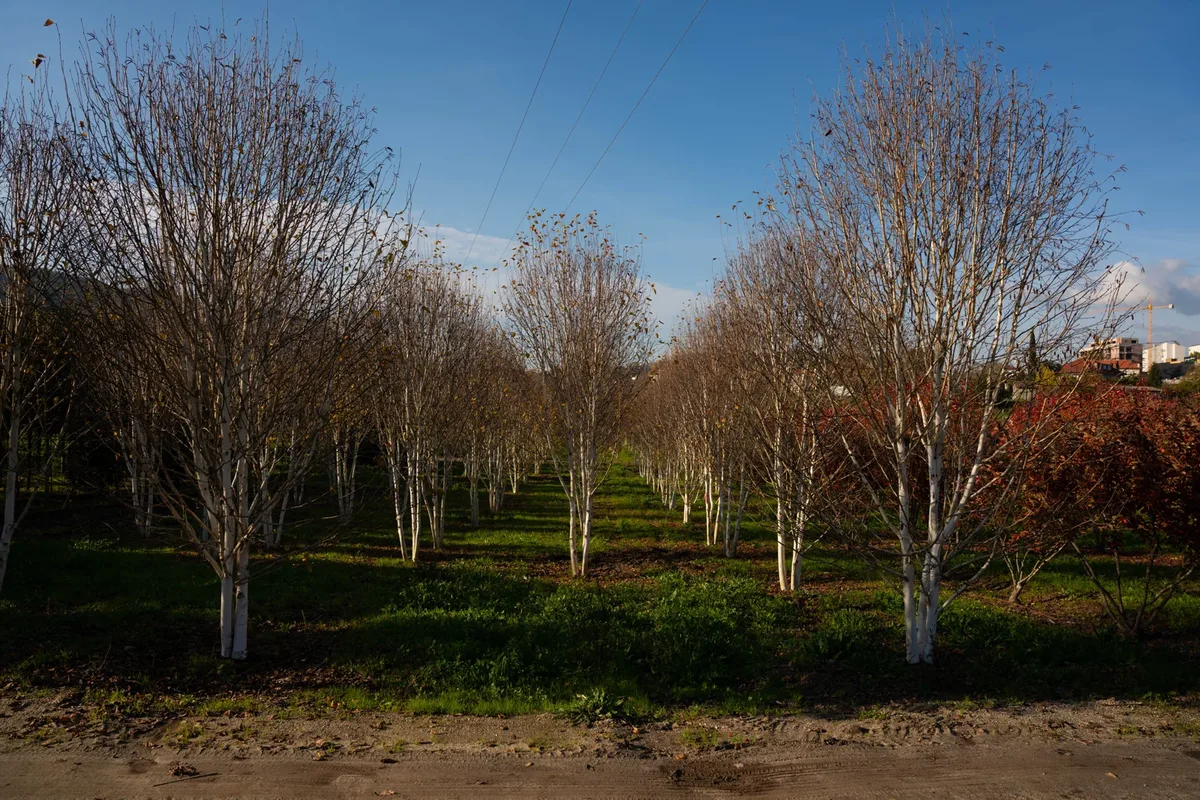
In winter, the leafless crown reveals the structure and shows how well the tree has been formed.
Crown development
The young crown tends to grow more upright, with ascending main branches. As it matures, it opens and can far exceed the spread perceived at the time of purchase.
This development makes the cultivar suitable for avenues, parks, entrances and gardens with space. Next to façades or narrow paths, the future clearance should be checked.
The tree can be produced with different clear stem heights. In avenue planting, this measurement is as important as the girth size.
Grafting
‘Kanzan’ is normally propagated by grafting. The union may be near the base or at a set height, depending on how the tree is produced.
The union should be sound and should not be buried. The root collar remains the reference for planting.
Shoots below the union belong to the rootstock and need to be removed so that they do not compete with the cultivar.
Soil and water
The cherry prefers fertile, moist, well-drained soil. It tolerates different textures, but reacts badly to standing water and compaction.
The soil should be prepared to allow the roots to extend beyond the rootball. An isolated planting hole in dense clay can collect water and cause decline.
During the first years, deep watering is essential. Once established, the tree tolerates drier spells, but the quality of the crown and of the flowering benefits from regular moisture.
Exposure
Sun favours flowering and a more compact crown. In shade, the tree tends to grow towards the light and may flower less.
Strong wind shortens the life of the flowers and increases water loss. In very exposed areas, staking and early aftercare become more important, but they are no substitute for a suitable position.
Use in the project
In avenues, repetition creates a striking seasonal moment. The batch needs to show compatible crown heights and volumes so that the group also works outside the flowering season.
In a garden, it can be used on its own or in small groups. The blossom reads particularly well against evergreen backdrops or plain façades.
Petal and leaf fall is part of the cycle. Next to pools, gutters and very formal paving, maintenance should be taken into account.
Structure and pruning
Formative pruning starts early. Crossing branches, competing leaders and weak unions are dealt with while the cuts are small.
Hard pruning reduces flowering and provokes vigorous regrowth. The tree should not be planted in too small a space in the expectation of being kept small.
Cuts on Prunus need the right timing and execution to reduce plant health risks. Intervention should be technically justified, not an annual routine.
Choosing the specimen
At the nursery, it is worth looking at the relationship between stem and crown, the way the crown will open and the graft union.
In a batch, the trees are compared without demanding absolute uniformity. For a free-standing specimen, you can choose a more expressive crown and turn the more open side towards the garden.
Prunus ‘Kanzan’ offers a very strong spring effect. The quality of the result, however, depends above all on allowing the crown to mature without being continually corrected.
Related content
Sources and supporting references
- Royal Horticultural Society — Prunus ‘Kanzan’ plant profile and associated synonyms.
- Plants of the World Online, Royal Botanic Gardens, Kew — genus Prunus.
- European Arboricultural Standards. European Tree Pruning Standard.
Tags