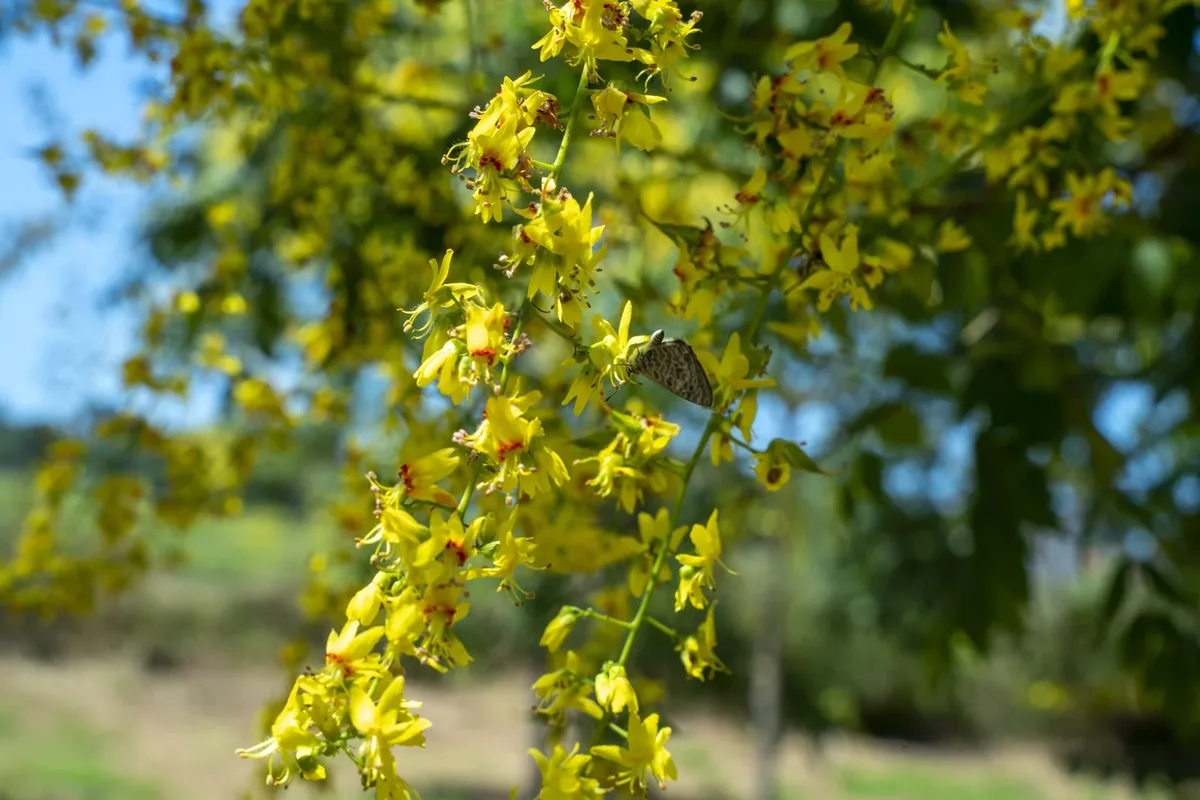
Koelreuteria paniculata in flower, Diaplant nursery.
Koelreuteria paniculata combines yellow summer flowers with ornamental capsules. Find out what space, soil and maintenance it needs.
Koelreuteria paniculata is a medium-sized deciduous tree, with yellow flowers in summer and inflated capsules that carry the interest through to autumn. It adapts to heat and to a range of well-drained soils, which explains its use in gardens and urban spaces.
The crown opens out considerably with age and can exceed the scale suggested by a young tree. The RHS gives a potential height of between eight and twelve metres and a spread that can exceed eight metres. These figures depend on conditions, but they show that this is not a small tree to suit any pavement.
Leaf, flower and fruit
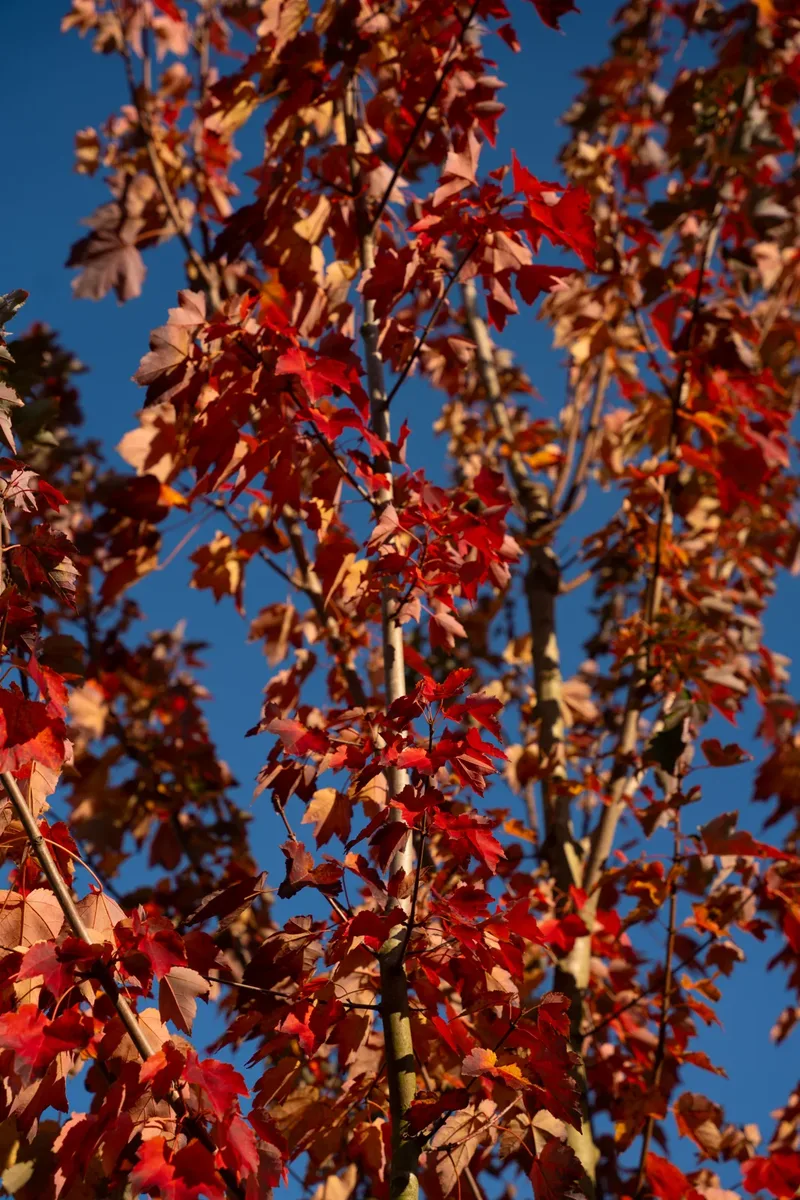
The leaf is compound and gives a light texture. New shoots may be bronze-tinted, turning green during the season and yellow in autumn.
The flowers appear in large yellow panicles in mid or late summer. The effect is less compact than a crown covered in large flowers, but it shows up through the extent of the inflorescences.
Capsules then form that look like small balloons, green or pinkish at first and later brown. They stay in the crown and give a second ornamental phase.
The amount of flower and fruit varies between years and between specimens.
Crown and structure
The tree tends to develop a broad, branching and somewhat irregular crown. This form works well in informal gardens, parks and spaces where there is room for growth.
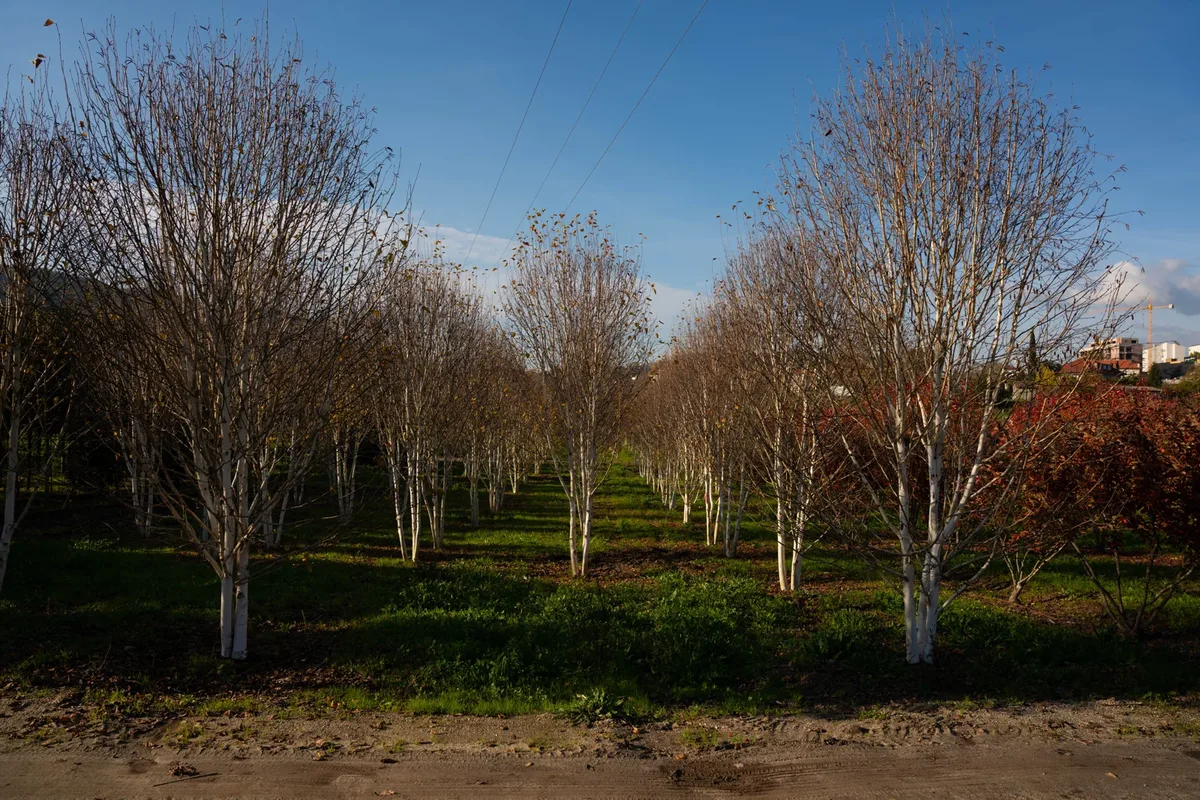
In formal avenue planting, batches should be selected with care. Differences in leader and in spread can become very visible.
Early formative work is important. Competing branches and weak unions are dealt with while the cuts are small. Once established, the crown should not depend on frequent reductions.
Soil
The species adapts to clay, loam, sandy and chalky soils, provided there is drainage. The RHS classes it as drought-resistant once established.
This tolerance does not do away with watering in the first and second year. A mature rootballed tree still has a limited root system and needs water until it occupies the surrounding soil.
Prolonged waterlogging is unfavourable. In compacted ground, a wide area should be prepared and the drainage confirmed.
Sun and climate
Full sun favours flowering and a balanced crown. The species tolerates heat and can work in exposed spaces where cool-climate trees would show greater stress.
Wind should be considered for newly planted specimens and for very dense crowns. Staking stabilises the rootball, but the branch structure needs to be of good quality.
In regions with cold winters, hardiness is generally adequate, although the response depends on provenance and maturity.
Use
The tree works as a free-standing specimen, in groups, in parks, in car parks and in streets with enough space.
Summer flowering adds seasonal interest at a time when few trees are in flower. The capsules hold the interest, but they also fall and can build up on paving.
Near areas with very demanding maintenance, this behaviour should be taken into account. In biodiversity gardens, flowers and structure add value for insects and birds.
Regeneration from seed
The species sets seed and can give rise to self-sown plants in some regions. Its behaviour varies with the climate and with the proximity of natural areas.
Before using it in large numbers, it is worth looking at local experience and monitoring regeneration. Urban tolerance should not be confused with an absence of ecological impact.
On projects close to sensitive habitats, selection calls for greater caution.
Planting
The soil is prepared over a wide area and the root collar set at the surface. The planting hole must not turn into a container within compacted ground.
The first watering wets the whole rootball. An organic mulch reduces evaporation and competition.
The staking system is adjusted to the size of the tree and to its crown. The ties are inspected, and removed once the roots provide stability.
Pruning
Formative pruning defines the leader and the distribution of the branches. In street trees, the crown is raised progressively.
A badly positioned Koelreuteria should not be kept small by annual cutting. The vigorous response produces long branches and a less stable structure.
When it has space, maintenance is light and concentrates on damaged branches and occasional corrections.
The species combines adaptability and seasonal interest, but its mature spread and its fruit production should be part of the decision from the outset.
Related content
Sources and supporting references
- Royal Horticultural Society — entry for Koelreuteria paniculata.
- Plants of the World Online, Royal Botanic Gardens, Kew.
- EPPO Global Database and regional sources, for assessing behaviour outside the native range.
Tags