Tilia tomentosa — one of the species compared in the article.
Immediate shade depends on the real specimen: width, crown density, clear stem height, orientation and the state of the foliage.
Immediate shade depends on the real specimen: width, crown density, clear stem height, orientation and the state of the foliage. A species known for growing fast may give less shade on the day of planting than a well-formed mature tree. This collection compares seven options of large and medium size.
The list lets you compare options, but it is no substitute for a site diagnosis or for choosing the right specimen.
The species in the collection
| Species or cultivar | Role in the composition | Reference conditions | Main limitation |
|---|---|---|---|
| Platanus × hispanica | tree with a large crown and fast shade at urban scale | sun, deep soil and enough water | size, roots, allergies and health limit where it can be used |
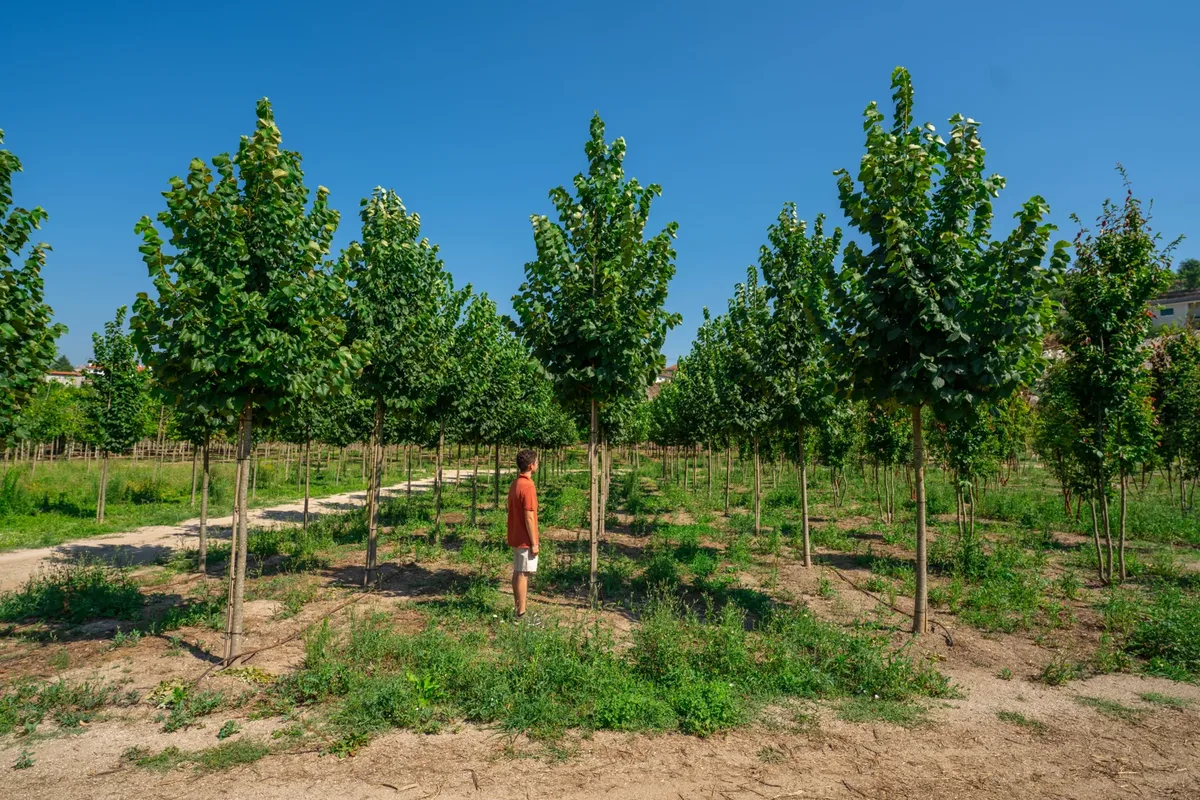
| Tilia tomentosa | lime with a large crown, relatively tolerant of urban heat | sun, deep soil and water during establishment | large size and interaction with paving call for space |
| Tilia cordata | large tree for shade and flower | sun to partial shade, deep, moist soil | sensitive to severe urban drought; honeydew drip can occur |
| Carpinus betulus | deciduous tree with a dense structure that tolerates training | sun to partial shade, moist soil | needs water during establishment and room for the future |
| Acer pseudoplatanus | large tree for shade and scale | sun, deep, moist soils | not a reference choice for extreme heat or small spaces |
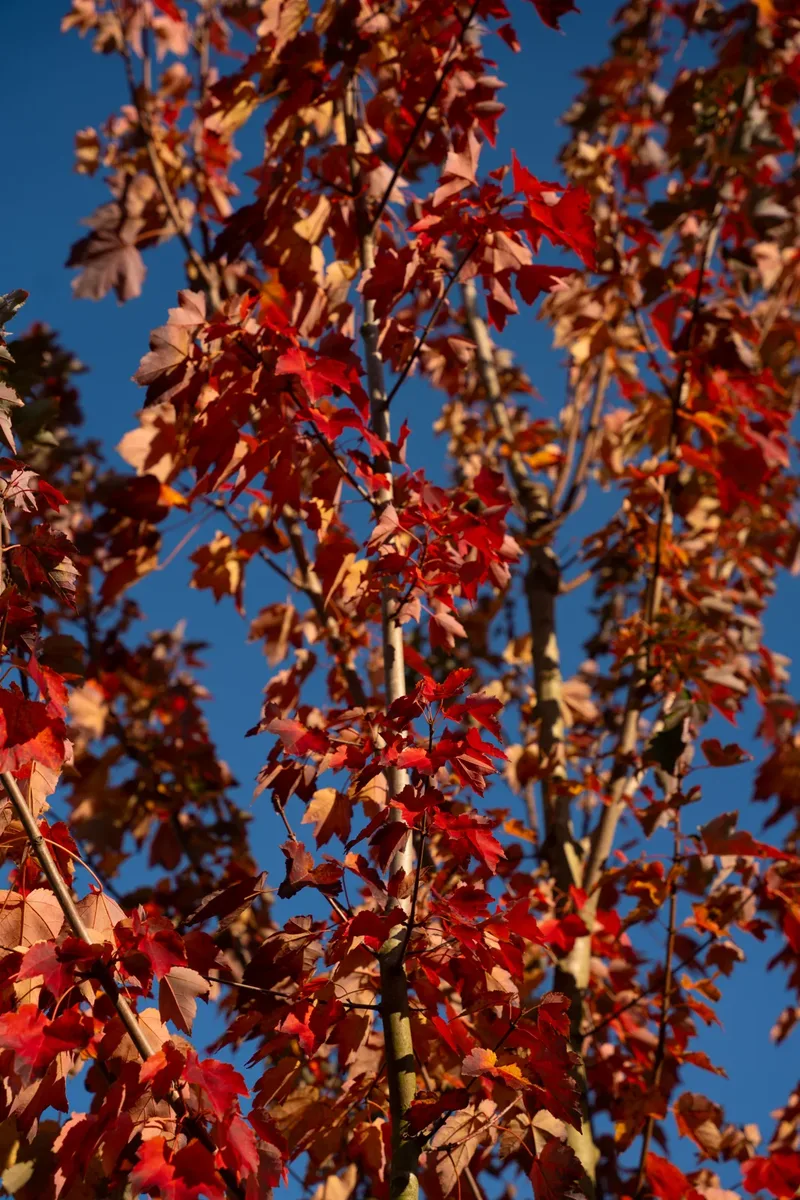
| Liquidambar styraciflua | large tree with strong autumn interest | sun, deep, moist soil | not a general choice for drought; roots and fruit should be considered |
| Liriodendron tulipifera | large-scale tree with a broad crown | sun, deep, moist, fertile soil | unsuitable for small gardens or dry soils |
How to combine them in the project
Platanus, Tilia and Liriodendron create large scale; Carpinus and Acer pseudoplatanus offer structured crowns; Liquidambar adds seasonality. The choice should relate the area of shade to water, soil and future size.
Mapping the shadow cast at midday and in the late afternoon shows where the crown really benefits façades, terraces or seating areas.
Conditions of use
The final choice should confirm the measurements of each specimen, transport access, anchoring, irrigation and rooting volume. Availability should be confirmed for each project.
Selection at Diaplant
At Diaplant, immediate shade is assessed by the real crown area, the condition of the rootball and the feasibility of transport and planting. The initial size calls for a proportionate establishment programme.
Sources
Tags