Diaplant
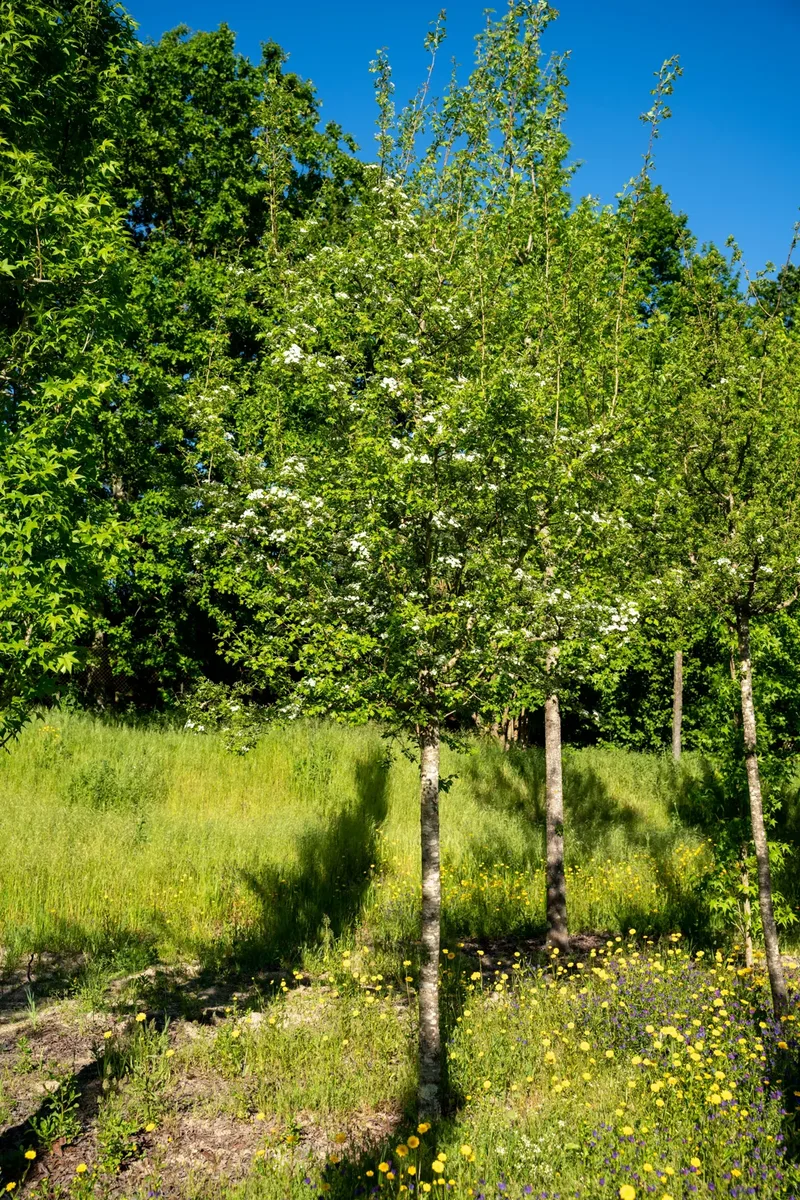
Creating a woodland is not a matter of setting out individual trees at regular intervals. It means building canopy, intermediate species, edge, evergreen cover and the way the light will change.
Creating a woodland is not a matter of setting out individual trees at regular intervals. It means building canopy, intermediate species, edge, evergreen cover and the way the light will change. This selection forms a deciduous woodland with seven species that play complementary roles.
This selection is a starting point. The final choice depends on the conditions of the site, the size you want and the specimens available.
The species in the collection
| Species or cultivar | Role in the composition | Reference conditions | Main limitation |
|---|---|---|---|
| Quercus robur | large native oak of high structural value | sun, deep, moist soil | not suited to severe drought, small tree pits or sites close to buildings |
| Carpinus betulus | deciduous tree with a dense structure that tolerates training | sun to partial shade, moist soil | needs water during establishment and room for the future |
| Acer campestre | tree of intermediate structure, useful in woodland and on its edges | sun to partial shade, a range of soils without prolonged waterlogging | the crown spreads; needs space and plant material of verified origin |
| Tilia cordata | large tree for shade and flower | sun to partial shade, deep, moist soil | sensitive to severe urban drought; honeydew drip can occur |
| Crataegus monogyna | small native tree offering flower, fruit and shelter | sun, a range of well-drained soils | thorns, fruit drop and health should be considered |
| Sorbus aucuparia | small tree with flower, fruit and autumn colour | sun to partial shade, a cool climate and well-drained soil | can suffer from heat and drought in Portugal |
| Ilex aquifolium | native evergreen for understorey, edge and shelter | partial shade, moist, well-drained soil | slow growth, and fruiting depends on sex and pollination |
How to combine them in the project
Quercus robur, Tilia cordata and Carpinus form the main layer. Acer campestre and Sorbus take the intermediate positions. Crataegus works the edge and the glades; Ilex keeps evergreen cover in the understorey.
Planting in groups and irregular repeats creates continuity. Spacings should allow for the mature crown, but the young phase can take a higher density with planned thinning.
Conditions of use
The final choice should confirm water, soil, health and provenance. Conifers should form a collection of their own, because they change the light and the way the woodland works.
Selection at Diaplant
At Diaplant, a woodland is planned by layers and by the way the light changes over the years. Spacings and species are adjusted to avoid a uniform mass that is hard to manage.
Related reading
- [117 — A biodiverse garden takes more than flowers](../03_Biodiversidade_Aplicada/117_um-jardim-biodiverso-nao-se-faz-apenas-com-flores.md)
- [118 — Why vegetation layers matter: trees, shrubs and ground cover as habitat](../03_Biodiversidade_Aplicada/118_porque-os-estratos-vegetais-importam-arvores-arbustos-e-cobertura-como-habitat.md)
- [127 — Native or exotic species? Why the answer should not be binary](../04_Autoctones_Cultivares_Clima/127_especies-autoctones-ou-exoticas-porque-a-resposta-nao-deve-ser-binaria.md)
Sources
- Contrasting effects of tree origin and urbanization on invertebrate abundance and tree phenology. (2021).
- Indigenous plants promote insect biodiversity in urban greenspaces. (2021).
- Site and landscape scale drivers of bird and insect diversity in native and novel forest ecosystems of Central Portugal. (2024).
- Hedgerow structural diversity is key to promoting biodiversity and ecosystem services. (2024).
- Flora-On — Flora de Portugal interativa. Sociedade Portuguesa de Botânica. (2025).
Tags