Diaplant
A biodiverse garden takes more than flowers. It also depends on shelter, water, living soil, breeding sites and continuity between habitats.
A biodiverse garden takes more than flowers. Biodiversity depends on food, shelter, breeding sites, water, living soil, continuity and different layers of vegetation. A massed planting in flower can be valuable, but it is incomplete if it is isolated, subject to intensive tidying and surrounded by surfaces with no habitat.
Thinking in ecological functions
Each element should answer a specific function. Flowers can supply nectar and pollen; leaves feed larvae and other invertebrates; fruits serve some birds; dense hedges create shelter; mature trees offer cavities and structure; soil, leaf litter and decaying wood support less visible organisms.
Saying that a plant ‘attracts biodiversity’ is too vague. It is better to name the group and the mechanism, making clear when the relationship has been observed and when it is only probable.
Structure can matter more than numbers
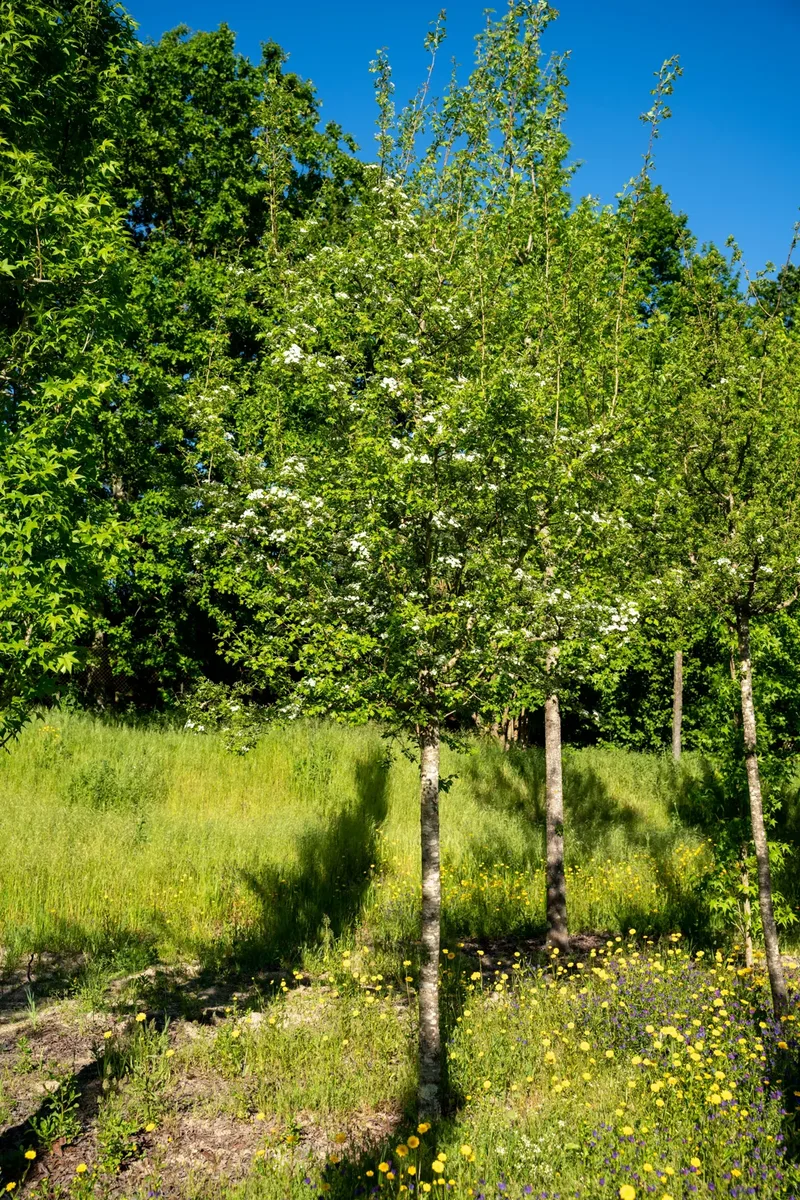
A composition with trees, shrubs and ground cover creates more niches than the same area occupied by free-standing trees over lawn. Vertical diversity, density and continuity influence insects and birds, although the result also depends on the surrounding landscape.
That does not mean filling every space. Glades, edges, open areas and patches of controlled bare soil can also have a function. The design should create contrast and connection, not just plant volume.
Maintenance as part of the habitat
Cutting everything at once, hard pruning, removing every leaf and night-time lighting can wipe out resources created by the planting. Management should be selective: keeping refuges, alternating operations and accepting some organic matter in areas where it fits.
Biodiversity does not have to conflict with a well-kept appearance. Defined edges, clean paths and areas managed in different ways show intent without making the whole garden uniform.
What compromises the result
The most common mistakes are judging biodiversity by the number of flowers alone; planting islands with no connectivity; clearing away all organic matter; and using broad-spectrum pesticides as a preventive measure.
Applying it to the project
At Diaplant, we assess the garden by specific functions: food, shelter, water, soil, connectivity and maintenance. This reading can be applied to new projects and to established spaces alike.
A biodiverse garden is a system. The plants are the foundation, but the result depends on the relationship between structure, calendar, maintenance and context.
Sources
Tags