Diaplant
Designing for twelve months means spreading interest, structure and resources through the year, instead of concentrating the selection on spring flowering.
Designing for twelve months means spreading interest, structure and resources through the year, instead of concentrating the selection on spring flowering. A seasonally balanced garden combines evergreens, deciduous plants, bark, fruit, seeds, grasses, early flowers and species that extend summer and autumn.
The calendar starts with structure
Trees and large shrubs define shade, scale and silhouette. Evergreens hold mass in winter; deciduous plants let light in and reveal trunks and branching. The seasonal plan should start from this lasting structure and only then add moments of colour.
A composition that depends on flower alone can be left empty for much of the year. Foliage, bark, fruit, growth habit and dried seed heads extend the interest and reduce the pressure for every plant to be in flower.
Working with sequences, not peaks
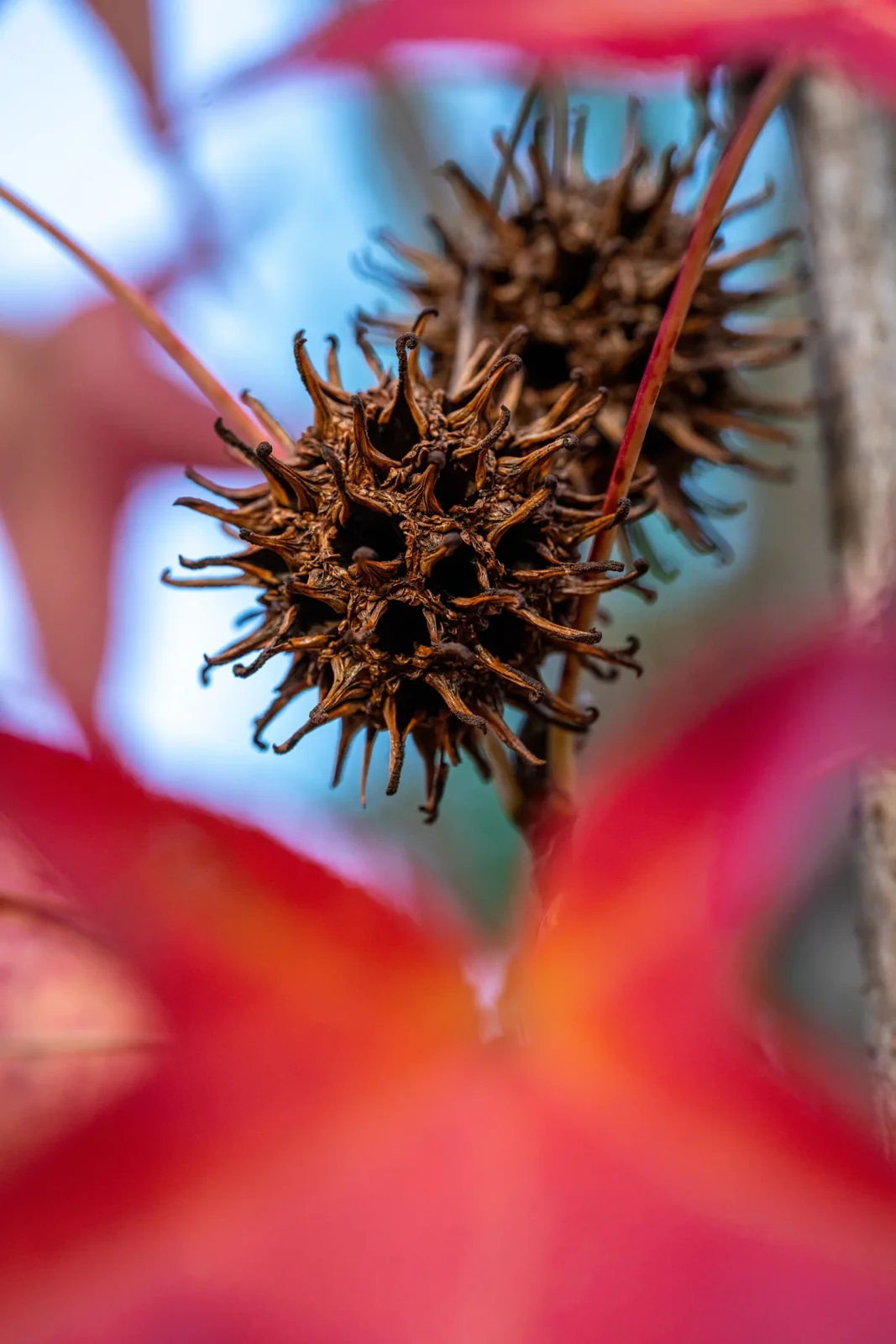
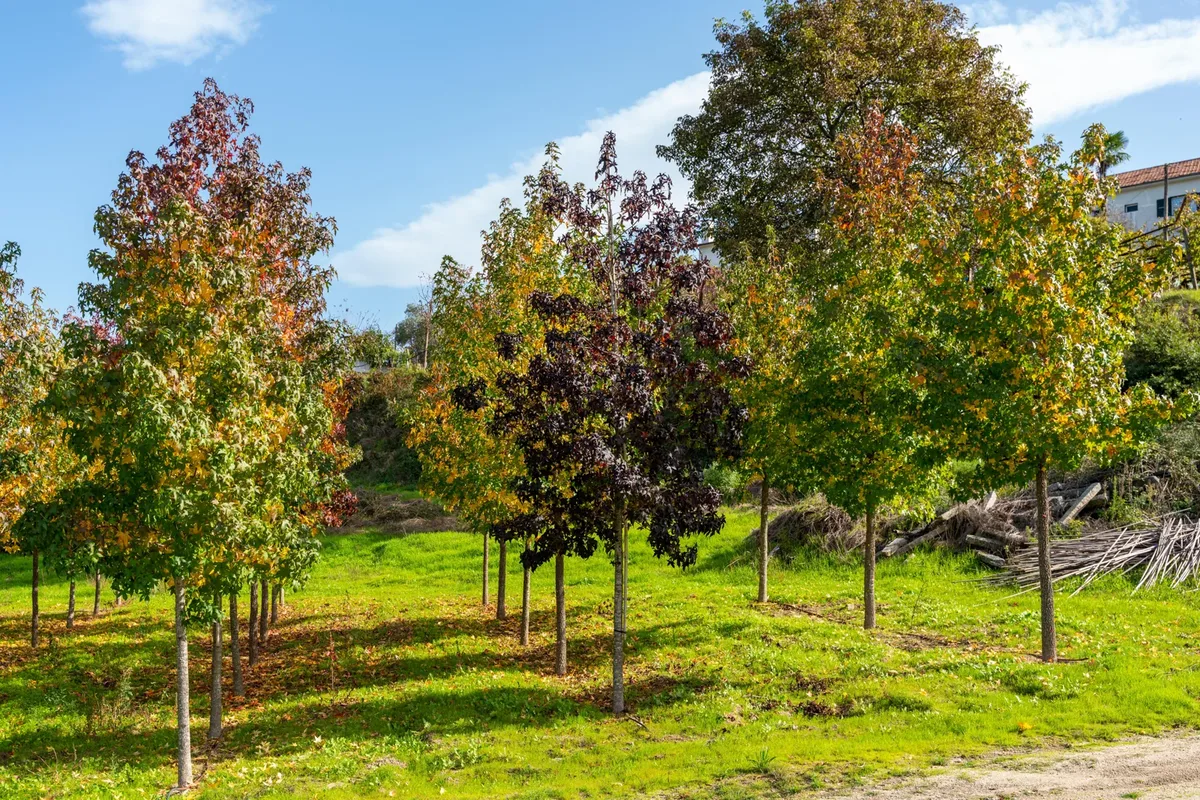
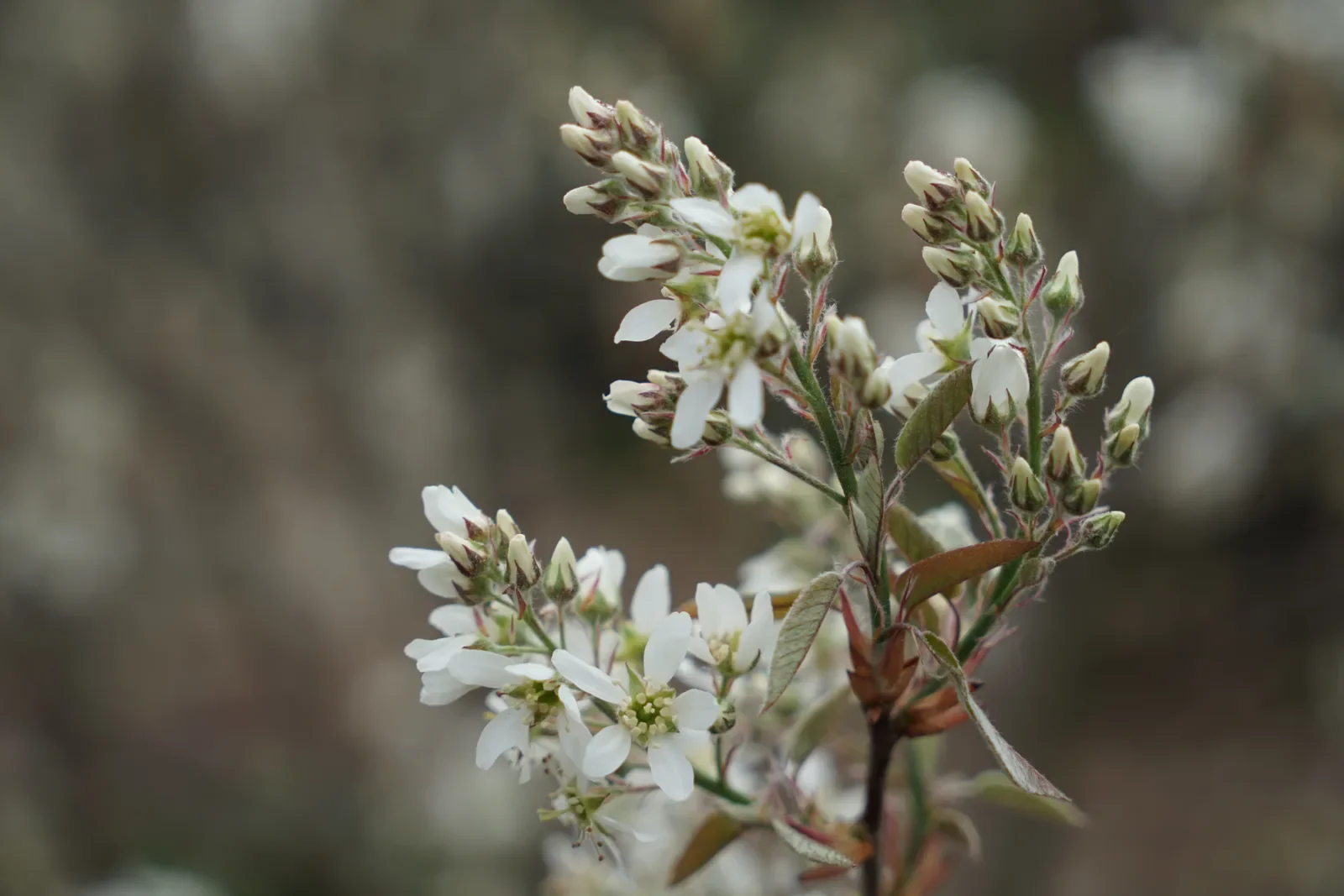
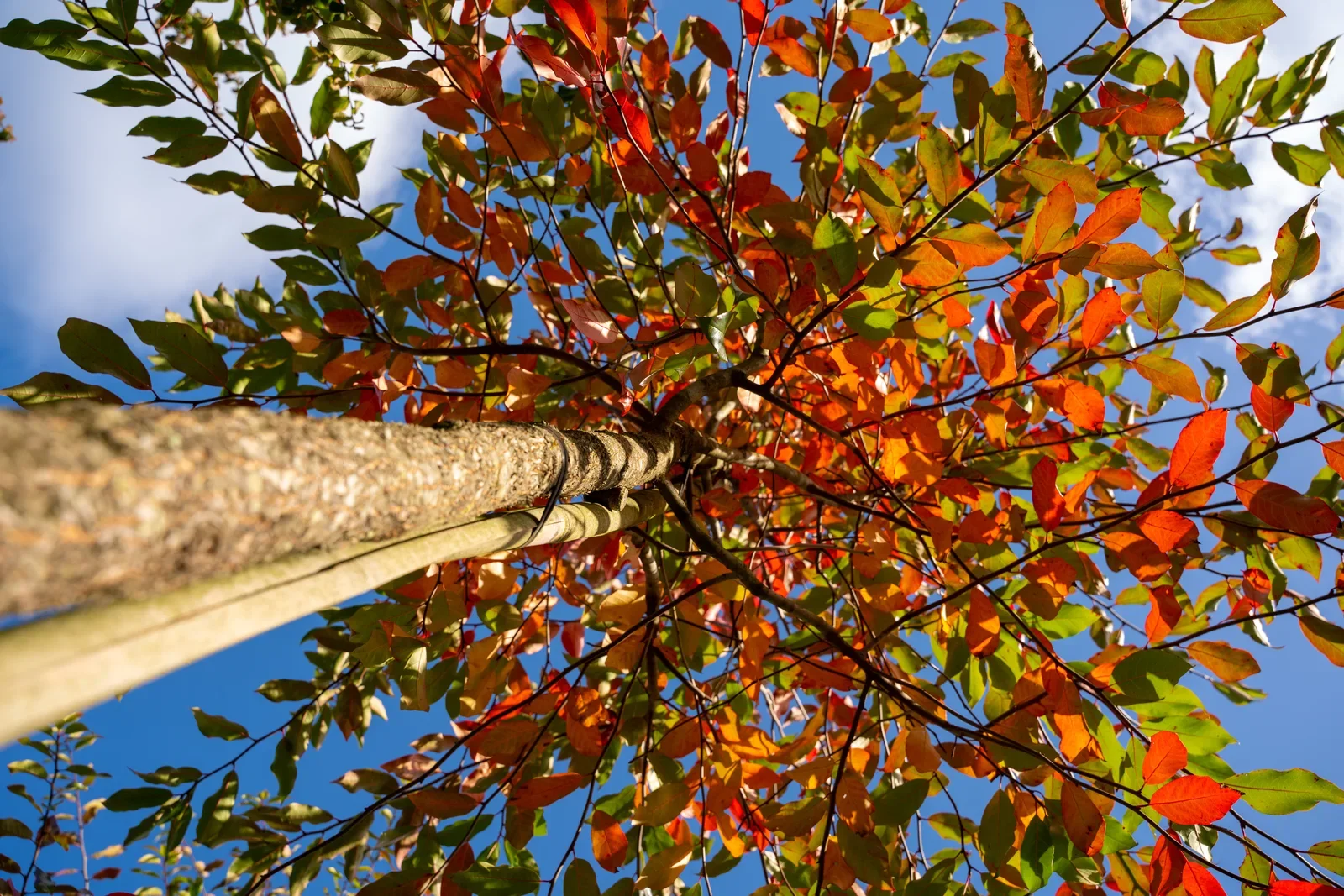
A simultaneous peak creates impact, but it does not last. A sequence uses species that come to the fore at different times. Cornus mas and some magnolias can open the calendar; Amelanchier and Prunus mark the spring; Koelreuteria and Lagerstroemia extend the summer; Parrotia, Liquidambar and Ginkgo work the autumn; bark, evergreens and fruit sustain the winter.
These references should be confirmed locally. Phenology varies with cultivar, aspect, water, accumulated chill and microclimate. The calendar is a tool for design and also for continuous observation.
Making winter a season to design for
In winter, the architecture of the plant is exposed. Multiple trunks, peeling bark, coloured stems, silhouetted crowns and persistent seeds carry more weight. Lighting can reinforce these forms, provided it is restrained and does not run unnecessarily long into the night.
Photographing the same specimens at four moments of the year is more useful than gathering isolated images of plants at their peak. That record helps to select realistically and to explain to the client that change is part of the garden.
Before going ahead
The most common mistakes are choosing every species from its spring photograph; confusing evergreen foliage with permanent interest; failing to allow for the dormant period of perennials; and ignoring phenological differences between north and south.
Applying it to the project
At Diaplant, plant selection is organised in a calendar that cross-references flower, fruit, leaf, bark and structure. The aim is to prevent all the garden’s interest from being concentrated in a few weeks.
A garden for twelve months is not always at its peak. It has rhythms, pauses and recognisable changes. The design should give quality to each of those phases.
Sources
- Trillo, A. et al. Year-round pollinator visitation of ornamental plants in Mediterranean urban parks. (2026).
- Vitt, P. et al. Temporal variation in the roles of exotic and native plant species in plant–pollinator networks. (2020).
- Flora-On — Flora de Portugal interativa. Sociedade Portuguesa de Botânica. (2025).
Tags