Diaplant
Autumn is more than the leaves changing colour. Fruit, seed, bark, branches, evergreens and the very transparency of the crowns can extend the garden’s interest.
Autumn is more than the leaves changing colour. Fruit, seed, bark, branches, evergreens and the very transparency of the crowns can extend the garden’s interest and provide food or shelter. A balanced design combines these elements without depending on a single week of colour.
Colour, duration and context
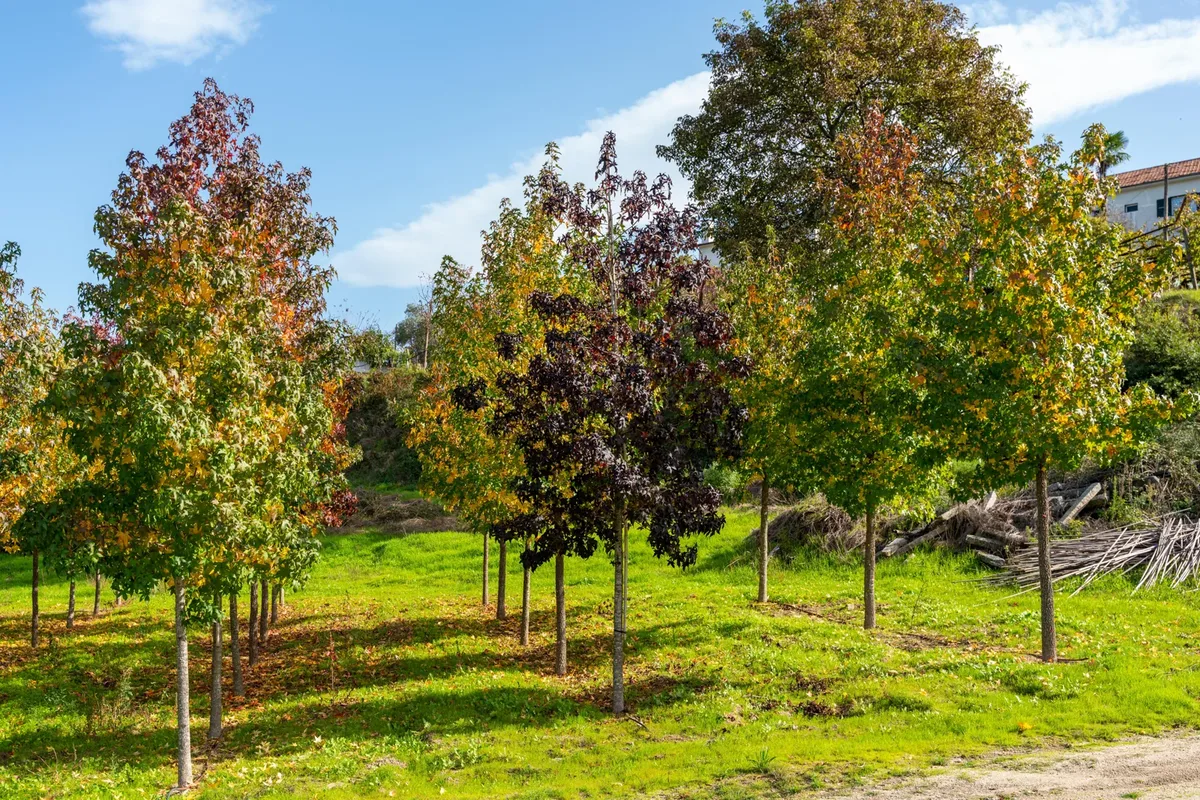
The intensity of autumn colour varies with cultivar, light, temperature, water and soil. Ginkgo, Liquidambar, Parrotia, Nyssa and some Acer can create strong sequences, but no calendar is entirely stable. The selection should compare duration and scale, not just the most vivid photograph.
A large tree changes the whole landscape; a small specimen works as a detail. The effect depends on its position in relation to the house, the path and the late-afternoon light.
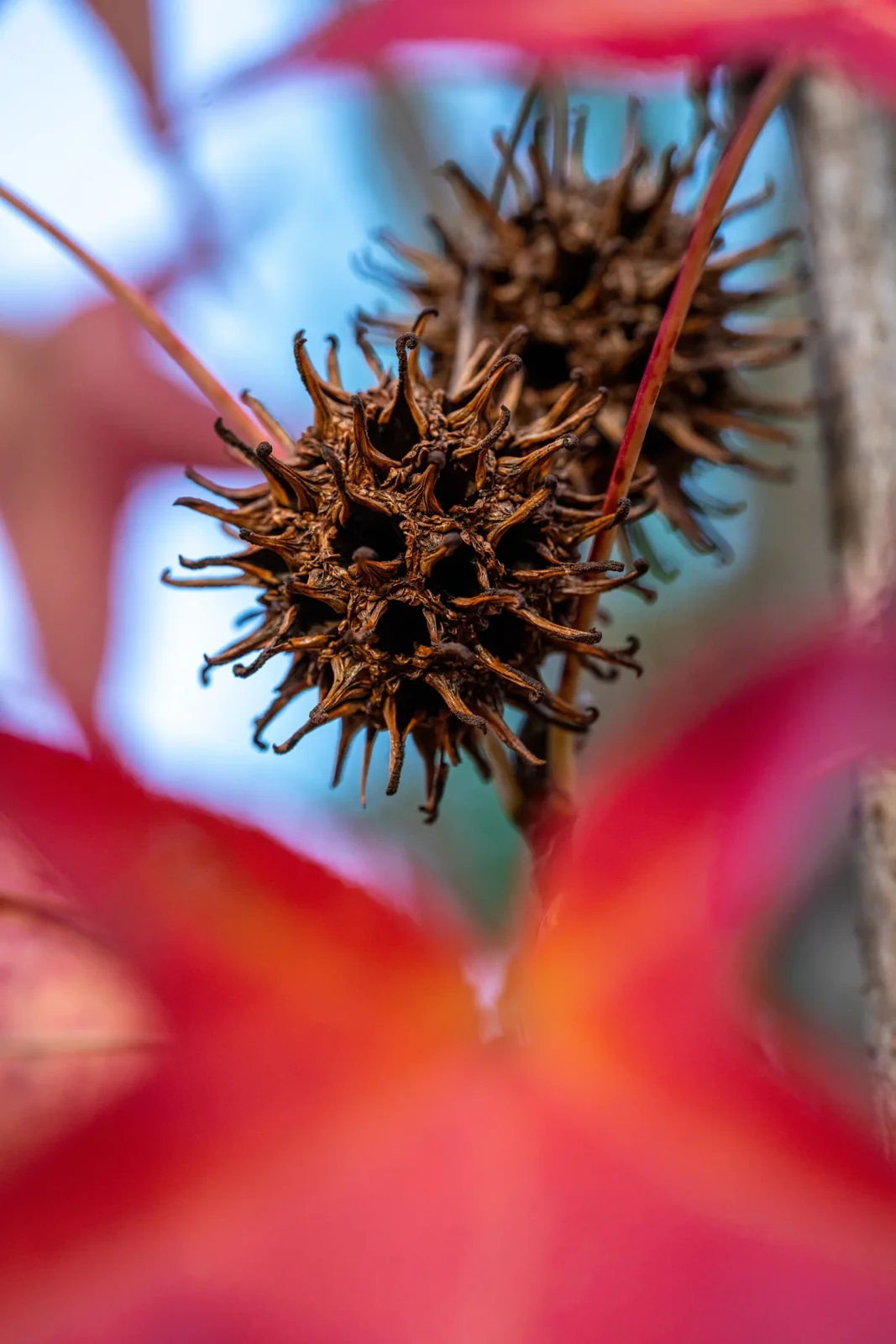
Fruit and seed as part of the design
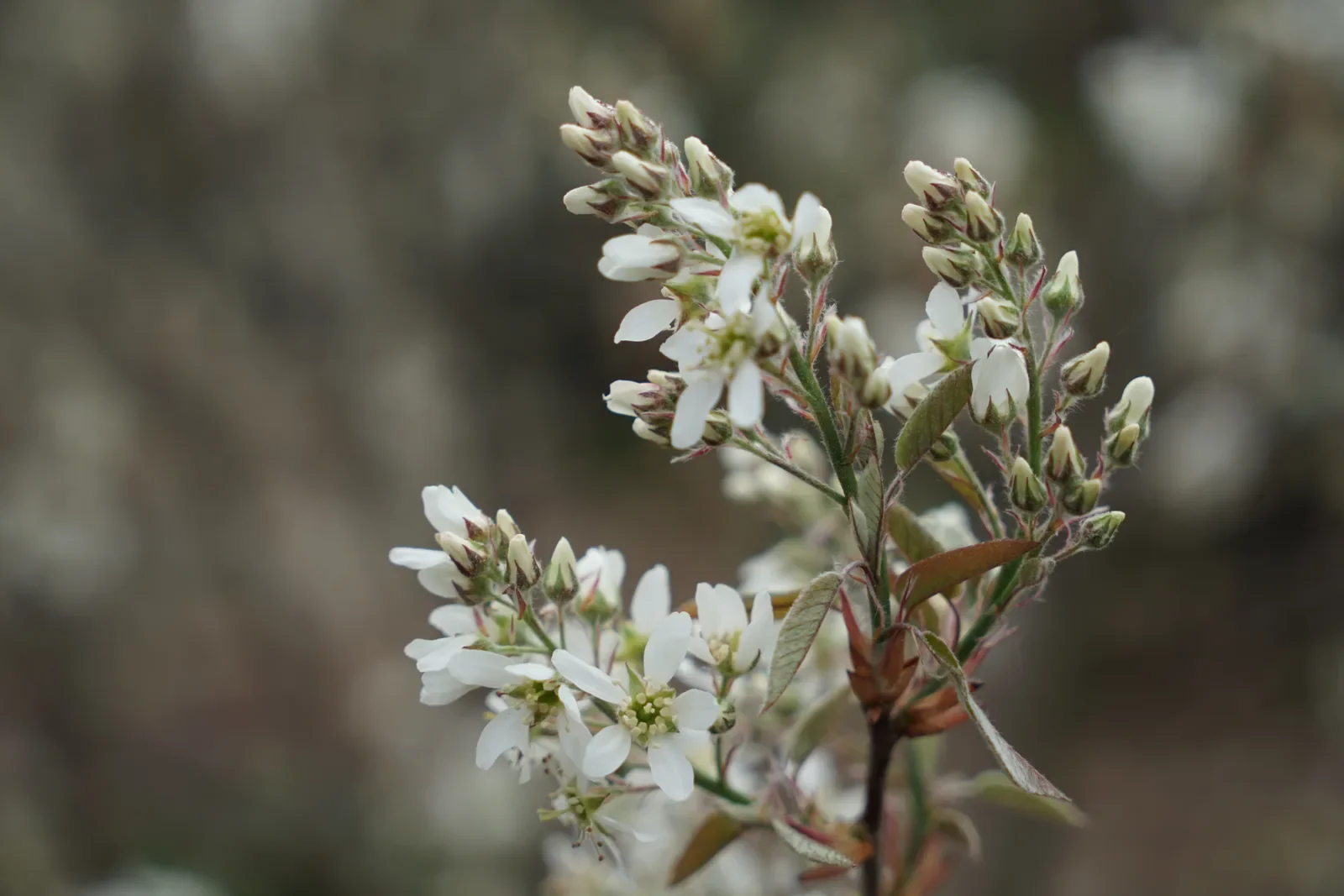
Amelanchier, Sorbus, Crataegus, Malus and Arbutus can bring fruit at different moments. Some fruit is eaten quickly; some persists. Its value to birds depends on the species, the size, the availability and the surrounding landscape.
Fruit can also cause conflicts on paving, in car parks or at entrances. The design should make use of the function where fruit drop is acceptable, and avoid promising benefits without considering cleaning and safety.
The beauty of transition
Dried grasses, seed heads and leaves gathered in controlled areas can keep texture and shelter. Maintenance does not need to clear everything at once. Some areas can be left until the end of winter, while paths and formal areas are kept tidy.
This gradation makes the change legible. The garden no longer looks finished once flowering is over, and instead reveals a succession of states.
Critical points
The most common mistakes are promising the same colour every year; planting fruiting species over sensitive paving; clearing away all the dried structures at the start of autumn; and judging trees only from a photograph in leaf.
Applying it to the project
At Diaplant, autumn is worked through the sequence of colour, fruit and texture, not through a single photograph taken at the peak. The selection also considers the scale of the crown and the behaviour observed on site.
Autumn gains depth when colour, fruit and structure work together. It is a season of transition, not just a display of colour.
Sources
Tags