Diaplant
Bringing spring forward means including trees and shrubs that flower in late winter or at the start of the season, rather than relying only on the best-known displays.
Bringing spring forward means including trees and shrubs that flower in late winter or at the start of the season, rather than relying only on the best-known displays of March and April. Cornus mas, some camellias, magnolias, Amelanchier and Cercis can open the calendar, but the choice has to take account of late cold, aspect and value after flowering.
Early flowering carries its own risks
Flowers that appear before or during bud break are more exposed to frost, persistent rain and wind. A sheltered courtyard can bring flowering forward and, at the same time, raise the risk of the flowers opening just before a cold spell. Position on the site matters as much as the species.
Earliness should not be the only criterion either. A tree that flowers for only a few days has to earn its place for the rest of the year through its crown, fruit, leaf or bark.
Building a sequence from late winter
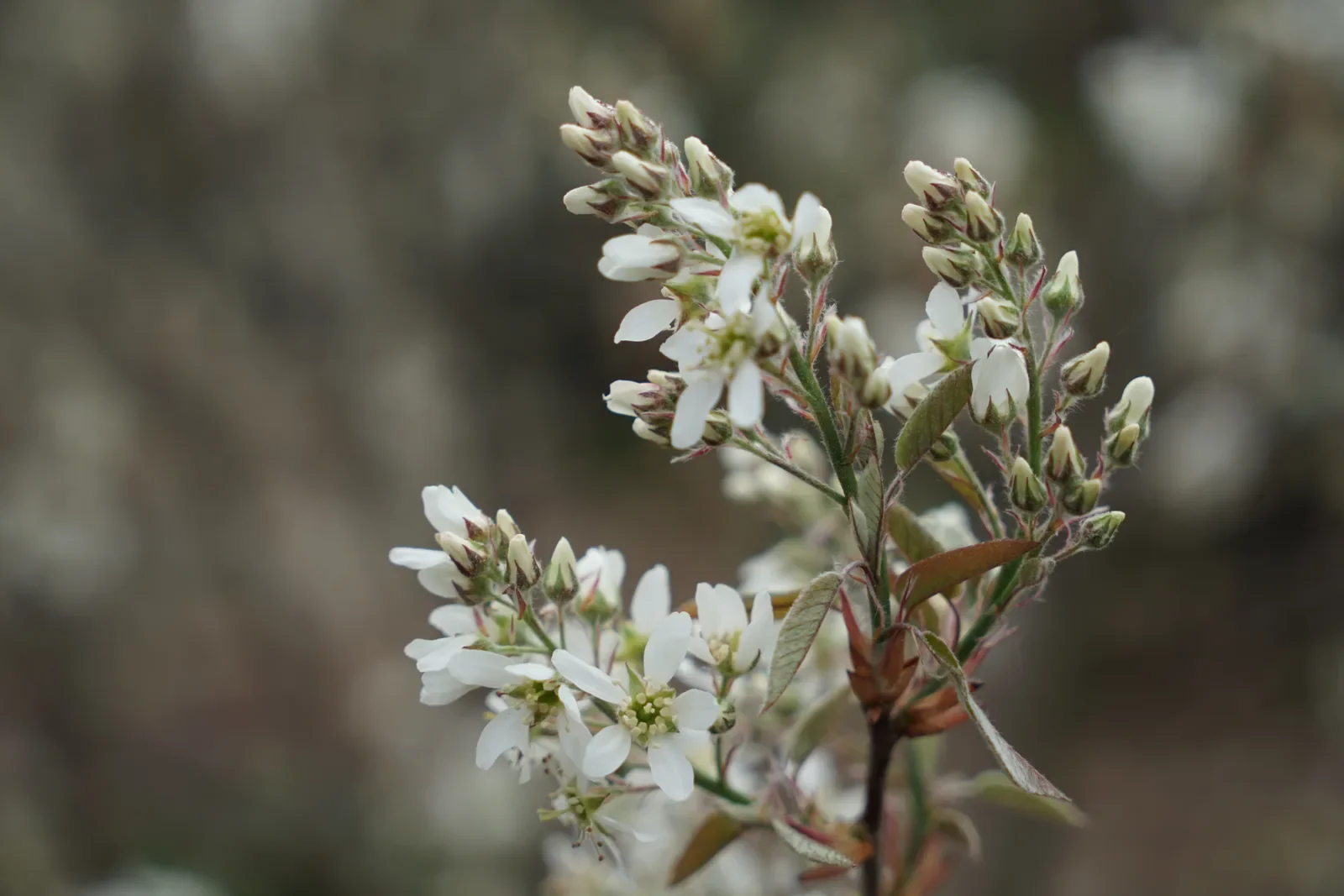
Cornus mas can bring in small yellow flowers very early. Camellia japonica extends the colour in sheltered spots and suitable soils. Magnolia × soulangeana creates a strong moment in early spring. Amelanchier lamarckii combines flower, fruit and autumn colour. Cercis siliquastrum adds flowers on the trunk and branches.
These species do not respond to the same soil or the same aspect. The calendar should be read alongside pH, moisture, space and mature size.
Combining impact and continuity
A single early-flowering tree can work as a focal point. In larger areas, repeating it in small groups creates continuity without turning the landscape into a rigid line. Plants in the lower layer can extend the same period, but they should be chosen for compatibility and not for colour alone.
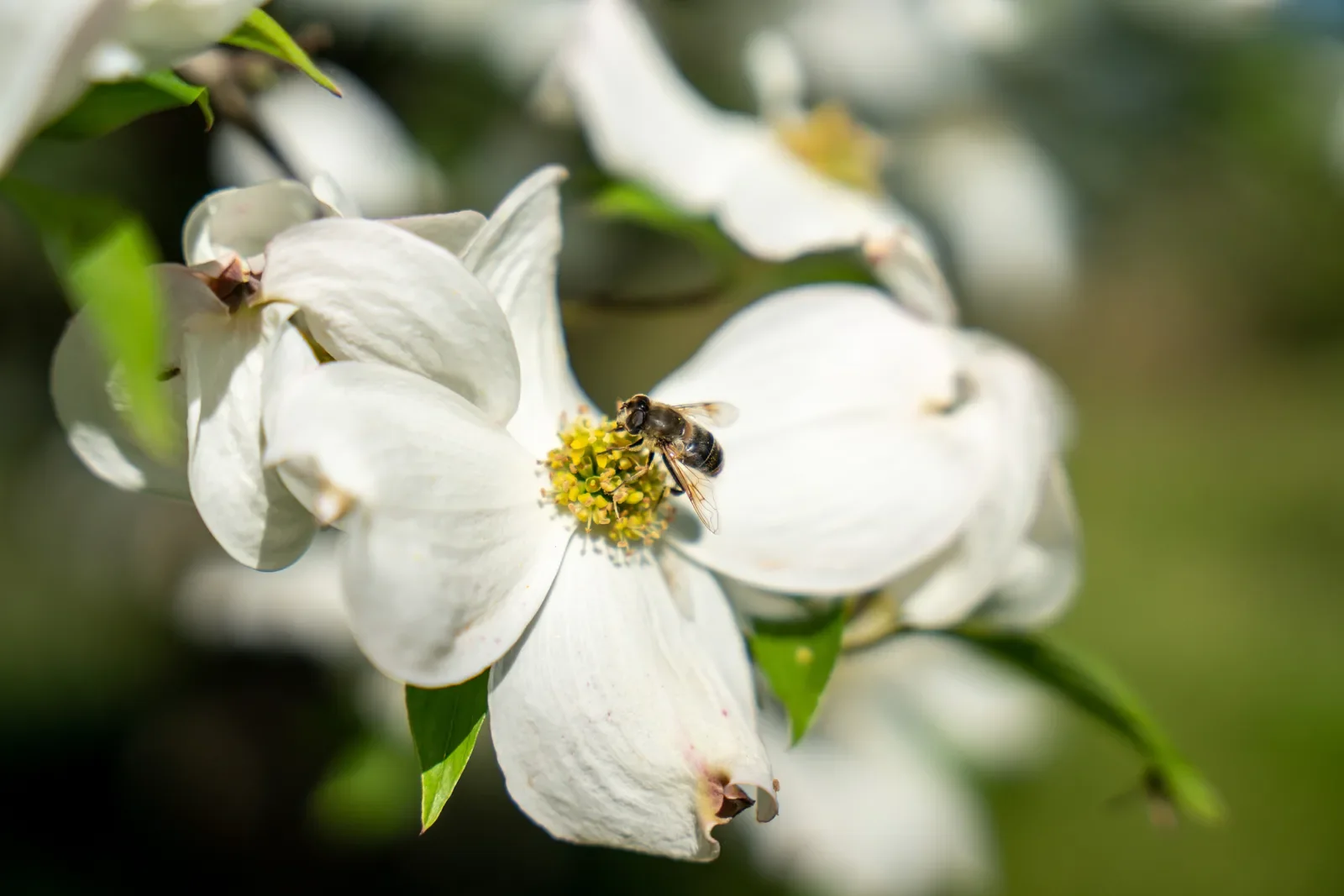
For pollinators, you need to confirm how accessible the flowers are and what resources the species or cultivar offers. Early flowering can matter when few resources are available, but a photograph of a flower is not enough to prove that function.
Where the approach fails
The most common mistakes are planting in frost-prone areas without assessing exposure; choosing by length of flowering alone; assuming value for pollinators without data; and repeating too many early species and leaving summer empty.
Applying it to the project
At Diaplant, early-flowering species are chosen for how well they suit the site, for their form and for what they contribute to the calendar. Where value for pollinators is wanted, that attribute is confirmed for the specific species or cultivar.
Bringing spring forward is a calendar decision. The aim is not to have everything flowering earlier, but to start a sequence that carries on through the seasons that follow.
Sources
Tags