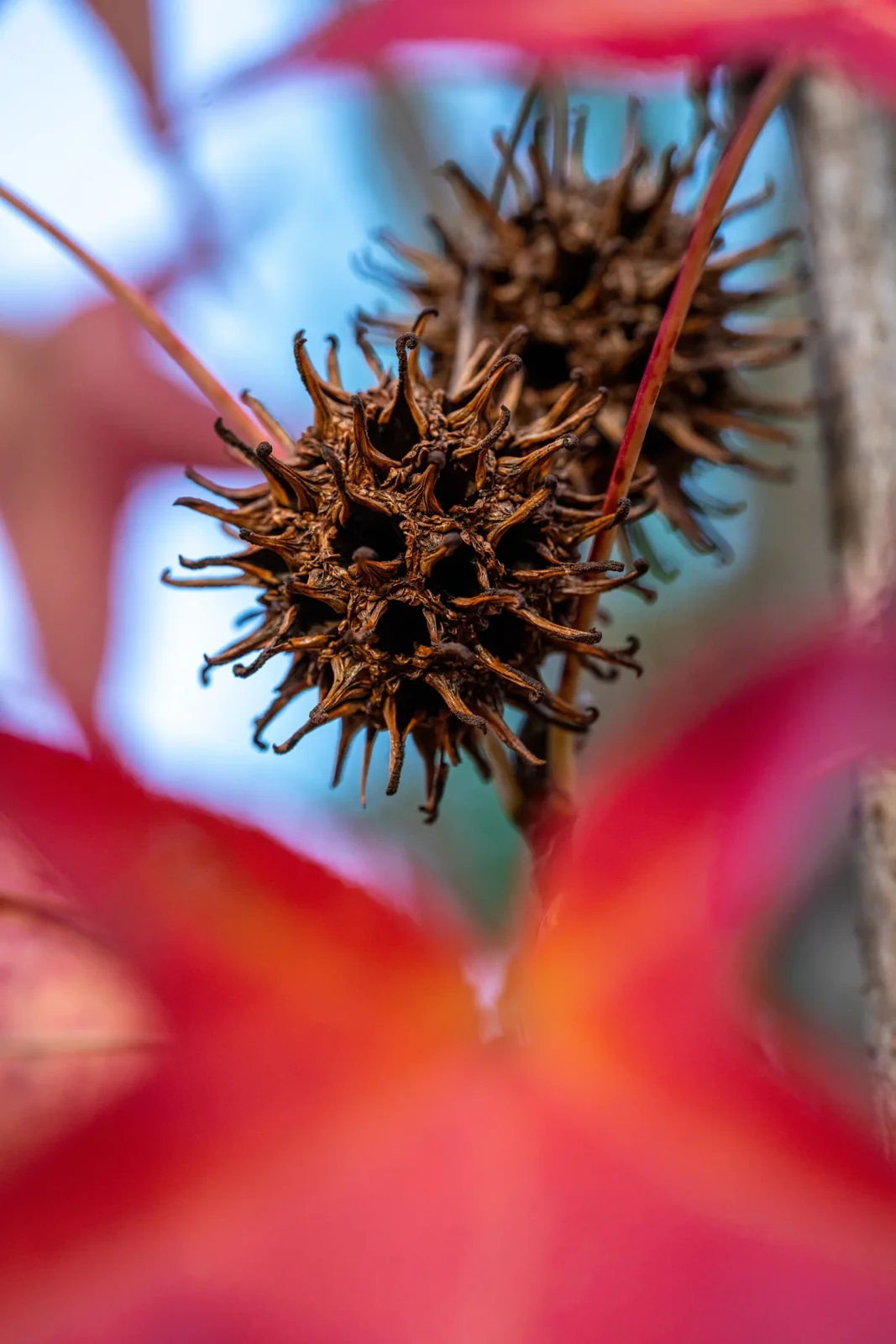
Liquidambar styraciflua — one of the species compared in the article.
Autumn trees should not be compared only by the most intense colour in a photograph.
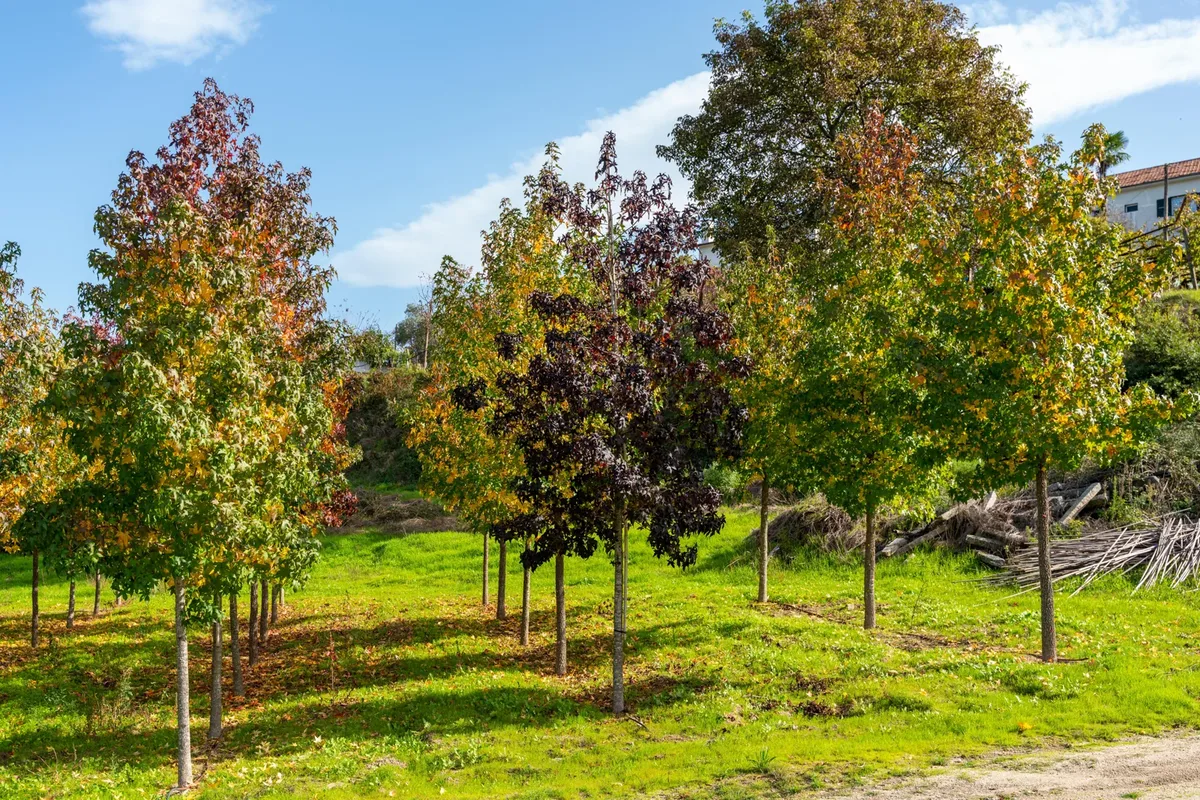
Autumn trees should not be compared only by the most intense colour in a photograph. Duration, sequence, crown scale, climate, light, water and soil all change the effect. This collection brings together seven trees with different expressions, from red to yellow, to create a calendar between September and December.
This selection is a starting point. The final choice depends on the conditions of the site, the size you want and the specimens available.
The species in the collection
| Species or cultivar | Role in the composition | Reference conditions | Main limitation |
|---|---|---|---|
| Acer palmatum ‘Osakazuki’ | light-crowned cultivar known for its autumn display | gentle sun or partial shade, moist soil | colour varies with climate; do not promise a fixed intensity |
| Acer rubrum ‘October Glory’ | medium to large tree with autumn interest | sun, moist, well-drained soil | colour and performance depend on pH, water and the summer |
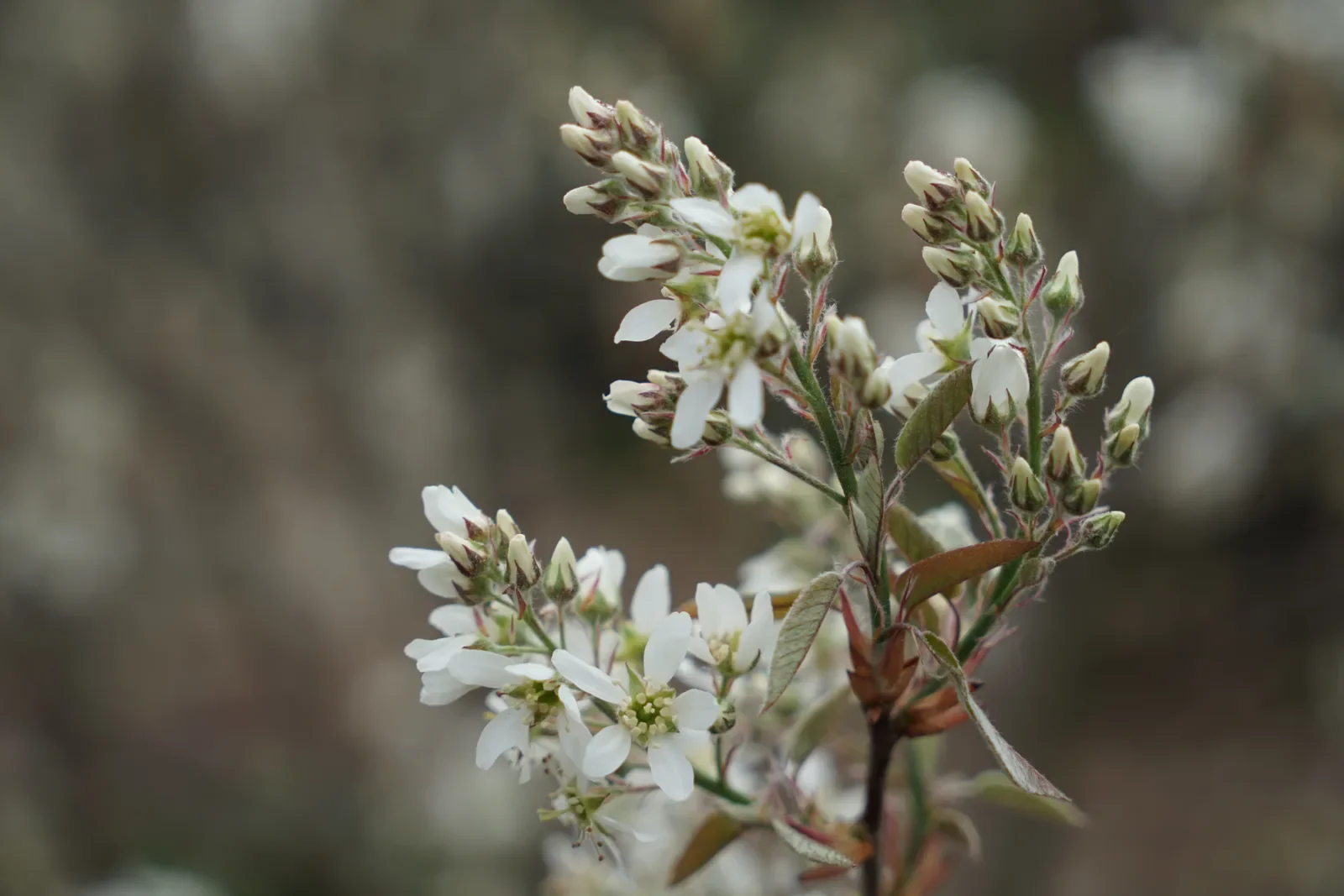
| Amelanchier lamarckii | small multi-stem tree with flower, fruit and autumn colour | sun or partial shade, moist, well-drained soil | fruit may drop; size and form vary with training |
| Ginkgo biloba | tree with a distinctive structure and yellow autumn colour | sun, well-drained soil and rooting volume | choose sex/cultivar when fruit is unwanted; growth can be slow |
| Liquidambar styraciflua ‘Worplesdon’ | cultivar with an elegant crown and autumn colour | sun, deep, moist soil | colour varies; not suited to dry soil without support |
| Nyssa sylvatica | tree with intense autumn colour for moist soils | sun, acid to neutral soil that is moist and deep | not an answer to constant waterlogging or severe drought |
| Parrotia persica ‘Vanessa’ | more upright cultivar with autumn interest | sun, moist soil | keeps broadening with age; colour depends on the year |
How to combine them in the project
Combining a large-scale tree, such as Liquidambar or Ginkgo, with smaller species, such as Amelanchier or Parrotia, makes it possible to spread colour across different planes. Acer palmatum works on detail and close range; Nyssa and Acer rubrum need more controlled soil and water.
A sequence can start with early changes in Amelanchier and Acer, move on to Liquidambar, Parrotia and Nyssa and end with the yellow of Ginkgo, but the order should be confirmed locally.
Conditions of use
Colour varies every year. Confirm cultivars, the calendar observed in Amarante, pH and water availability.
Selection at Diaplant
At Diaplant, autumn trees are compared at several points in the season, relating colour, duration and crown architecture. The choice does not depend on a single image taken at the peak.
Related reading
- [109 — Designing a garden for twelve months, not just for spring](../02_Sazonalidade_Fenologia/109_projetar-um-jardim-para-doze-meses-e-nao-apenas-para-a-primavera.md)
- [113 — Autumn beyond leaf colour: fruit, texture and extending the garden](../02_Sazonalidade_Fenologia/113_o-outono-para-alem-da-cor-da-folha-fruto-textura-e-prolongamento-do-jardim.md)
- [150 — Four-season pack: trees and large shrubs that extend the garden’s interest](150_pack-quatro-estacoes-arvores-e-grandes-arbustos-que-prolongam-o-interesse-do-jardim.md)
Sources
- Trillo, A. et al. Year-round pollinator visitation of ornamental plants in Mediterranean urban parks. (2026).
- Vitt, P. et al. Temporal variation in the roles of exotic and native plant species in plant–pollinator networks. (2020).
- Relating the climate envelopes of urban tree species to their drought and thermal tolerance. (2021).
- Flora-On — Flora de Portugal interativa. Sociedade Portuguesa de Botânica. (2025).
Tags