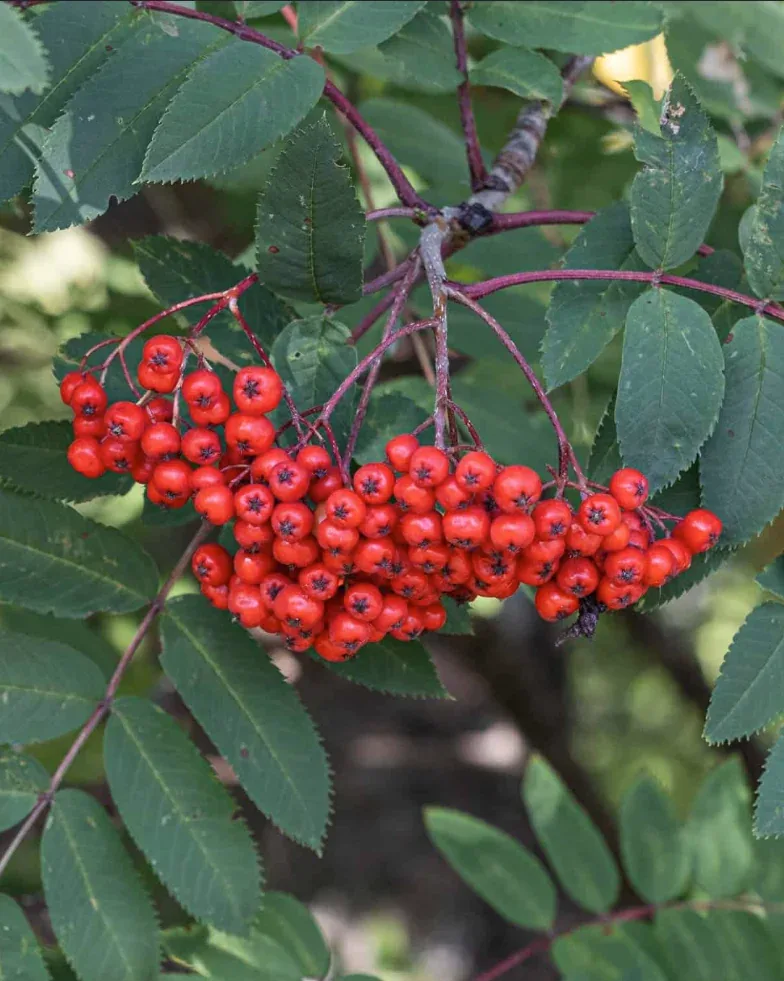
Sorbus aucuparia — the fruit that feeds the birds. The article compares ten species.
A selection of trees for birds should combine direct food, associated insects, shelter and different times of year.
A selection of trees for birds should combine direct food, associated insects, shelter and different times of year. No species guarantees the presence of birds on its own. The value comes from the composition, the maturity of the trees, the connection to hedges and copses and the surrounding landscape.
The list makes it possible to compare options, but it does not replace a diagnosis of the site or the choice of the right specimen.
The species in the collection
| Species or cultivar | Role in the composition | Reference conditions | Main limitation |
|---|---|---|---|
| Quercus robur | large native oak of high structural value | sun, deep, moist soil | not suited to severe drought, small tree pits or sites close to buildings |
| Quercus suber | evergreen cork oak for well-drained soils and a Mediterranean climate | sun, acid to neutral soil with no waterlogging | sensitive to soil disturbance, poor drainage and damage to the root collar |
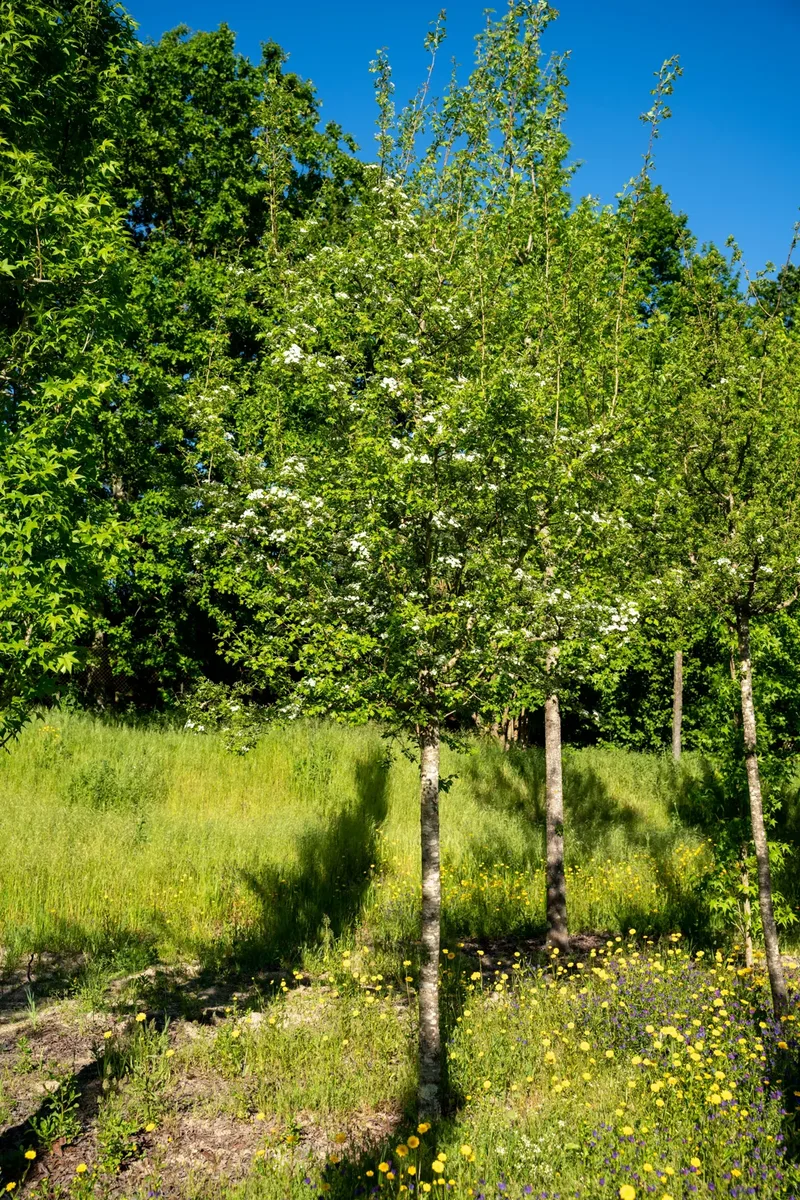
| Crataegus monogyna | small native tree with flower, fruit and shelter | sun, varied, well-drained soils | thorns, fruit drop and plant health should be considered |
| Sorbus aucuparia | small tree with flower, fruit and autumn colour | sun to partial shade, cool climate and well-drained soil | can suffer from heat and drought in Portugal |
| Sorbus torminalis | medium-sized native tree with fruit and autumn interest | sun, well-drained soil and space | availability and provenance should be confirmed |
| Arbutus unedo | Mediterranean evergreen with flower and fruit late in the year | sun to partial shade, well-drained soil | avoid waterlogging and confirm there is room for the crown |
| Malus ‘Evereste’ | small tree with flower and persistent fruit | sun, moist, well-drained soil | confirm the trade name and consider fruit drop and plant health |
| Prunus avium ‘Bigarreau Burlat’ | fruiting cherry for a productive, seasonal element | sun, fertile, well-drained soil | fruit, pests and the need for pollination/maintenance should be assessed |
| Celtis australis | Mediterranean shade tree that adapts well once established | sun, deep, well-drained soils | crown and roots need space; fruit and leaves should be considered |
| Pinus pinea | Mediterranean conifer with a broad crown and seeds | sun, well-drained soil and space | large size, resin, needle drop and cones should be considered |
How to combine them in the project
Start with two or three structural trees, such as Quercus, capable of supporting complex crowns and communities of invertebrates. Add fruiting species of different sizes and seasons, such as Crataegus, Sorbus, Malus, Prunus, Arbutus and Celtis. Pinus pinea brings evergreen cover and seeds.
The layout should avoid concentrating fruit over car parks and paths. Small trees can bring resources closer to the shrub layer; large trees create continuity and shelter at the scale of the property.
Conditions of use
The final choice should confirm fruiting, sex where applicable, cultivar, regional fauna, plant health and nomenclature. The selection is comparative and guarantees neither permanent availability nor the automatic presence of birds.
Selection at Diaplant
At Diaplant, this selection is made on real specimens, comparing crown, habit, fruit and structure. The final choice weighs ecological function against suitability for the site and the availability of the batch.
Sources
- Narango, D. L.; Tallamy, D. W.; Marra, P. P. Nonnative plants reduce population growth of an insectivorous bird. (2018).
- Contrasting effects of tree origin and urbanization on invertebrate abundance and tree phenology. (2021).
- Plant–frugivore interactions in an urban nature reserve and its nearby gardens. (2019).
- Flora-On — Flora de Portugal interativa. Sociedade Portuguesa de Botânica. (2025).
Tags