Diaplant
A winter garden needs form before it needs flower. Bare crowns, bark, multiple stems, evergreens, hedges, dried grasses and paving.
A winter garden needs form before it needs flower. Bare crowns, bark, multiple stems, evergreens, hedges, dried grasses and paving all become more visible. Designing for this season means making sure the structure stays legible when much of the planting goes dormant.
Silhouette as design material
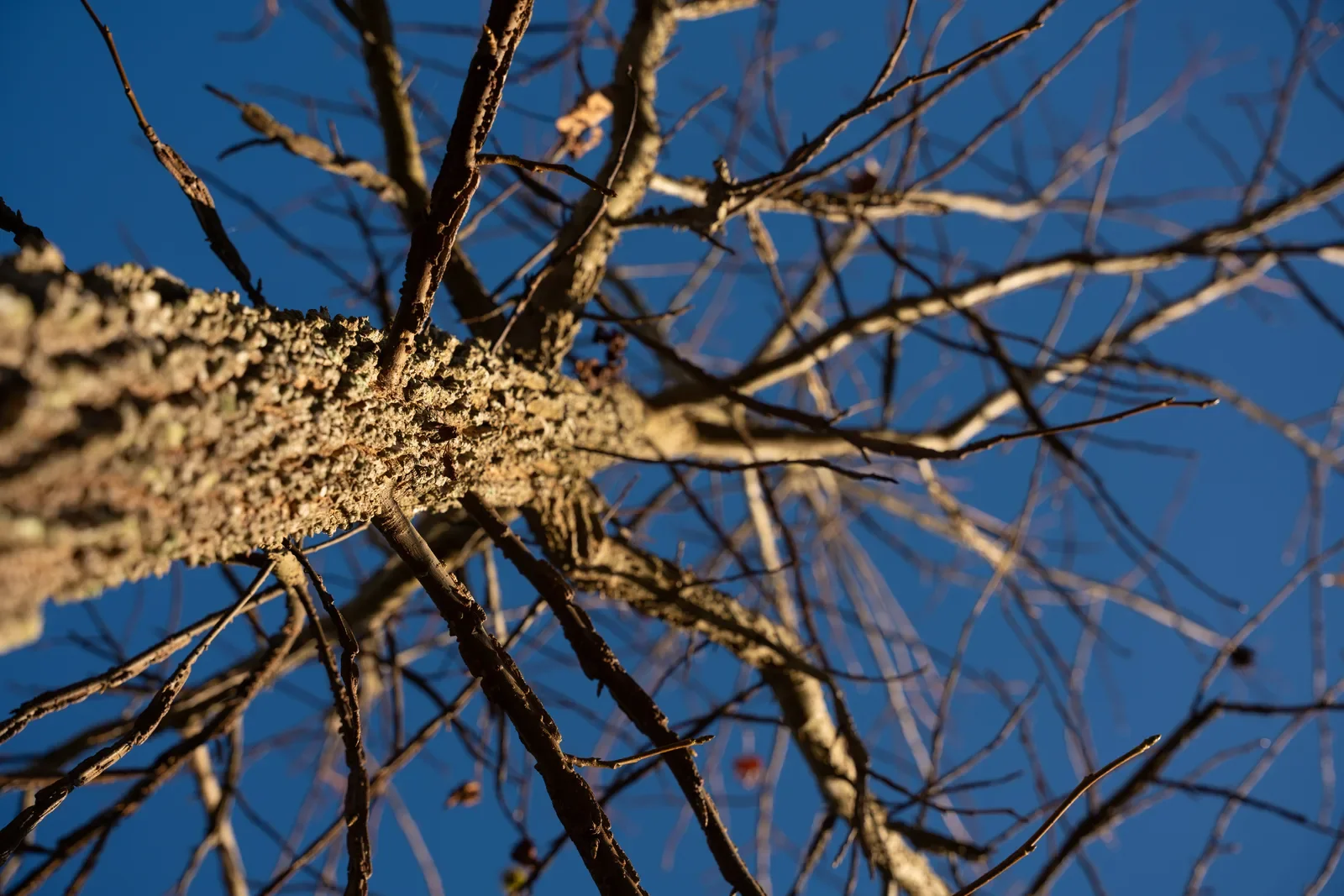
Trees trained as tall standards, multi-stem specimens, columnar crowns and open branching draw different patterns against the sky. The choice should take account of the view from indoors, because in winter the garden is often seen through the windows.
Lighting can reveal trunks and volumes, but it should be used sparingly, directed downwards and switched off when it is not needed.
Bark, branches and persistence
Acer griseum stands out for its peeling bark; Cornus with coloured stems works the lower layer; Parrotia and Lagerstroemia add texture; Ilex, Arbutus, Laurus and conifers hold the mass. The combination needs variety without an excess of effects.
Evergreen does not mean unchanging. Leaves can shift in tone, suffer from wind or renew themselves. The value lies in continuity of volume, not in an artificially constant appearance.
Do not tidy the garden until it disappears
The dried structures of perennials and grasses can stay for part of the winter, provided they create no risk and no image at odds with the place. Leaves can be left under massed planting and trees, while paths and entrances are kept clear.
This selective maintenance preserves shelter and organic matter and reduces visual emptiness. The final cut can be scheduled before the new growth breaks.
Before going ahead
The most common mistakes are concentrating all the structure in evergreens; ignoring the view from indoors; using too much lighting; and cutting back all the perennials straight after flowering.
Applying it to the project
At Diaplant, the winter garden is built with trees and shrubs whose silhouette, bark, evergreen foliage or branching stay legible after leaf fall.
Winter tests the architecture of the garden. When the composition works in this season, spring adds richness to a base that was already sound.
Sources
Tags