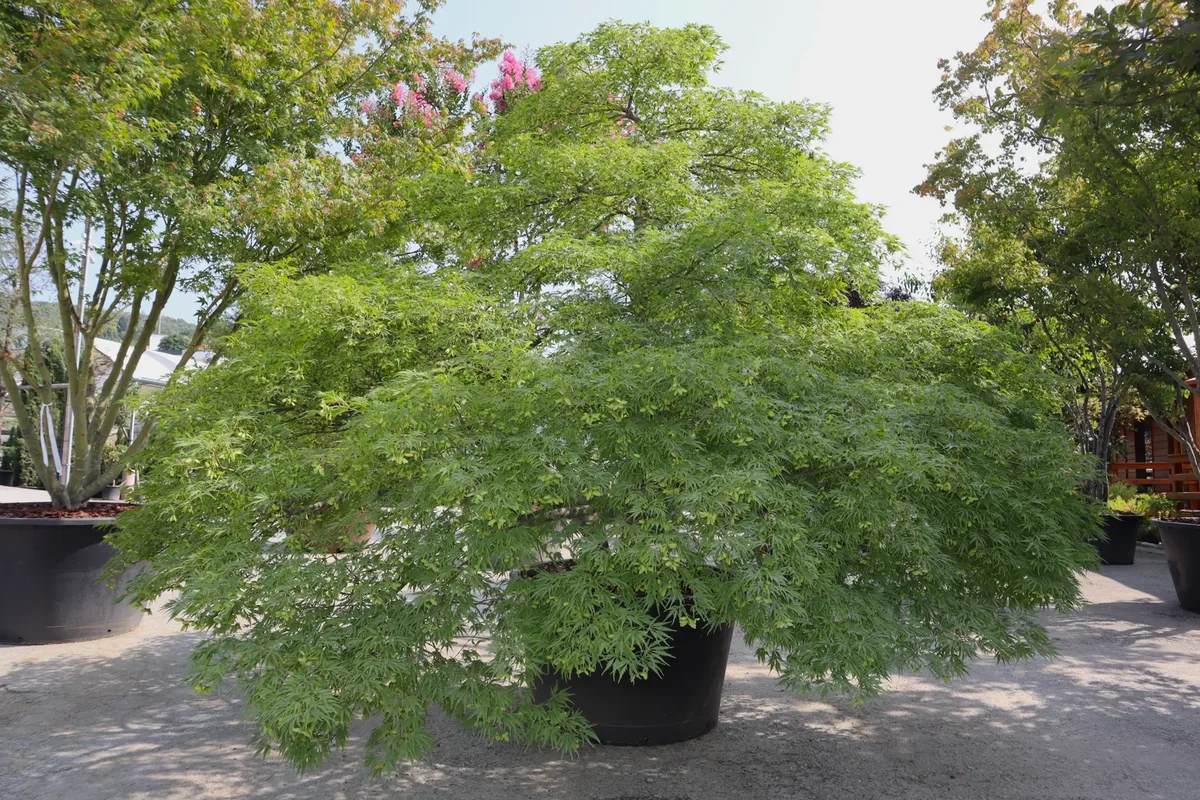
Acer palmatum dissectum — one of the species compared in the article.
A Japanese-inspired garden comes from the relationship between empty space, scale, rhythm, stone, water and seasonal change.
A Japanese-inspired garden comes from the relationship between empty space, scale, rhythm, stone, water and seasonal change. The geographical origin of the plants is only one part. This collection uses light crowns, finely cut forms, winter stems and occasional flowering to build a language, not to reproduce a Japanese ecosystem.
The species below should be read as design alternatives. Soil, climate, space and availability determine the final decision.
The species in the collection
| Species or cultivar | Role in the composition | Reference conditions | Main limitation |
|---|---|---|---|
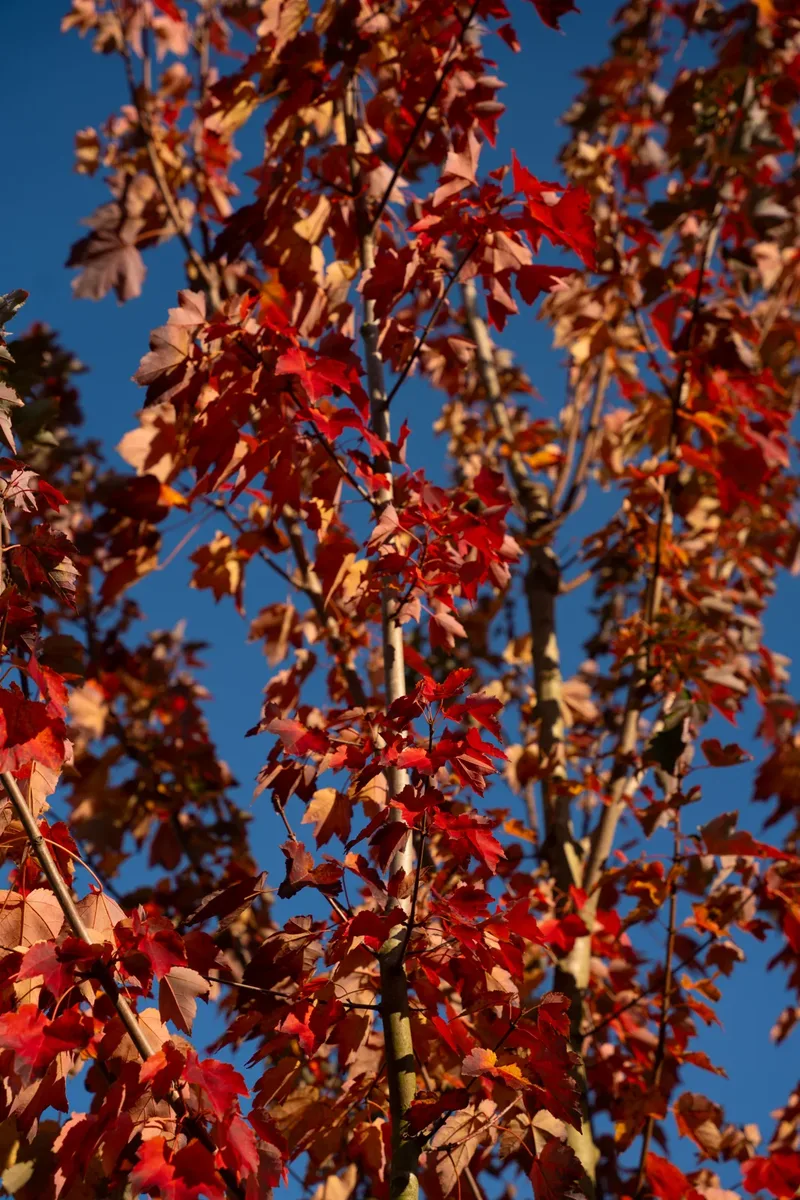
| Acer palmatum ‘Osakazuki’ | light-crowned cultivar known for its autumn display | gentle sun or partial shade, moist soil | colour varies with climate; do not promise a fixed intensity |
| Acer palmatum ‘Sango-kaku’ | cultivar valued for its coloured stems in winter | partial shade, moist soil and shelter | the bark effect is strongest on young stems and calls for careful maintenance |
| Acer palmatum ‘Garnet’ | low, arching, cut-leaved cultivar with dark foliage | partial shade, moist, well-drained soil | delicate leaf; avoid hot aspects and dry wind |
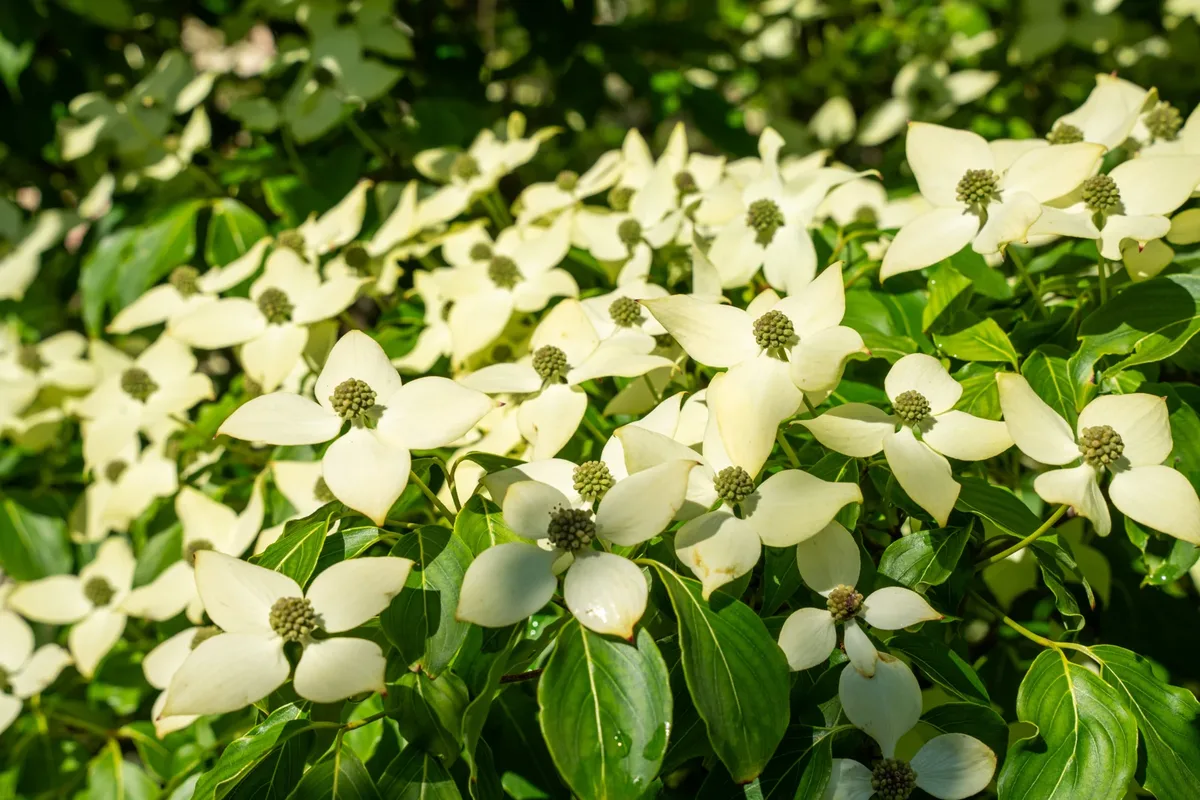
| Cornus kousa | small tree with bracts, fruit and autumn interest | gentle sun or partial shade, moist, well-drained soil | sensitive to water stress and reflected heat |
| Prunus serrulata ‘Shirotae’ | ornamental cherry with an open crown and white flowers | sun, moist, well-drained soil | short flowering; health and room for the crown matter |
| Ginkgo biloba ‘Blagon’ | narrower cultivar for spaces of restricted width | sun, well-drained soil | keeps growing in height and needs rooting space |
| Lagerstroemia indica | small tree or large shrub for summer flowering and bark | sun and heat, well-drained soil with enough water during establishment | flowering depends on heat and pruning; sensitive to cold depending on the cultivar |
How to combine them in the project
The Acer palmatum cultivars bring detail, colour and different habits. Cornus kousa and Prunus ‘Shirotae’ introduce flowering and open crowns. Ginkgo adds verticality and autumn; Lagerstroemia extends the summer and offers bark.
Avoid lining up all the specimens. Work with asymmetry, framing and the distance between crowns. Unplanted space is part of the composition.
Conditions of use
The final choice should confirm cultivars, aspect and scale. Other Acer can replace those selected, depending on form and climate.
Selection at Diaplant
At Diaplant, Japanese inspiration starts from the silhouette, the training and the seasonality of the actual specimens. The composition is built from the relationship between tree, stone, water and architecture, without copying a closed model.
Related reading
- [109 — Designing a garden for twelve months, not just for spring](../02_Sazonalidade_Fenologia/109_projetar-um-jardim-para-doze-meses-e-nao-apenas-para-a-primavera.md)
- [114 — Winter garden: designing with bark, trunks, evergreens and dried structures](../02_Sazonalidade_Fenologia/114_jardim-de-inverno-desenhar-com-casca-troncos-persistentes-e-estruturas-secas.md)
Sources
- Trillo, A. et al. Year-round pollinator visitation of ornamental plants in Mediterranean urban parks. (2026).
- Vitt, P. et al. Temporal variation in the roles of exotic and native plant species in plant–pollinator networks. (2020).
- Flora-On — Flora de Portugal interativa. Sociedade Portuguesa de Botânica. (2025).
Tags