Diaplant
Designing fruit through the year means avoiding the whole supply being concentrated in late summer or autumn.
Designing fruit through the year means avoiding the whole supply being concentrated in late summer or autumn. The sequence should consider flowering, fruit formation, ripening, persistence and consumption. Not all fruits stay available for the same length of time, and not all birds use the same sizes and species.
From the botanical calendar to the food calendar
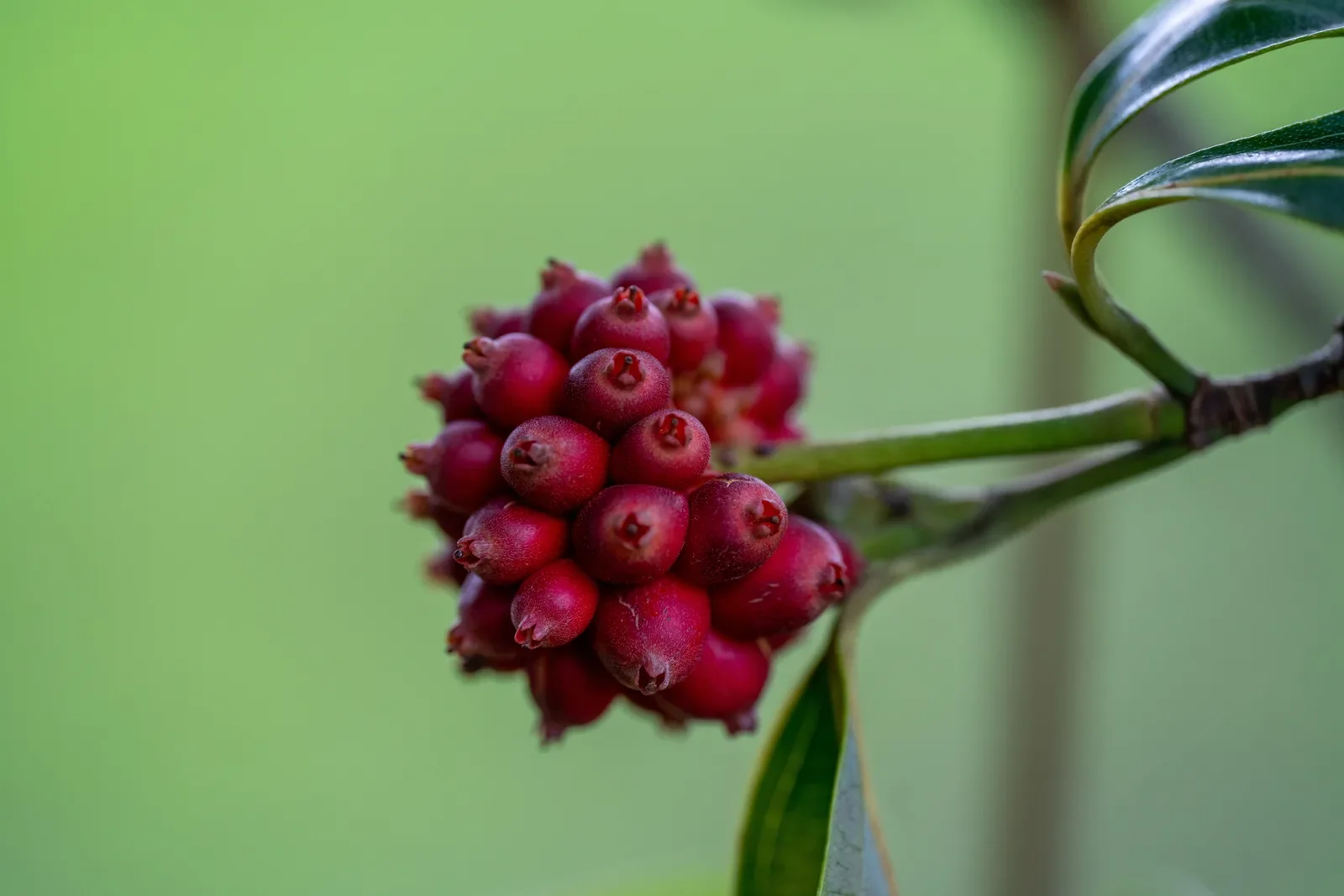
The fruiting period given for a species is only a starting point. Some fruits are eaten as soon as they ripen; others stay for weeks. Climate, pruning and water availability alter quantity and duration.
A local record should note ripening and disappearance, not just visual presence.
Combining species and sizes
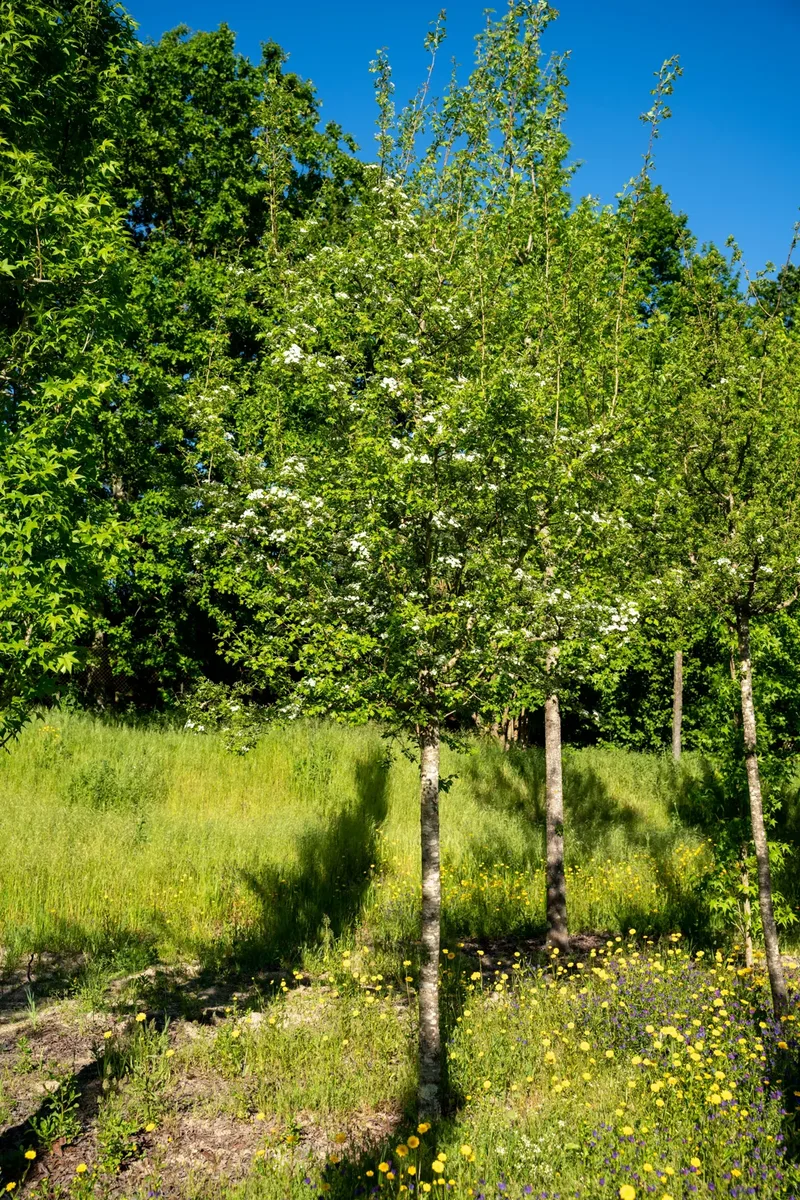
Amelanchier and some cherries can offer fruit earlier; Sorbus, Crataegus and Malus carry on through late summer and autumn; Arbutus can add a resource later. Quercus and Pinus produce seeds of a different kind and support different food chains.
A combination of trees and shrubs brings resources at different heights close together and creates shelter between feeding times.
Fruit has its costs too
At entrances and on paths, terraces and car parks, fallen fruit can cause staining or slipping. Heavy-fruiting species should be kept away from these points or placed in areas where the material can be left.
Excessive tidying removes part of the resource. The plan should define where fruit on the ground is accepted and where safety requires it to be removed.
How to test the sequence on the ground
A simple way to validate the palette is to observe the same specimens for two or three years and record four dates: start of ripening, peak, end of persistence and disappearance of the fruit. The record should include whether the fruit fell, dried on the tree or was eaten. Only then can you tell whether two species listed for autumn really offer a resource at different times.
On larger properties, the sequence can be spread between an ornamental orchard, hedges and woodland. This spread reduces the concentration of wildlife at a single point and avoids all the fruit falling in the same intensively maintained area.
Where the approach fails
The most common mistakes are using only species that fruit at the same time; confusing persistent fruit with fruit that is used; planting over delicate paving; and pruning in a way that removes the crop.
Applying it to the project
At Diaplant, a fruit sequence is organised by ripening time, persistence and observed use. The calendar should be followed on the ground, because it varies with the climate and with the behaviour of wildlife.
A food sequence is not a list of fruit trees. It is an observed calendar, distributed across a habitat structure.
Sources
Tags