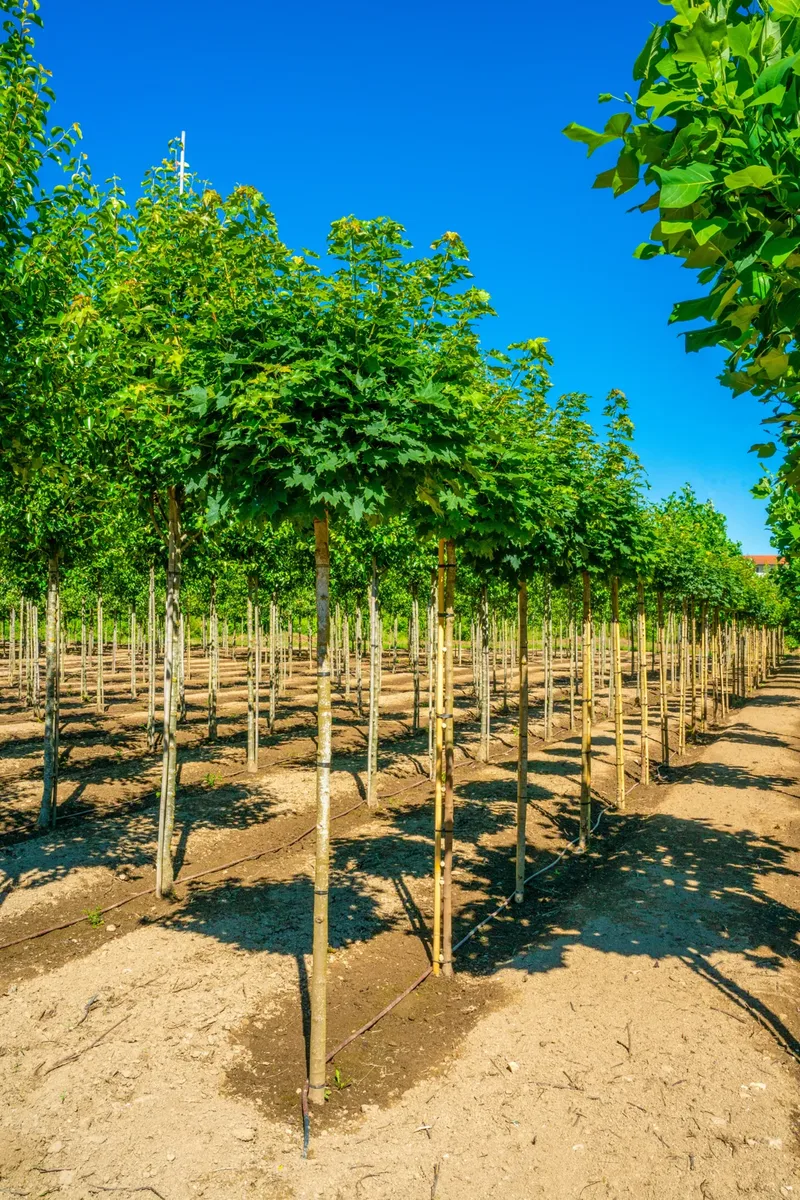
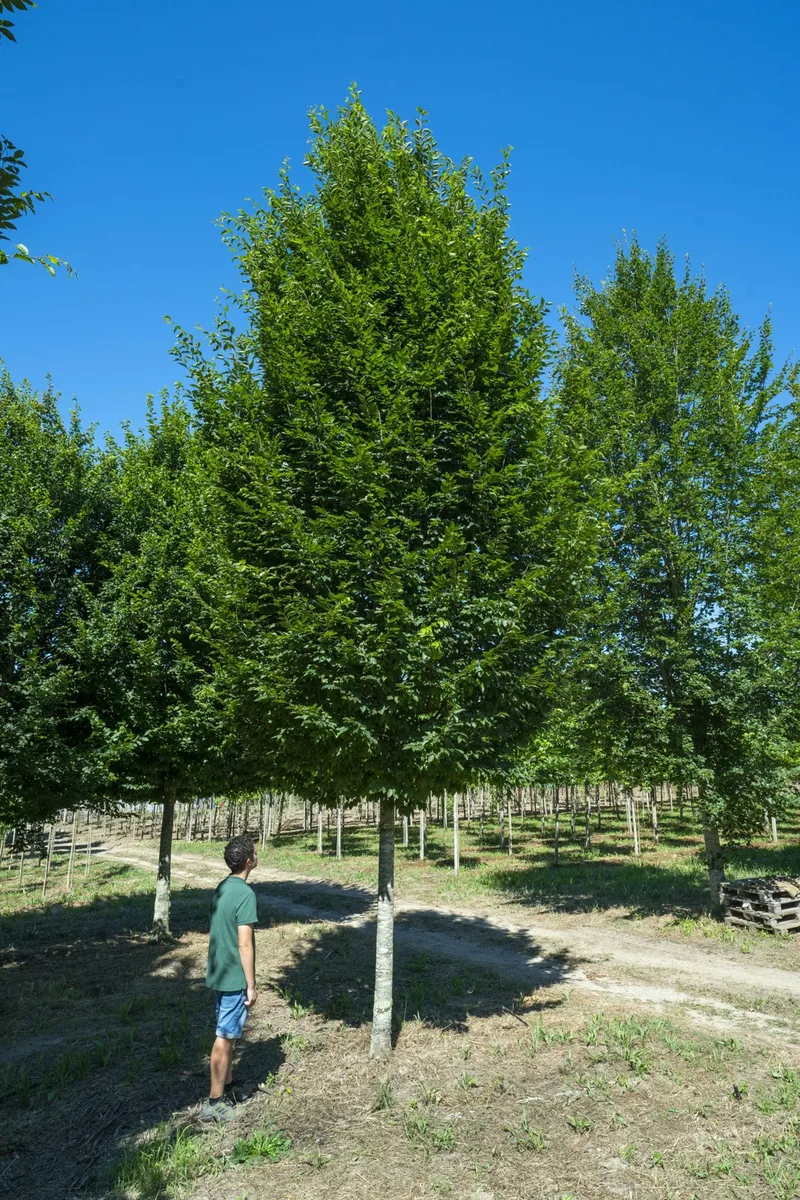
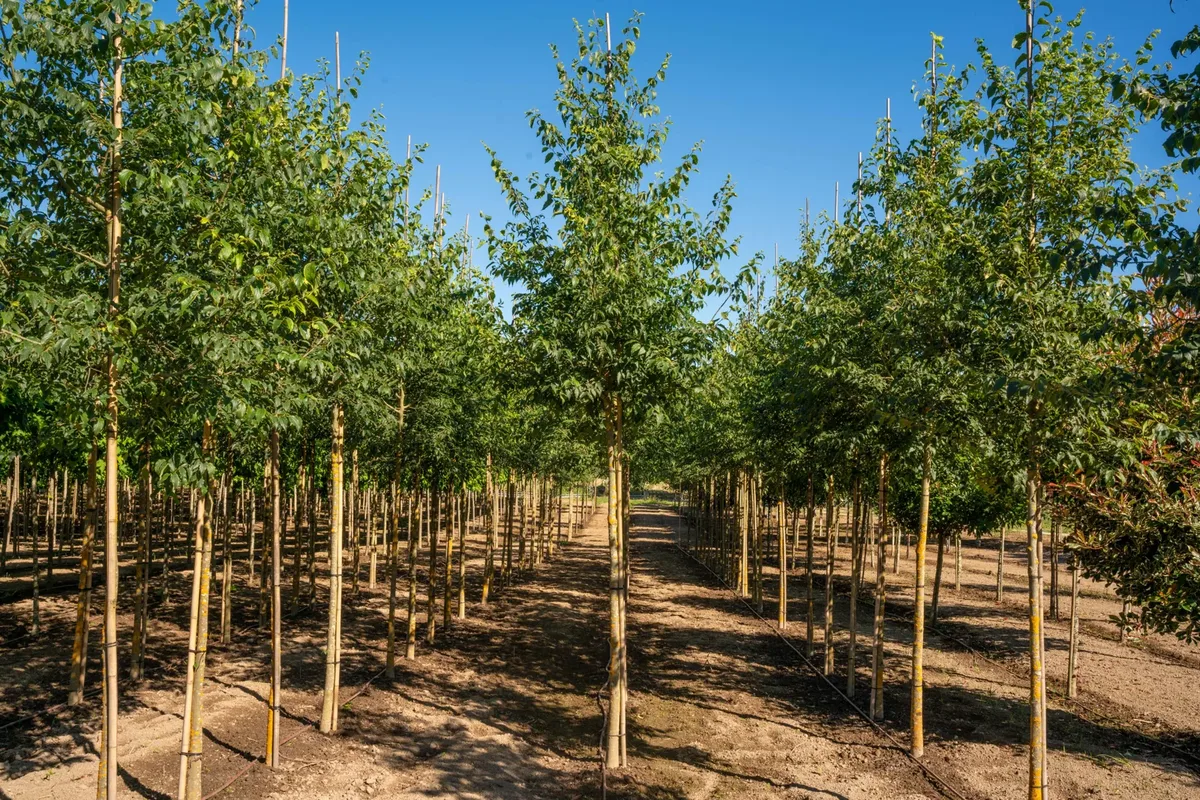
A mature tree spends several years in the nursery before it is chosen for a project. During that time, the team monitors its roots, crown, vigour and response to transplanting.
A mature tree spends several years in the nursery before it is chosen for a project. During that time, the team monitors its roots, crown, vigour and response to transplanting.
When the tree leaves the field, that information is still useful. The size of the rootball, the sensitivity of the species, the orientation of the crown and the production history all influence transport, planting and the first years in the garden.
Production and selection
In the nursery, each species reacts differently. Some Quercus need shorter root cycles. Liquidambar and Platanus generally allow longer intervals. Birches and magnolias call for particular attention to water and to root cutting.
This knowledge does not show up fully on a sheet of measurements. Two trees with the same girth can differ in form and in how far their preparation has gone.
Selecting in person makes it possible to relate the specimen to the place where it will be planted.
Design
The design defines crown space, soil volume, drainage, access and function. A mature tree should not be added at the end as a decorative element.
Its size can affect levels, the sequence of works and the position of infrastructure. The design also needs to accept the individuality of the chosen specimen.
When the nursery and the designer work from the same information, the tree can be fitted to the design and the design to the tree.
Transport
The team that knows the specimen prepares the rootball, the crown and the trunk according to its size and species.
Weight, lifting equipment and access are confirmed before the tree is lifted from the field. The orientation chosen in the field can be recorded for planting.
Transport stops being just a journey and becomes a technical stage of the process.
Planting
On site, information about the rootball and the species helps to set the planting level, staking, watering and monitoring.
On rootballs prepared by Diaplant, the certified hessian and wire mesh stay in place during planting so as not to compromise cohesion.
Soil preparation is adapted to the site. A basic rule can guide the dimensions, but the ground decides the volume actually needed.
The first years
A mature tree gives immediate scale, but it still needs to establish. The first year is critical and the second remains especially important in the heat.
Watering is adjusted to the drainage and the species. Contact with the team makes it possible to look at photographs, clarify symptoms and decide when a visit is needed.
Continuity cuts down on generic answers because it starts from a known tree and a known site.
A method, not an obligation to contract everything
Knowledge can accompany several combinations of service. A client can buy trees, or commission design, construction or a more complete intervention.
The difference lies in how information passes between stages. Even when separate teams are involved, the data on production, selection and planting should be handed on.
The Diaplant Method stands for this continuity between nursery, design, transport, construction and monitoring. It does not mean that all the services have to be contracted together.
Learning from establishment
What is observed after planting also feeds back to the nursery and to the design. Problems with soil, water or selection help to improve future decisions.
This cycle turns site experience into production knowledge and avoids treating each tree as an entirely separate case.
The tree changes place, but the process should not lose its history.
What continuity does not solve
Passing information between nursery, design and site reduces mistakes, but it does not eliminate adverse conditions. A soil with no drainage, a change during the works or insufficient maintenance still call for decisions and correction.
The value of the method lies in identifying these situations earlier and knowing what information exists about the specimen, without turning monitoring into a promise of survival regardless of the site.
Sources and supporting references
- Diaplant’s data and method for production, design, transport, planting and monitoring.
- European Arboricultural Standards. European Tree Planting Standard.
- European Arboricultural Standards. European Tree Pruning Standard.
Tags