Diaplant
Trees for birds should be compared by function, not just by fruit production.
Trees for birds should be compared by function, not just by fruit production. Associated insects, crown density, perching branches, nesting sites, evergreen foliage, size and food calendar contribute in different ways. The final choice depends on the bird species, the context and the connection to other habitats.
Direct and indirect food
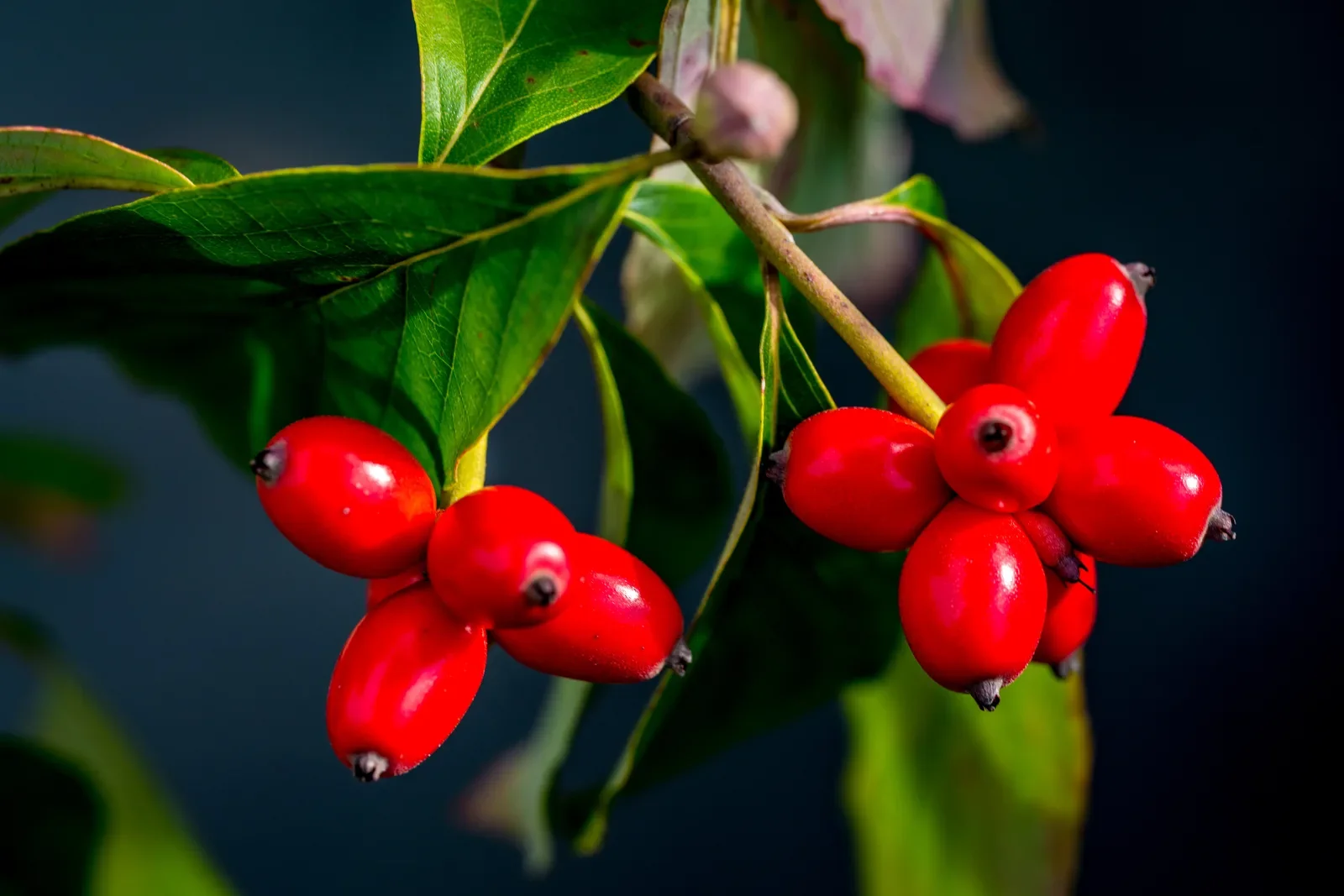
The fruits of Sorbus, Crataegus, Malus, Prunus, Arbutus or Celtis can be used by birds, but availability and preference vary. Trees that support many invertebrates provide indirect food, especially while insectivorous birds are breeding.
Quercus and other trees of large structure can have value even without an obvious ornamental fruit, because of their relationships with insects and the complexity of the crown.
Shelter and nesting
A dense crown gives protection from wind and predators; structured branches allow perching; cavities and mature wood can create nesting sites. A young tree does not deliver all these functions straight away, so hedges and dense shrubs can complement the system.
Conifers and evergreens keep shelter through the winter, while deciduous trees add seasonality and greater transparency close to buildings.
Designing a sequence and a network
It is better to combine species that fruit at different times and have complementary structures. Isolated trees in a garden dominated by hard surfaces have less potential than a network linked to hedges, copses and neighbouring spaces.
Conflicts also need to be anticipated: fruit drop, mess, attraction close to glazed façades or parking areas. The ecological benefit should be integrated without ignoring use and maintenance.
Mistakes to avoid
The most common mistakes are promising that a species will attract birds automatically; choosing by showy fruit alone; ignoring collisions with glass; and planting trees with no connection to shrubs or other green areas.
Applying it to the project
At Diaplant, trees for birds are compared by four functions: associated insects, fruit, shelter and nesting structure. A species is only recommended after these functions have been checked against the site.
The best tree for birds is the one that fulfils a clear function within a habitat network. The palette should combine food, shelter, time and structure.
Sources
- Narango, D. L.; Tallamy, D. W.; Marra, P. P. Nonnative plants reduce population growth of an insectivorous bird. (2018).
- Contrasting effects of tree origin and urbanization on invertebrate abundance and tree phenology. (2021).
- Plant–frugivore interactions in an urban nature reserve and its nearby gardens. (2019).
Tags