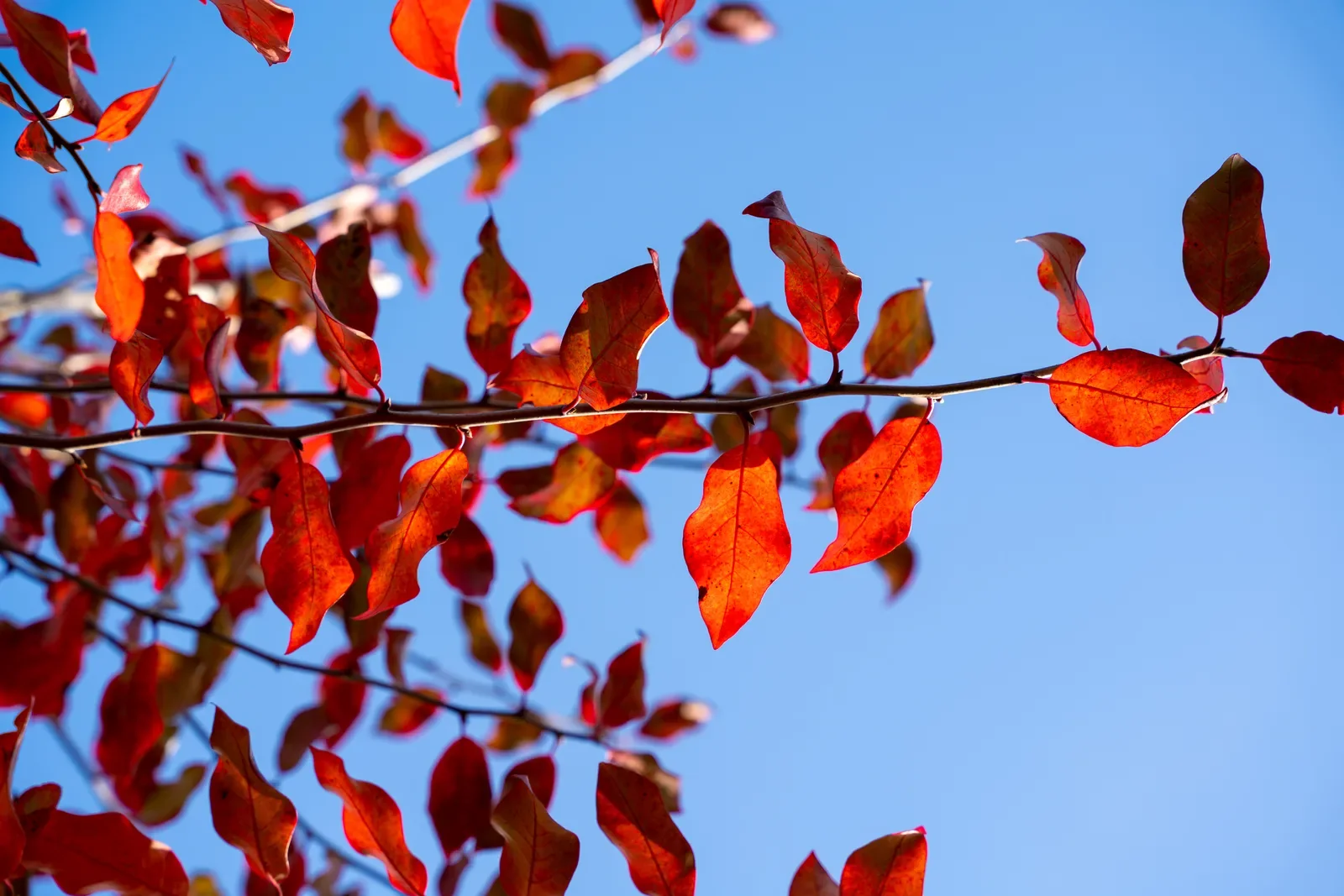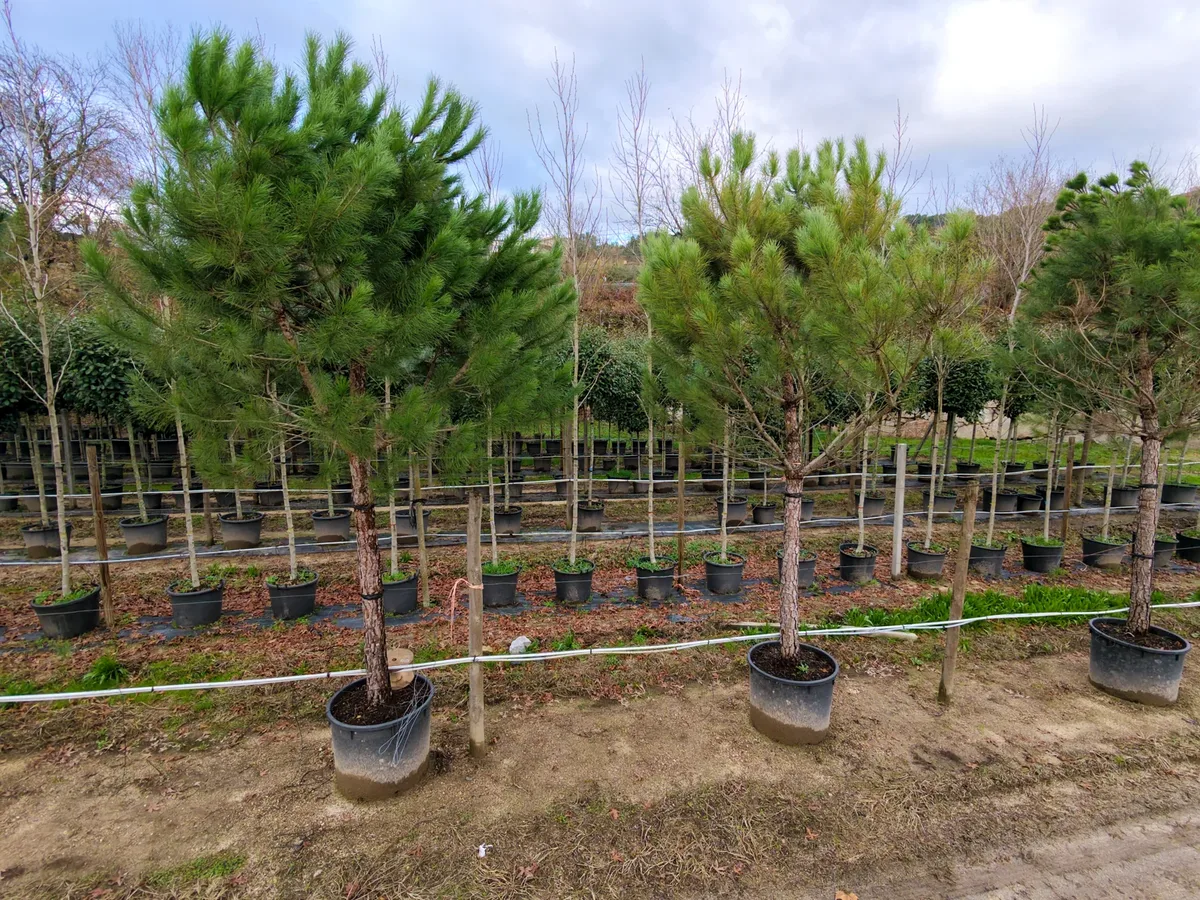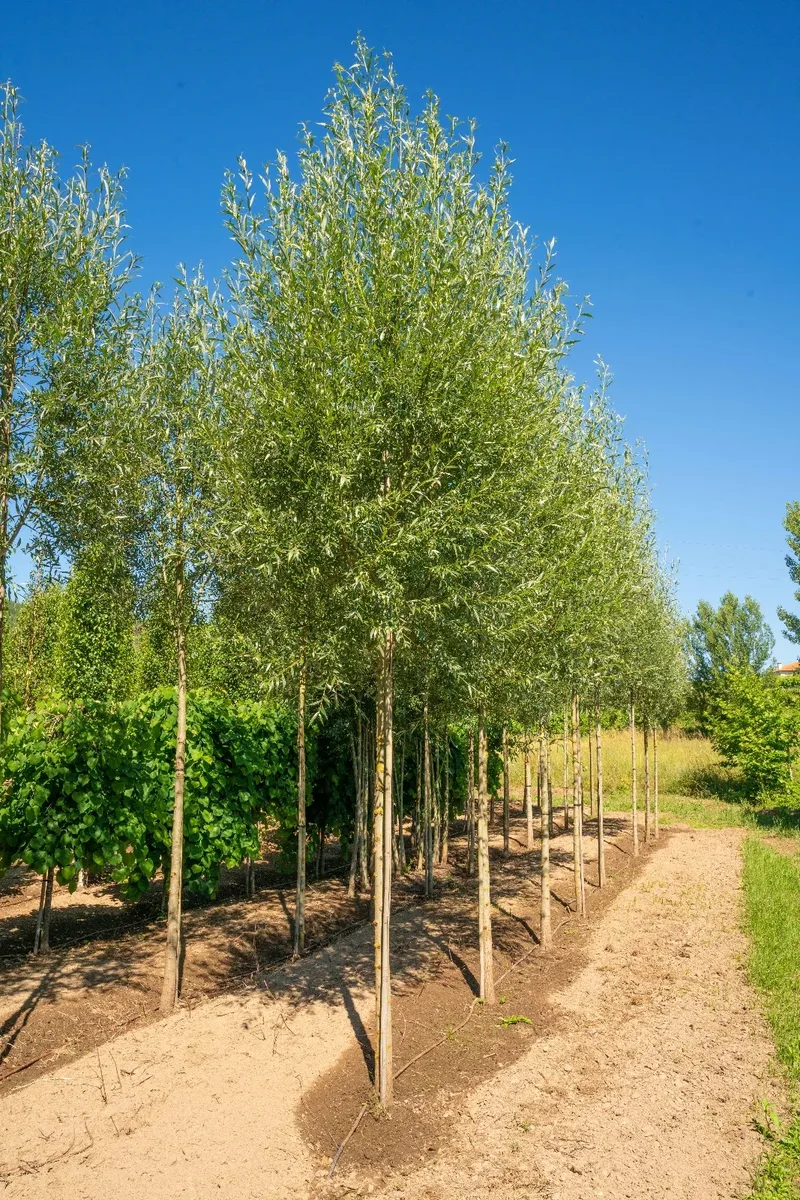
Salix alba — one of the species compared in the article.
Moist soils, periodic saturation, riverbanks and prolonged waterlogging call for different responses.
Moist soils, periodic saturation, riverbanks and prolonged waterlogging call for different responses. This collection arranges seven trees along a water gradient and warns against the mistake of planting wetland species in an urban planting hole with no drainage.
This selection is a starting point. The final choice depends on the conditions of the site, the size you want and the specimens available.
The species in the collection
| Species or cultivar | Role in the composition | Reference conditions | Main limitation |
|---|---|---|---|
| Alnus glutinosa | native tree of wet soils and riverbanks | moist to periodically saturated soil | do not confuse tolerance of wet with a planting hole that has no drainage; assess health |
| Salix alba | fast-growing tree of riverbanks and wet soils | sun, available water and plenty of space | roots, wood and large size keep it away from infrastructure |
| Fraxinus angustifolia | native tree associated with moist soils and riverbanks | sun, moist soil and space | assess current health and climatic suitability |
| Betula pendula | tree with a light crown and pale bark | sun, moist soil and rooting space | can suffer from heat, drought and compaction; assess health |
| Taxodium distichum | deciduous conifer able to tolerate very wet soils | sun, moist to flood-prone soils and space | large size and specialised roots; do not use in small depressions |
| Nyssa sylvatica | tree with intense autumn colour for moist soils | sun, acid to neutral soil that is moist and deep | not an answer to constant waterlogging or severe drought |
| Liquidambar styraciflua | large tree with strong autumn interest | sun, deep, moist soil | not a general choice for drought; roots and fruit should be considered |
How to combine them in the project
Taxodium and Salix occupy the wettest band and demand a great deal of space. Alnus and Fraxinus suit moist to periodically saturated soils. Betula, Nyssa and Liquidambar need available moisture, but should not be extended to permanent water.
Drawing the profile of the ground and the calendar of saturation matters more than the label ‘wet soil’.
Conditions of use
Assess the health of Betula and Fraxinus, the water table, oxygenation, erosion and rooting space.
Selection at Diaplant
At Diaplant, selection for riverside sites starts from a gradient of moisture, depth and duration of saturation. Drainage and rooting space are confirmed before the choice is made.
Related reading
- [137 — Rain gardens: when the planting also manages rainwater](../05_Solucoes_Baseadas_Natureza/137_jardins-de-chuva-quando-a-plantacao-tambem-gere-aguas-pluviais.md)
- [149 — Pack for wet soils and drainage areas: species to compare](149_pack-para-solos-humidos-e-zonas-de-drenagem-especies-para-comparar.md)
Sources
- Flora-On — Flora de Portugal interativa. Sociedade Portuguesa de Botânica. (2025).
- Forest Research. Urban Tree Manual. (2018).
- Forest Research. Urban forests — climate change advice. (2026).
- Comparative analysis of bioretention design strategies for urban runoff infiltration: a critical overview. (2024).
Tags