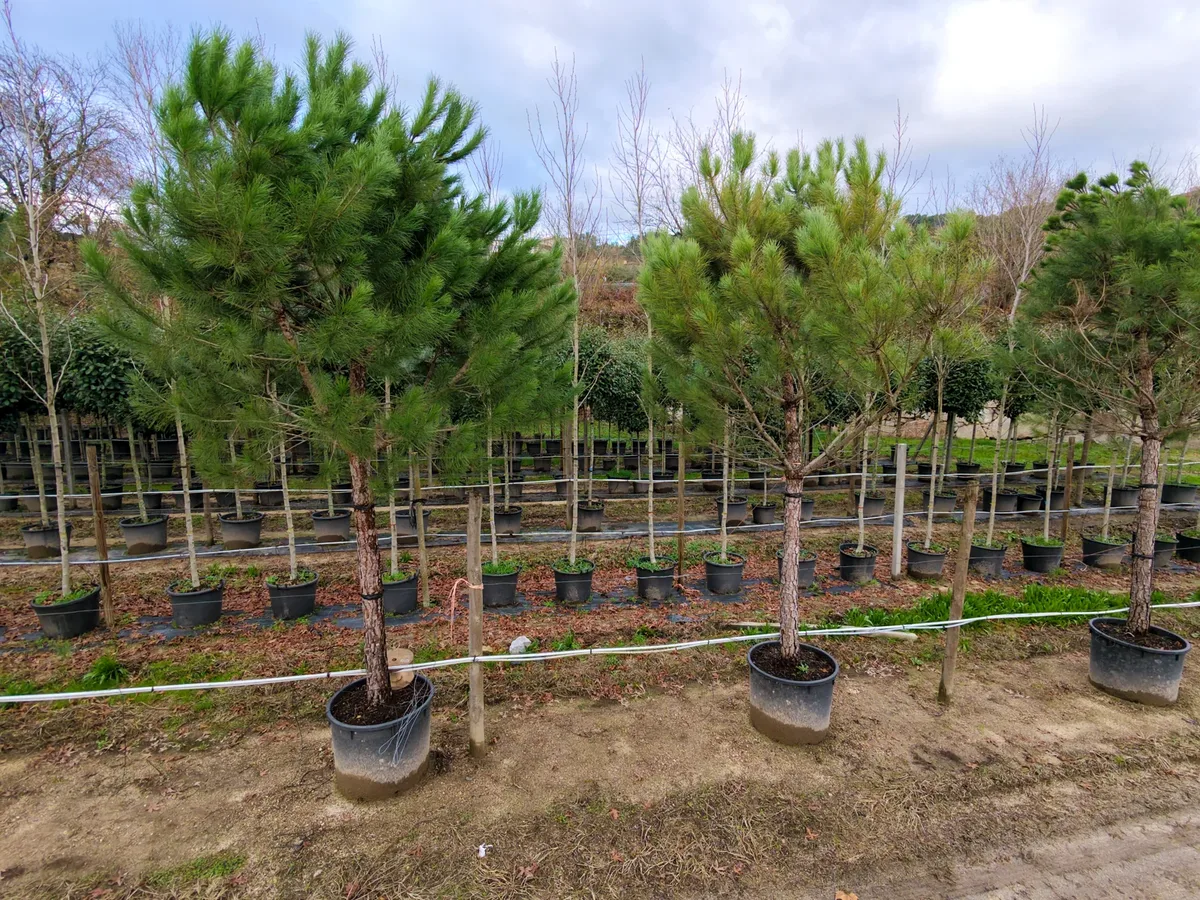
Pinus pinea — one of the species compared in the article.
Trees for dry soils should be selected for low watering after establishment, not for abandonment.
Trees for dry soils should be selected for low watering after establishment, not for abandonment. Soil depth, heat, wind, cold and the size of the specimen all change the result. This collection brings together Mediterranean and related species with different strategies.
The list lets you compare options, but it is no substitute for a site diagnosis or for choosing the right specimen.
The species in the collection
| Species or cultivar | Role in the composition | Reference conditions | Main limitation |
|---|---|---|---|
| Acer monspessulanum | medium-sized Mediterranean tree that reads well through the seasons | sun, well-drained soils and dry summers once established | should not be used without confirming cold, soil and provenance |
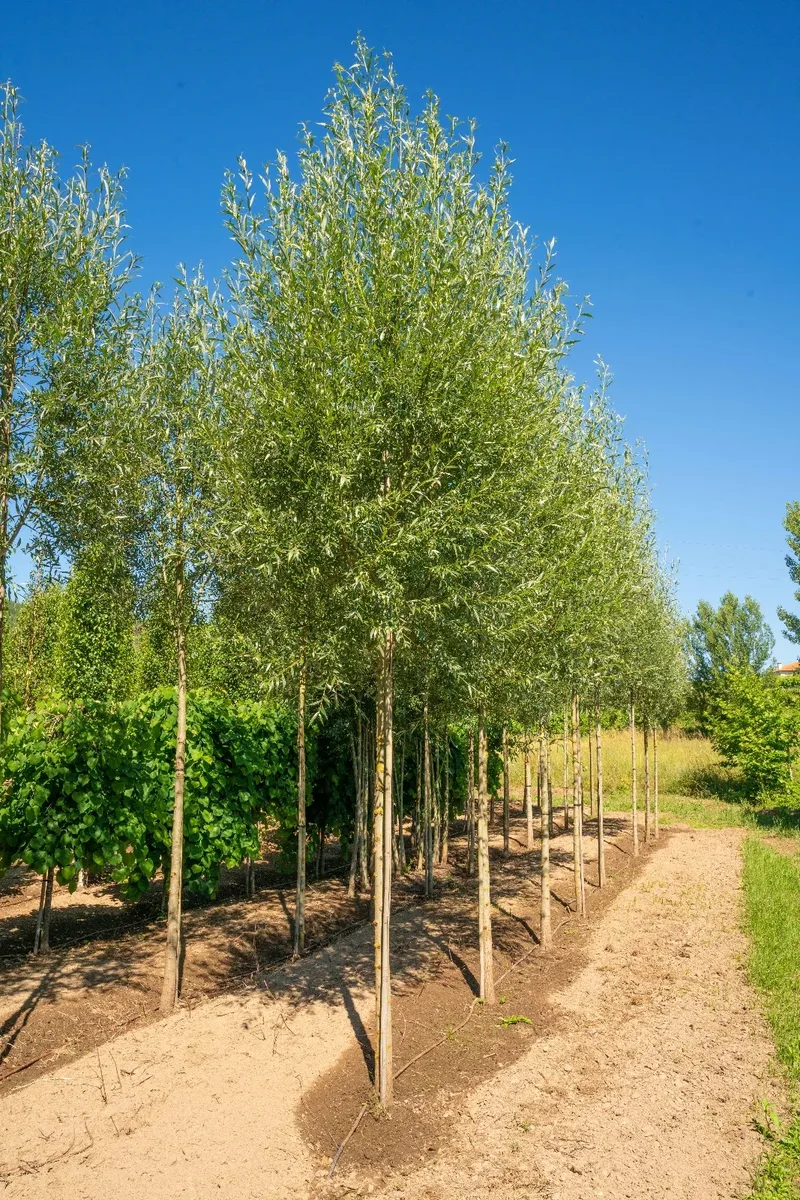
| Celtis australis | Mediterranean shade tree that adapts well once established | sun, deep, well-drained soils | crown and roots need space; fruit and leaves should be taken into account |
| Cercis siliquastrum | small tree that flowers in spring on the trunk and branches | sun, well-drained soil | dislikes waterlogging and can suffer from a badly handled transplant |
| Cupressus sempervirens ‘Stricta’ | columnar conifer for vertical rhythm and little width | sun, well-drained soil | narrow but tall; not suited to sites without depth of soil or with waterlogging |
| Olea europaea | evergreen Mediterranean tree of great character | sun, well-drained soil and heat | transplanting, drainage, cold and the size of the specimen all call for care |
| Pinus pinea | Mediterranean conifer with a broad crown and seeds | sun, well-drained soil and space | large size, resin, needle drop and cones should be taken into account |
| Quercus suber | evergreen cork oak for well-drained soils and a Mediterranean climate | sun, acid to neutral soil with no waterlogging | sensitive to soil disturbance, poor drainage and damage to the root collar |
How to combine them in the project
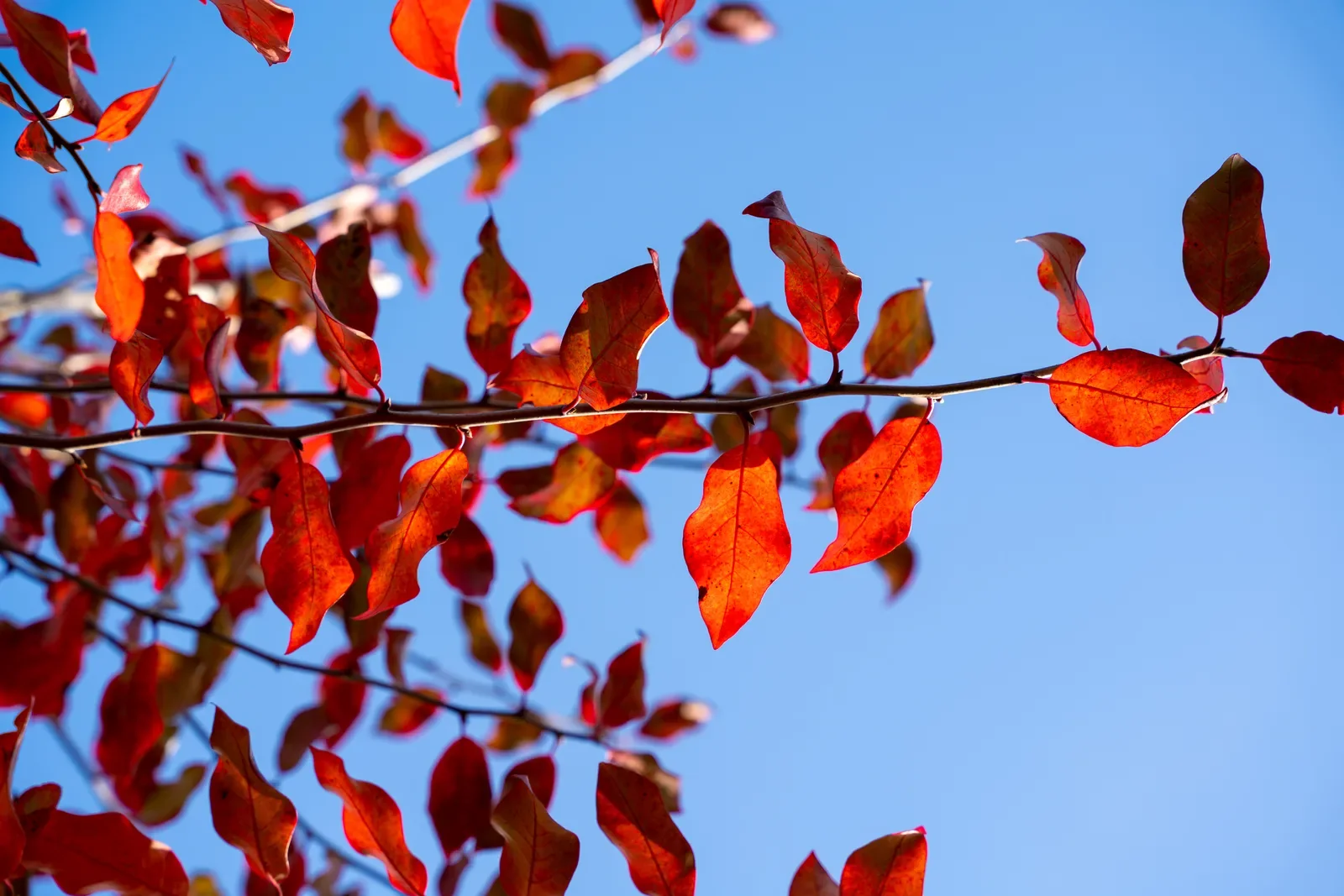
Acer monspessulanum, Celtis and Cercis offer medium-sized deciduous crowns; Cupressus works on verticality; Olea, Pinus pinea and Quercus suber create evergreen structure.
Using species with different crowns and roots spreads risk. The planting should be given a watering basin, soil cover and a watering programme that is progressively reduced.
Conditions of use
The final choice should confirm soil, drainage, cold, the origin of the plant material and local behaviour. Liquidambar and Platanus should not be presented as general reference choices for dry soils.
Selection at Diaplant
At Diaplant, trees for dry soils are compared by soil, cold, aspect and size. All of them receive establishment watering; low watering is an aim for maturity, not a starting condition.
Related reading
- [127 — Native or exotic species? Why the answer should not be binary](../04_Autoctones_Cultivares_Clima/127_especies-autoctones-ou-exoticas-porque-a-resposta-nao-deve-ser-binaria.md)
- [135 — Drought-tolerant does not mean doing without watering](../04_Autoctones_Cultivares_Clima/135_tolerante-a-seca-nao-significa-dispensar-rega.md)
- [148 — Low-water Mediterranean pack: structure, shade and ground cover](148_pack-mediterranico-de-baixa-rega-estrutura-sombra-e-cobertura.md)
Sources
- Forest Research. Urban Tree Manual. (2018).
- Relating the climate envelopes of urban tree species to their drought and thermal tolerance. (2021).
- Forest Research. Urban forests — climate change advice. (2026).
- Crown dieback and mortality of urban trees linked to heatwaves during extreme drought. (2023).
- Flora-On — Flora de Portugal interativa. Sociedade Portuguesa de Botânica. (2025).
Tags