Diaplant
A calendar organises planting, watering, pruning and weeding through the year. It should be adapted to the region, the climate and the condition of the plants.
An annual calendar helps to organise care, but it is no substitute for observation. In northern Portugal, altitude, aspect and proximity to the sea can shift bud break, flowering and the onset of drought by several weeks.
The tasks should be understood as windows. The condition of the plant and the weather of the particular year take priority over the date.
This calendar serves as a basis for trees, shrubs and perennials in an established garden. Particular species and systems may call for a different rhythm.
January
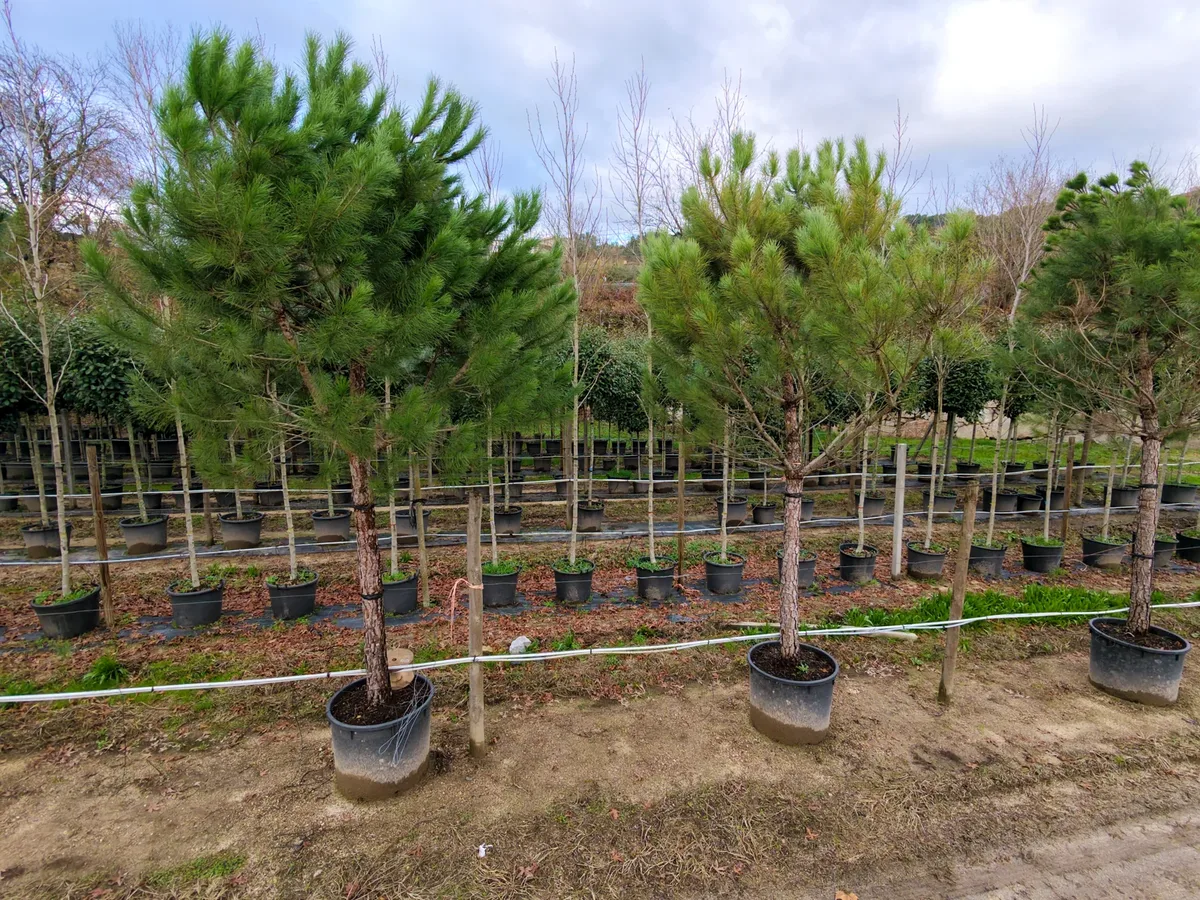
This is a favourable time for planting many rootballed trees and shrubs, provided the soil is not saturated or frozen.
On deciduous species, the crown structure is visible and can be assessed. Pruning is carried out only on suitable species and for suitable purposes.
Staking is checked after wind, as are drainage and winter damage.
Irrigation is not switched off automatically. Evergreens and recent plantings need checking in dry spells.
February
The planting season and soil preparation continue.
Formative pruning can go ahead on compatible species, taking care with trees that start into growth early or bleed sap.
Chambers, channels and outlets are cleared before the spring rains.
Dried perennials can start to be cut back in areas where new growth is about to break, without bringing them all forward at once.
March
Plant activity increases.
The irrigation system is tested, emitters are repaired and coverage is confirmed before growth hides the pipework.
Weeding starts early, while the self-sown plants are small.
Trees planted in winter are watched as they come into leaf. Failures should not be declared final before the rhythm of the species is known.
April
The season for rootballed trees is drawing to a close, depending on the stage of growth and the climate.
Watering becomes more regular. Checks confirm that water is reaching the rootballs and that the soil drains.
Shrubs and perennials come into growth. Replacements are planted before the heat, with follow-up watering.
Early pests and symptoms are watched for, without applying generic treatments.
May
Growth is rapid and competition for water increases.
Weeding and topping up the mulch help to protect the soil before summer.
Hedges and trained forms may need a first cut, respecting nesting and the applicable legislation.
Tree ties are checked because trunks are starting to thicken.
Irrigation is adjusted by aspect and not just by the controller.
June
The garden enters the period of highest water demand.
Deep watering of trees and shrubs takes priority. Perennials are watched so that their small rootballs do not dry out.
Hard cuts are avoided ahead of hot weather. Only broken branches and immediate hazards are removed.
Paving, pumps and water systems are checked before intensive use.
July
Heat and wind can cause stress quickly.
Moisture is checked at depth, especially around trees planted in the last year and the year before.
Fertilising is not increased in response to pale leaves without a diagnosis.
Weeding continues, but work that leaves soil exposed is planned with care.
Lagerstroemias and other summer species come into flower and can be observed for the record.
August
Vigilance over water and heat continues.
In extreme periods, the priority is to keep plants alive, not to carry out aesthetic pruning.
Scorch, irrigation failures, waterlogging from excessive programmes and damage from maintenance are watched for.
Perennials may need selective cutting or deadheading, depending on the style.
Water consumption is compared with what was programmed.
September
Temperatures may fall, but the soil is still dry.
Irrigation is reduced only when rain and moisture allow.
Losses, replacement needs and changes for the next season are assessed.
Some perennials can be divided or planted, provided there is time for them to root.
Data is gathered on how species behaved over the summer.
October
Preparation for the planting season begins.
Soil, drainage, access and tree orders are confirmed.
Organic mulch is applied where needed and erosion is put right.
Autumn leaves are managed differently depending on the location: removed from paving and drains, composted or left in planted areas.
The garden is not tidied to the point of removing all organic matter.
November
With many species dormant, the main season for dispatching and planting rootballed trees begins.
Trees are planted only when the soil allows good-quality work.
Staking and trunk protection are installed and recorded.
The irrigation system can move to a winter programme, while remaining available for use.
Structural perennials can be left standing dry in the bed.
December
Planting continues, as does inspection after storms.
Deciduous crowns make it possible to assess structure and plan future pruning.
Leaves are cleared from gratings, chambers and surfaces where they create a risk, without removing them indiscriminately from every bed.
The year’s records are reviewed and the maintenance plan is updated.
Newly planted trees
Whatever the month, the first few weeks call for checks on moisture and stability.
The first summer is critical. The second still deserves attention.
Staking is checked after wind and removed once the roots provide stability.
Structural pruning resumes only when recovery is sufficient.
Shrubs
The pruning season depends on flowering and habit.
Shrubs that flower on the previous year’s wood should not be cut before they flower if that effect matters.
Species grown in their natural form are treated differently from hedges.
New shoots, dead wood and density are assessed, rather than applying the same cut to all of them.
Perennials and grasses
Some are cut back at the end of winter, keeping structure and seed through the cold months.
Others lose quality or collapse and can be removed earlier.
Division and renewal depend on vigour and on the right season.
The plan should identify the species so that the team does not treat the whole mass as a single crop.
Lawns and meadows
Lawn grows most in spring and autumn and slows down in heat or cold.
The cutting height is adjusted; very low cuts increase stress.
Flowering meadows have their own calendar for cutting and removing the material, linked to flowering and fertility.
Lawn routines are not applied to a meadow mix.
Irrigation and infrastructure
The controller is reviewed whenever the season changes.
In early spring, the zones are tested. In summer, pressure and coverage are observed. In autumn, irrigation is reduced without being switched off out of habit.
Before winter, systems sensitive to cold are protected according to the equipment.
Drains are cleared before the wettest periods.
A calendar that learns
The first year yields information about microclimate, soil and plants.
Flowering dates, irrigation failures, wet areas and tasks are recorded. The next calendar then reflects the real garden.
Maintenance becomes more efficient when it stops following months alone and starts following signs.
Related content
Sources and supporting references
- Diaplant’s maintenance practice in the context of northern Portugal.
- European Arboricultural Standards. European Tree Pruning Standard.
- Royal Horticultural Society — maintenance calendars and guidance, adapted to the local context.
Tags