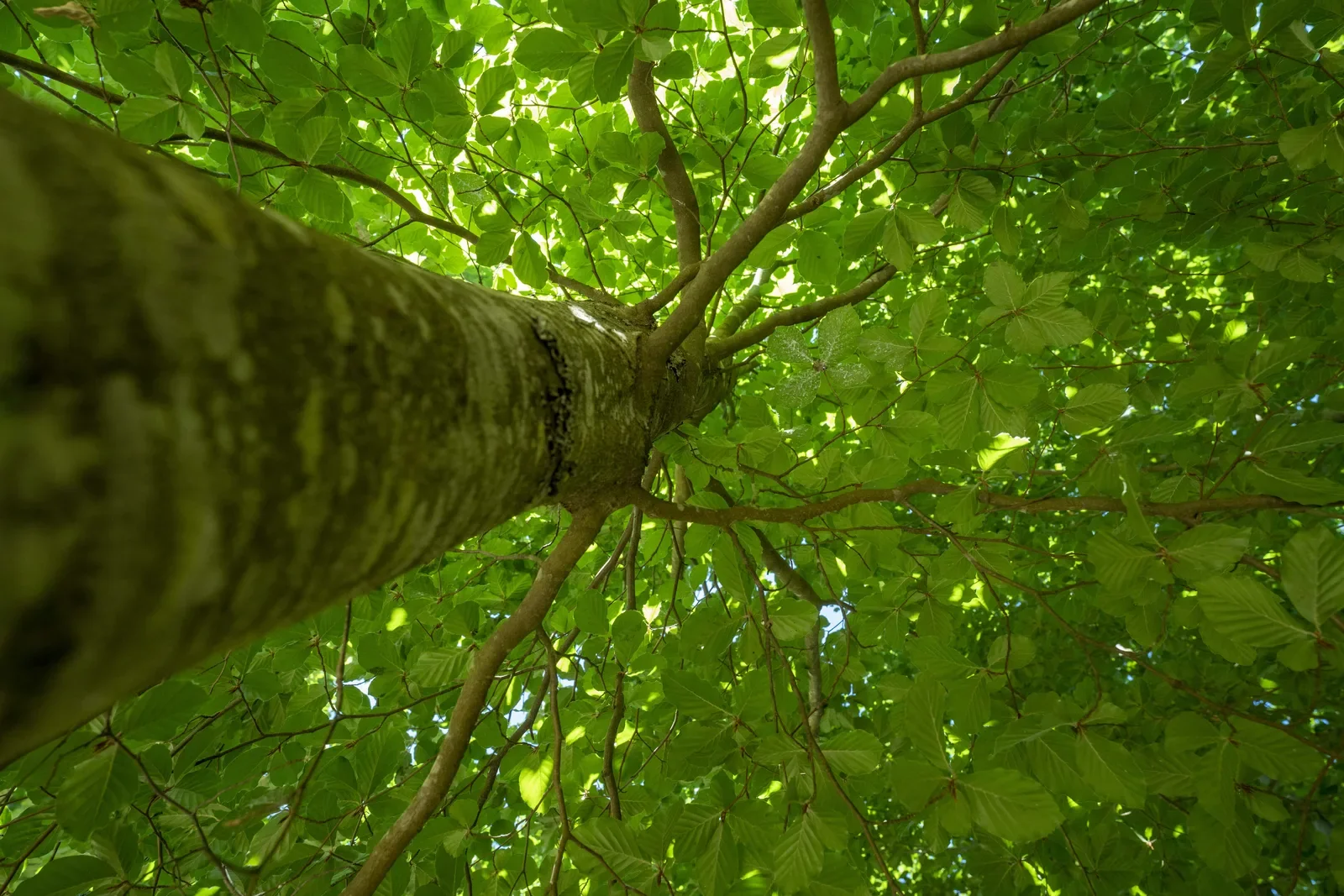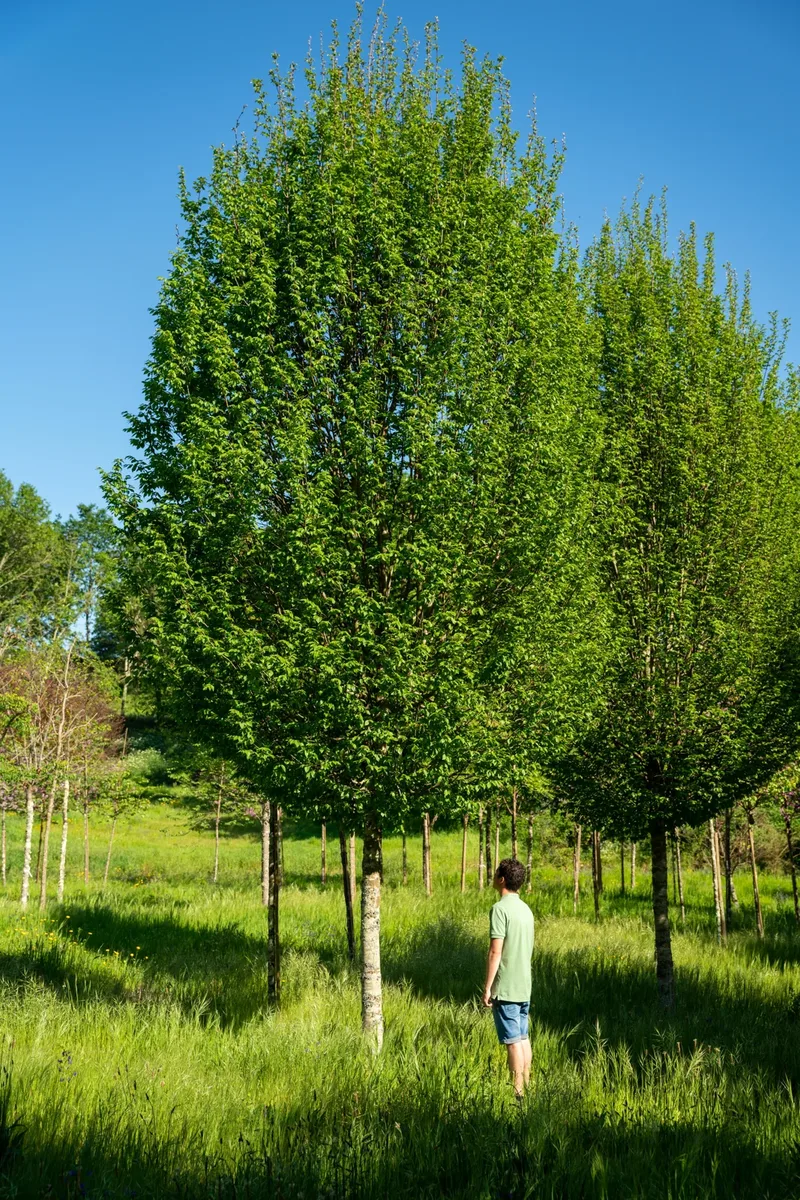
Tilia cordata — one of the species compared in the article.
Wide avenues call for scale, continuity and shade, but they should not depend on a single species.
Wide avenues call for scale, continuity and shade, but they should not depend on a single species. Diversity across the urban network reduces risk and allows trees to be matched to different stretches. This collection brings together seven large options with complementary functions.
This selection is a starting point. The final choice depends on the conditions of the site, the size you want and the specimens available.
The species in the collection
| Species or cultivar | Role in the composition | Reference conditions | Main limitation |
|---|---|---|---|
| Acer pseudoplatanus | large tree for shade and scale | sun, deep, moist soils | not a reference choice for extreme heat or small spaces |
| Celtis australis | Mediterranean shade tree that adapts well once established | sun, deep, well-drained soils | crown and roots need space; fruit and leaves should be taken into account |
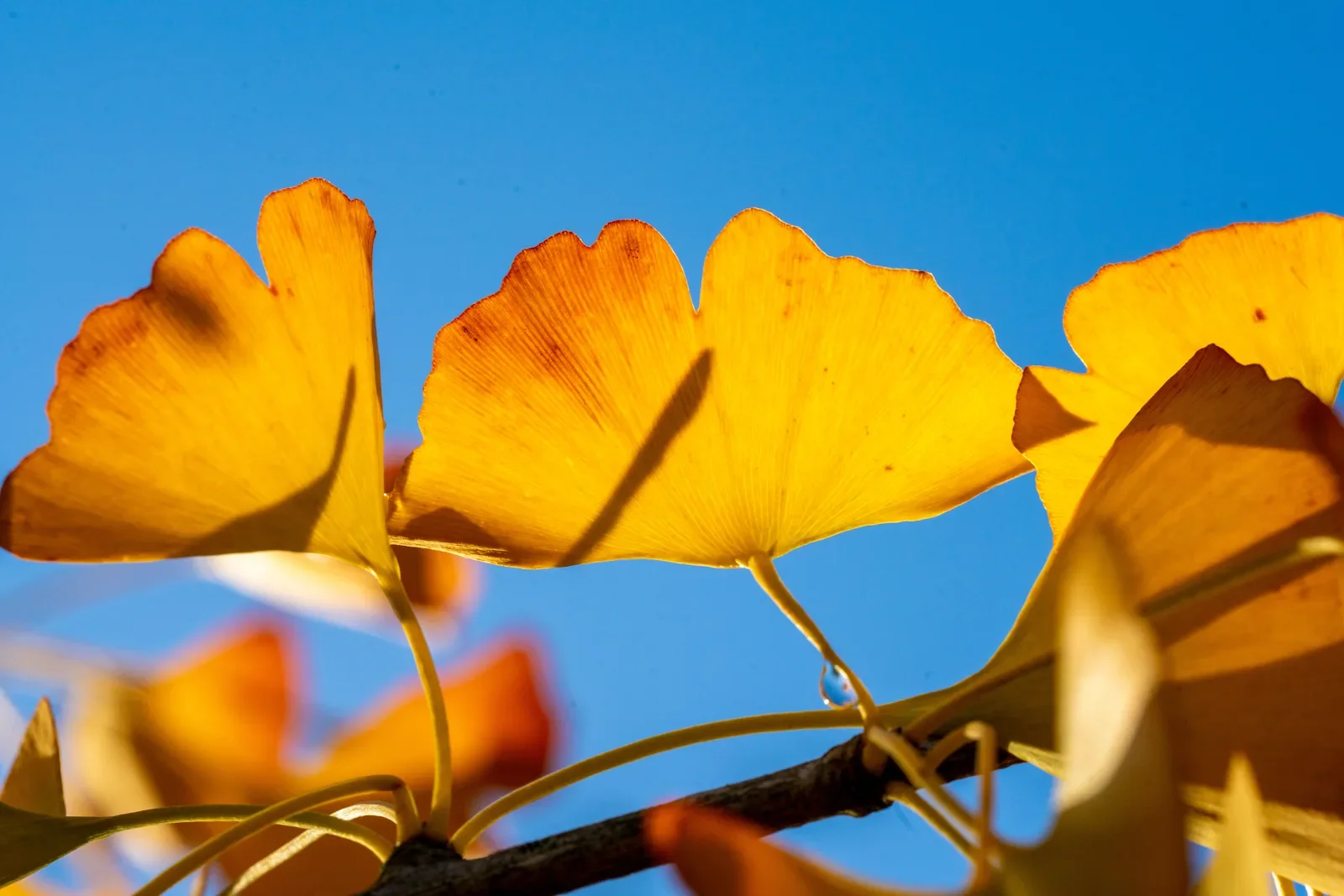
| Ginkgo biloba | tree with a distinctive structure and yellow autumn colour | sun, well-drained soil and rooting volume | choose sex/cultivar when fruit is unwanted; growth can be slow |
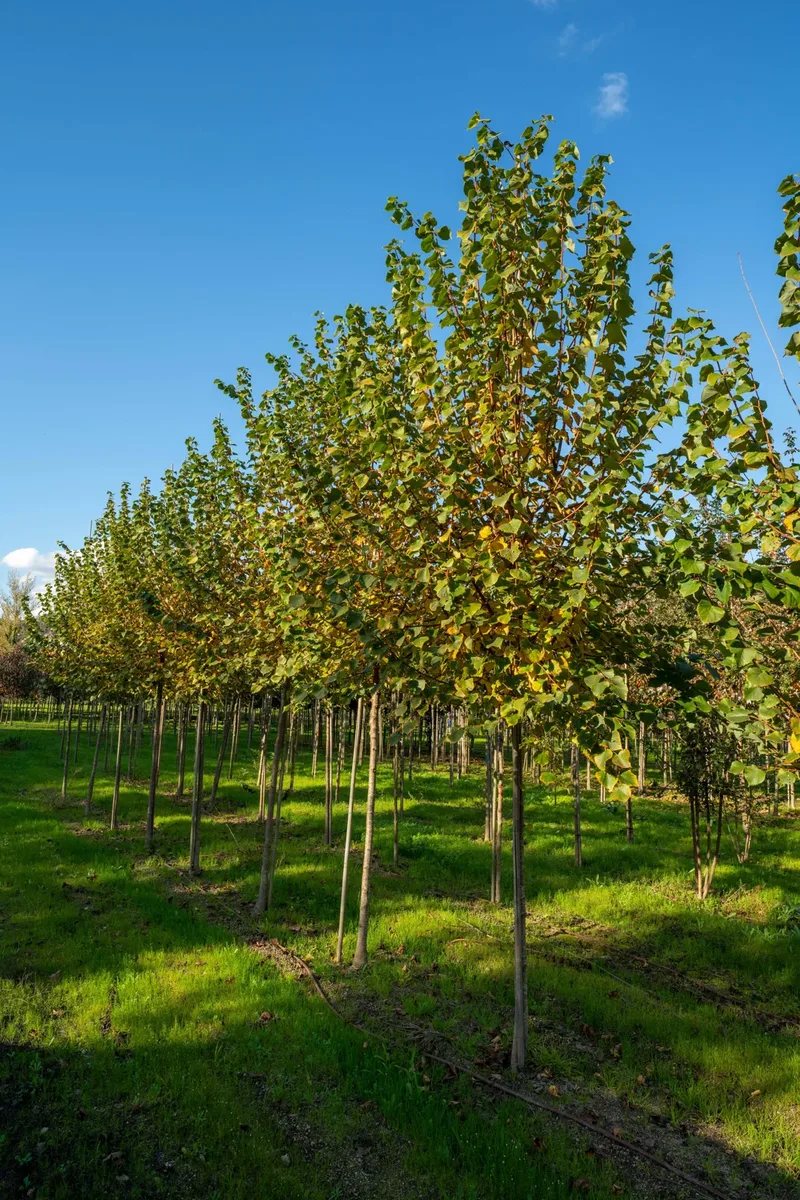
| Gleditsia triacanthos ‘Sunburst’ | tree with a light crown and luminous foliage | sun, deep soil and well-prepared urban soil | young foliage can scorch; confirm the absence of thorns and the form of the batch |
| Liquidambar styraciflua | large tree with strong autumn interest | sun, deep, moist soil | not a general choice for drought; roots and fruit should be considered |
| Quercus coccinea | large oak with autumn colour | sun, deep, well-drained soil | exotic origin and large scale need to be justified |
| Tilia tomentosa | lime with a large crown, relatively tolerant of urban heat | sun, deep soil and water during establishment | large size and interaction with paving call for space |
How to combine them in the project
Acer pseudoplatanus, Tilia tomentosa, Liquidambar and Quercus coccinea create expressive crowns; Celtis offers a Mediterranean answer; Ginkgo brings longevity and autumn; Gleditsia ‘Sunburst’ casts a more filtered shade.
Instead of alternating species tree by tree with no logic, diversity can be organised by stretches, junctions or sequences, keeping a coherent reading and practicable management.
Conditions of use
The final choice should confirm future climate, continuous soil, plant health, batch uniformity and trade-offs. Platanus and Quercus robur can be alternatives depending on the context.
Selection at Diaplant
At Diaplant, batches for avenues are compared at full scale, considering continuity, diversity and the possibility of future replacement. Diversity is organised by stretches, without losing the reading of the whole.
Sources
- Forest Research. Urban Tree Manual. (2018).
- Relating the climate envelopes of urban tree species to their drought and thermal tolerance. (2021).
- Functional traits are better than climate niche approach at predicting the vital growth and mortality rates of urban tree species. (2026).
- Forest Research. Urban forests — climate change advice. (2026).
- Embracing ambivalence: tree diversity as a nature-based solution for European cities. (2024).
- Diversification of the urban forest—Can we afford to exclude exotic tree species? (2016).
Tags