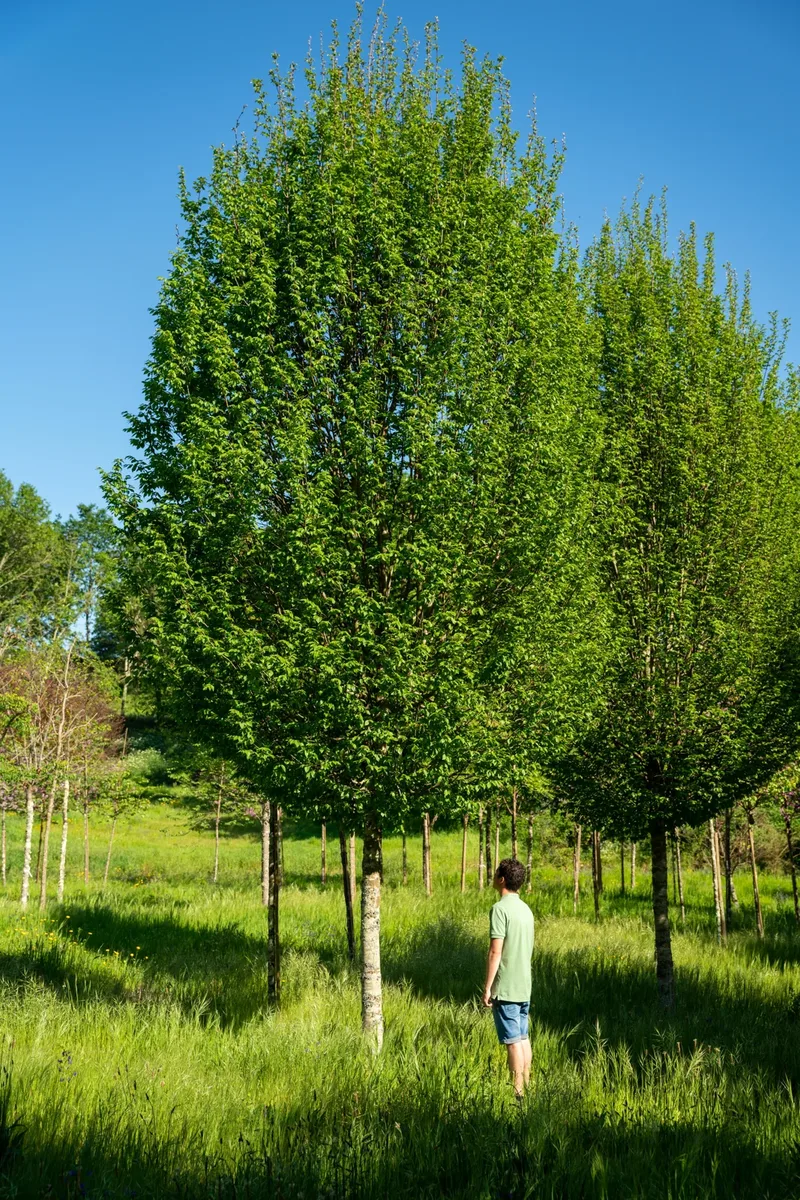
Carpinus betulus 'Fastigiata' — an example of a columnar crown. The article compares seven species.
In a narrow street, the crown has to coexist with façades, lighting, signage and traffic.
In a narrow street, the crown has to coexist with façades, lighting, signage and traffic. Columnar or contained forms help with the space overhead, but they do not solve small tree pits or conflicts below ground. This collection compares seven trees with distinct habits.
The species below should be read as design alternatives. Soil, climate, space and availability determine the final decision.
The species in the collection
| Species or cultivar | Role in the composition | Reference conditions | Main limitation |
|---|---|---|---|
| Acer platanoides ‘Globosum’ | rounded, fairly contained crown for streets and squares | sun, urban soil with sufficient volume | crown form does not make up for a lack of rooting space |
| Betula pendula ‘Fastigiata’ | narrower form for vertical composition | sun, moist soil | still needs rooting volume and copes poorly with extreme heat |
| Carpinus betulus ‘Fastigiata’ | upright form that broadens with age | sun to partial shade, moist soil | does not stay narrow indefinitely |
| Fagus sylvatica ‘Dawyck Purple’ | columnar tree with dark foliage | sun to partial shade, moist soil and a moderate climate | poorly suited to intense heat and drought; grows tall |
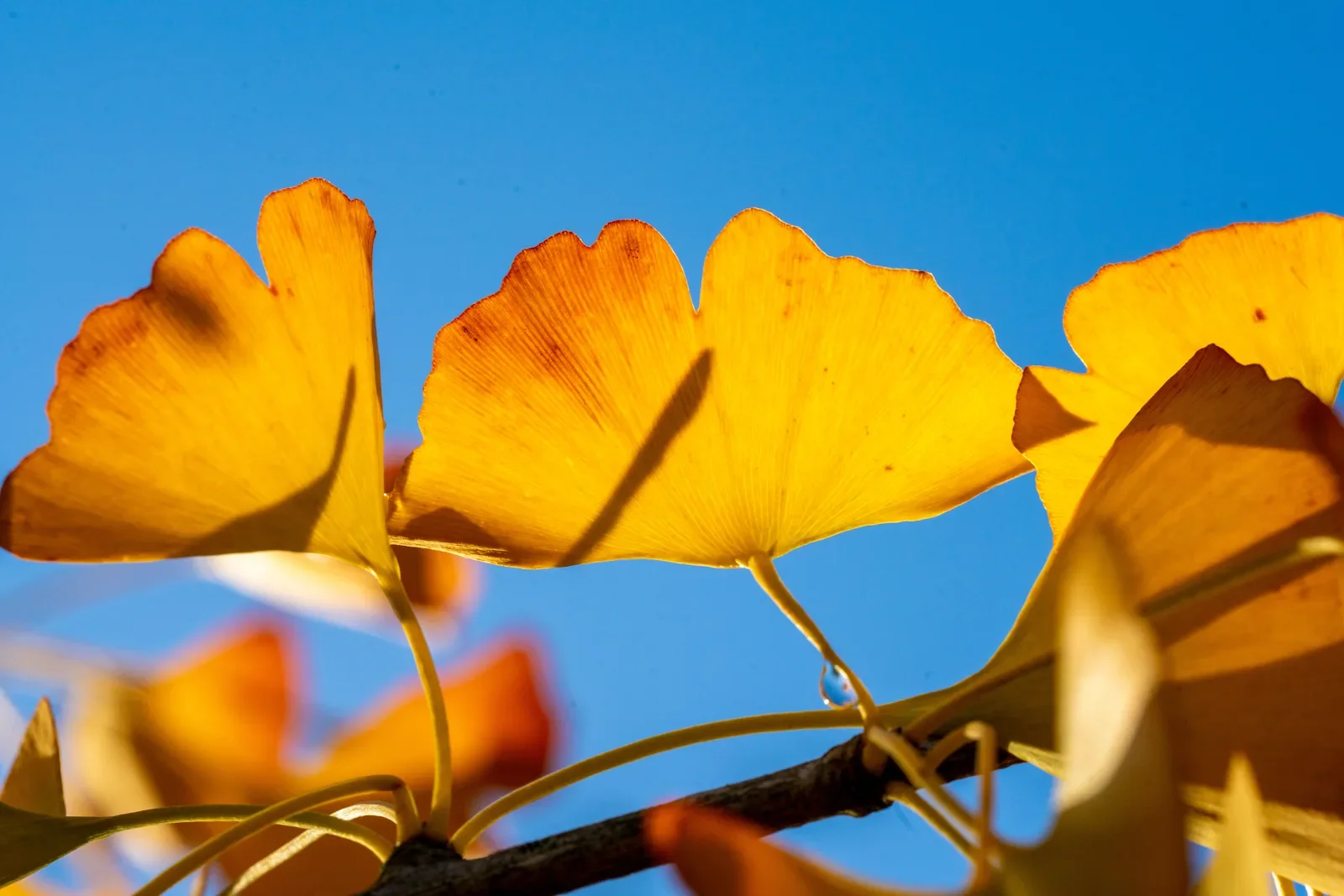
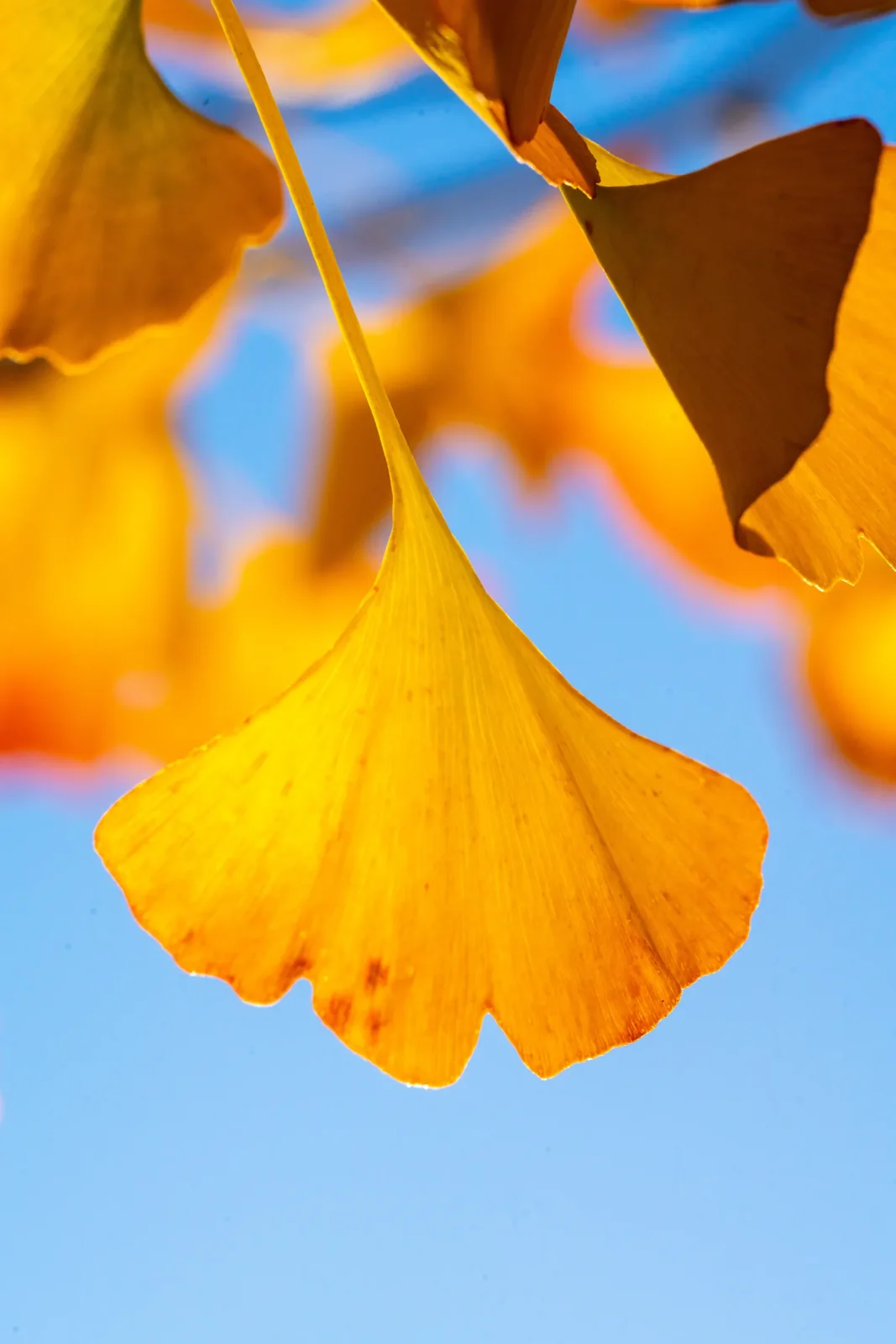
| Ginkgo biloba ‘Blagon’ | narrower cultivar for spaces of restricted width | sun, well-drained soil | keeps growing in height and needs rooting space |
| Liquidambar styraciflua ‘Slender Silhouette’ | very narrow, tall cultivar | sun, moist soil | a columnar form reduces neither the need for root room nor the height |
| Parrotia persica ‘Vanessa’ | more upright cultivar with autumn interest | sun, moist soil | keeps broadening with age; colour depends on the year |
How to combine them in the project
Acer ‘Globosum’ gives a rounded crown; Betula and Carpinus ‘Fastigiata’ are upright; Fagus ‘Dawyck Purple’ adds dark colour; Ginkgo ‘Blagon’, Liquidambar ‘Slender Silhouette’ and Parrotia ‘Vanessa’ keep a fairly contained width.
Drawing sections at 10 and 20 years shows where each crown meets façades and lamp columns. Soil volume should be sized independently of the width above ground.
Conditions of use
The final choice should confirm mature dimensions, clear stem height, health, climatic tolerance and the availability of uniform batches.
Selection at Diaplant
At Diaplant, trees for narrow streets are assessed in section, relating crown, stem, façades, lighting and soil volume. The uniformity of the batch is confirmed on real plants.
Sources
- Forest Research. Urban Tree Manual. (2018).
- Relating the climate envelopes of urban tree species to their drought and thermal tolerance. (2021).
- Functional traits are better than climate niche approach at predicting the vital growth and mortality rates of urban tree species. (2026).
- Forest Research. Urban forests — climate change advice. (2026).
Tags