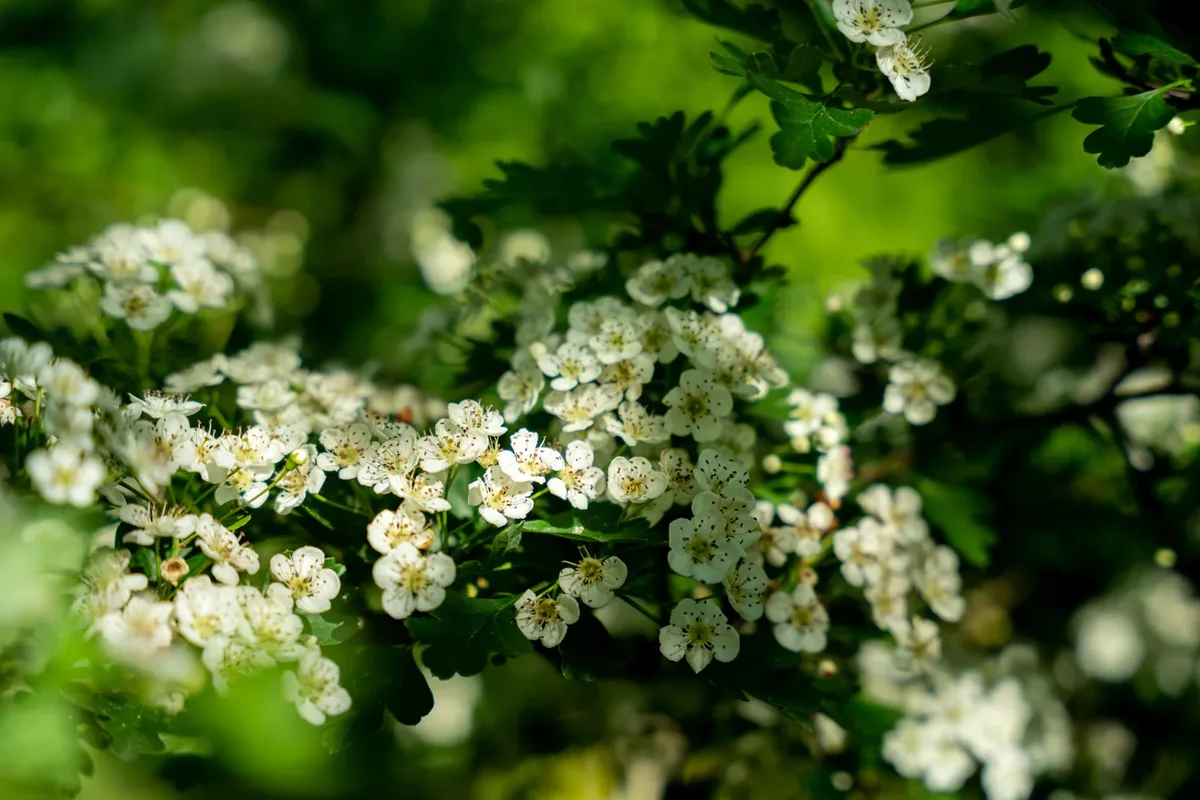
Crataegus monogyna — one of the species in the pack.
A native Atlantic base can give structure to projects on the moist soils of northern Portugal, but it should not be applied without a diagnosis.
A native Atlantic base can give structure to projects on the moist soils of northern Portugal, but it should not be applied without a diagnosis. Alnus, Betula, Quercus robur, Fraxinus, Sorbus and Crataegus occupy distinct regimes of water, light and scale.
This selection serves as a starting point. The final choice depends on the conditions of the site, the size wanted and the specimens available.
The species in the collection
| Species or cultivar | Role in the composition | Reference conditions | Main limitation |
|---|---|---|---|
| Alnus glutinosa | native tree of wet soils and watersides | moist to periodically saturated soil | do not confuse tolerance of wet with a planting hole that has no drainage; assess plant health |
| Betula pendula | tree with a light crown and pale bark | sun, moist soil and rooting space | can suffer from heat, drought and compaction; assess plant health |
| Quercus robur | large native oak of high structural value | sun, deep, moist soil | not suited to severe drought, small tree pits or sites close to buildings |
| Fraxinus angustifolia | native tree associated with moist soils and watersides | sun, moist soil and space | assess current plant health and climatic suitability |
| Fraxinus excelsior | large tree of cool environments | sun to partial shade, deep, damp soil | heavily constrained by plant health issues and heat |
| Sorbus aucuparia | small tree with flower, fruit and autumn colour | sun to partial shade, cool climate and well-drained soil | can suffer from heat and drought in Portugal |
| Sorbus torminalis | medium-sized native tree with fruit and autumn interest | sun, well-drained soil and space | availability and provenance should be confirmed |
| Crataegus monogyna | small native tree with flower, fruit and shelter | sun, varied, well-drained soils | thorns, fruit drop and plant health should be considered |
How to combine them in the project
Use Quercus robur as the long-term structure where there is deep soil and enough water. Alnus and Fraxinus suit moister or wetter areas; Betula and Sorbus provide lighter crowns; Crataegus creates edge, flower and fruit.
The composition should follow the gradient of the site, placing the species most tolerant of wet at the lower levels and avoiding the repetition of trees from cool environments in dry, compacted urban areas.
Conditions of use
The final choice should confirm status and distribution on Flora-On, provenance, the current health of ash trees and behaviour in urban heat. Native does not mean suited to any soil.
Selection at Diaplant
At Diaplant, the Atlantic base is adjusted to the soil, moisture and aspect of each project. Native origin does not dispense with diagnosis or plant health checks.
Related reading
- [127 — Native or exotic species? Why the answer should not be binary](../04_Autoctones_Cultivares_Clima/127_especies-autoctones-ou-exoticas-porque-a-resposta-nao-deve-ser-binaria.md)
Sources
Tags