

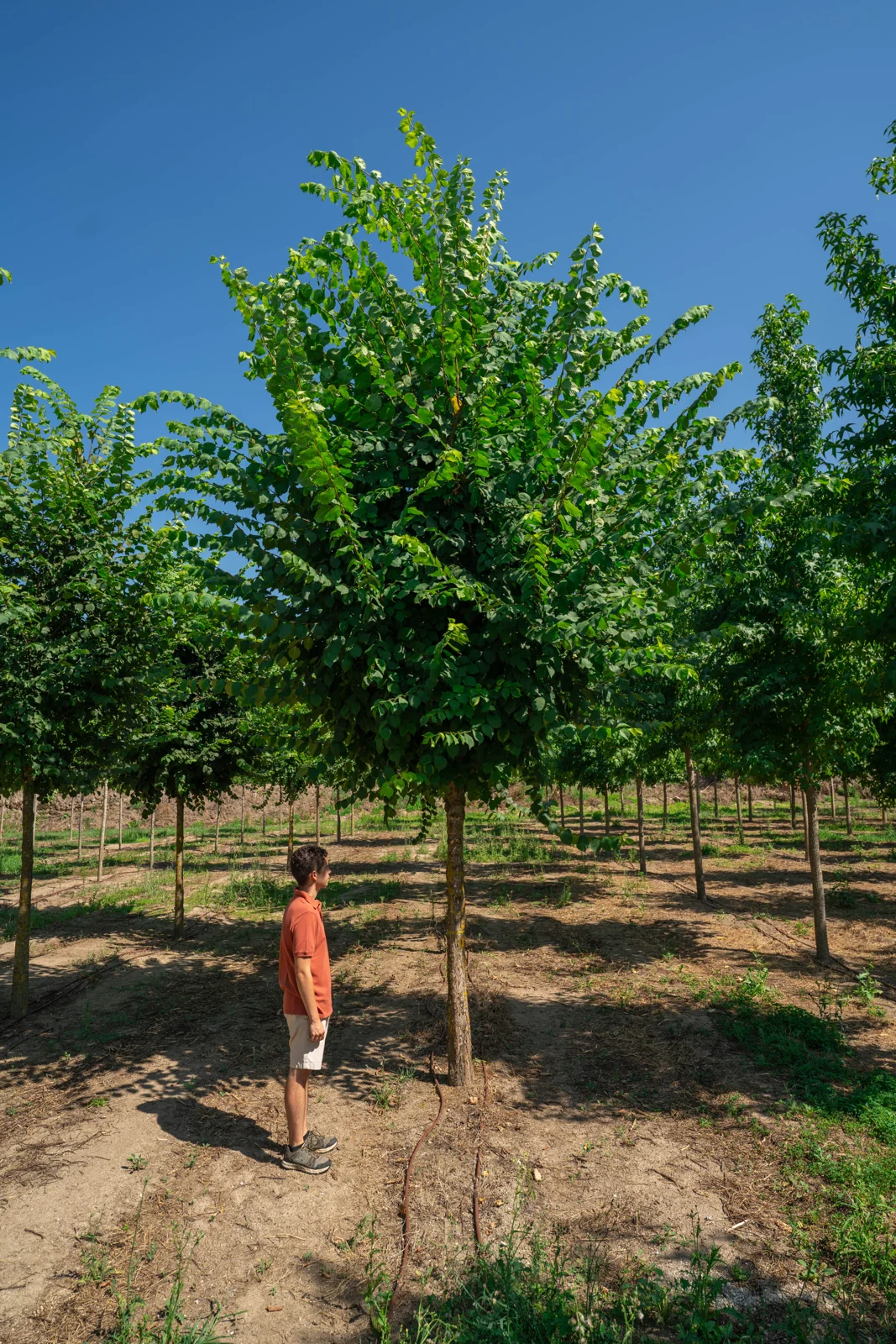
Ulmus glabraWych elm
A large, fast-growing tree, it develops a broad, oval and densely branched crown, able to create deep shade and a monumental presence. The large dark green leaves, very rough to the touch, take on a yellow to golden colour in autumn.
- Broad, dense crown, suited to parks and large estates
- Particularly large leaves, very rough and markedly asymmetrical
- Domed crown with slightly pendulous lower branches in mature specimens
About Ulmus glabra
Known as wych elm, it is a large-growing deciduous tree, native to Europe and western Asia. It grows fast and can reach approximately 25 to 35 metres in height, occasionally up to 40 metres, with a crown between 15 and 20 metres wide. The crown becomes broad, oval to rounded and densely branched; in mature specimens, the lower branches may take on a slightly pendulous position.Read moreShow less
Ulmus glabra, known as wych elm or Scots elm, is a large-growing deciduous tree, native to Europe and western Asia. It grows fast and can reach approximately 25 to 35 metres in height, occasionally up to 40 metres, with a crown between 15 and 20 metres wide. The crown becomes broad, oval to rounded and densely branched; in mature specimens, the lower branches may take on a slightly pendulous position.
The leaves, about 8 to 16 centimetres long, are broad, asymmetrical at the base, dark green and markedly rough on the surface. This pronounced texture and the size of the leaf give the crown a solid, abundant appearance during the summer. In autumn, the foliage takes on yellow to golden tones. In March, before the leaves appear, small clusters of reddish-brown to violet flowers emerge. They are discreet and wind-pollinated, and are later replaced by winged samaras, likewise dispersed by the wind. The bark stays relatively smooth for several years, becoming dark grey and progressively furrowed with age.
It grows best in sun or partial shade, in deep, fertile, moist to wet and preferably neutral or chalky soils. It adapts particularly well to valley bottoms, the banks of watercourses, cool woodland and ground under Atlantic influence. It tolerates intense cold, strong wind, sea wind and temporary episodes of flooding. On the other hand, it is not a suitable choice for permanently dry soils, restricted rooting spaces, severely compacted ground or tree pits surrounded by impermeable paving.
The scale and density of the crown make Ulmus glabra suited to parks, large estates, landscape settings, woodland, riverbanks and wide avenues with open soil. A mature specimen from Diaplant immediately brings shade, volume and a relationship of scale in proportion to large buildings and open spaces. The project should, however, reserve enough area for a crown that can exceed 15 metres in diameter, ensure a generous rooting volume and provide for deep watering during the establishment period.
Advice on this species
Want to know more about Ulmus glabra?
Tell us about your project and we will advise on this species — where it does well, what size makes sense and what to expect once it is planted.
- Own production
- Mature specimens
- Reply within 1–2 days
No obligation · tailored quote