

Pyrus calleryana 'Chanticleer'Callery pear
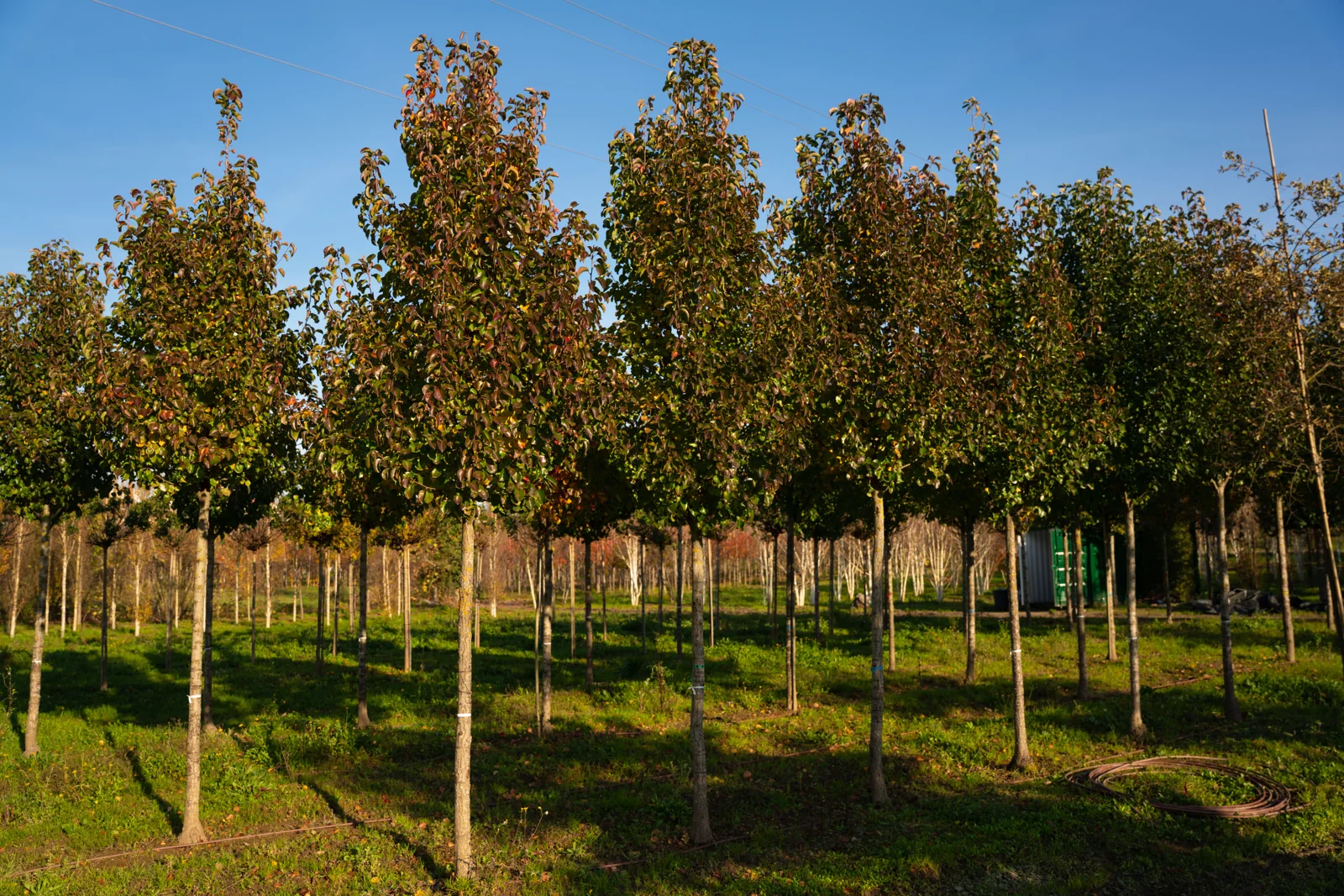
Where an urban avenue planting calls for vertical shade without encroaching on the circulation zone, the narrow crown and columnar habit offer contained aerial volume in a tree pit, with spring flowering and a reliable autumn colour change.
- Narrow, columnar habit, vertical shade without taking up lateral ground
- White flowers in clusters in spring, attractive to pollinators
- Foliage that turns red, purple and orange in autumn
About this cultivar
A cultivar with a narrow crown, pyramidal to columnar, it reaches in Portuguese conditions 10 to 12 m in height by only 4 to 6 m in width. This proportion sets it apart from the straight species and from the other Callery pears: in avenue planting it takes up the lateral space of a Carpinus betulus 'Fastigiata', but with better tolerance of compaction and air pollution, which makes it…Read moreShow less
A cultivar with a narrow crown, pyramidal to columnar, it reaches in Portuguese conditions 10 to 12 m in height by only 4 to 6 m in width. This proportion sets it apart from the straight species and from the other Callery pears: in avenue planting it takes up the lateral space of a Carpinus betulus 'Fastigiata', but with better tolerance of compaction and air pollution, which makes it specifiable in narrow streets and central reservations where a lime or a plane will not fit.
Root behaviour matches the contained habit: a relatively compact system, compatible with smaller tree pits and with the separation of underground services, without the paving lift associated with species with aggressive shallow roots. It adapts to compacted clay and chalky soils, provided drainage is assured; prolonged waterlogging is the only soil factor to avoid, so it is not recommended in poorly drained soils without correction.
In full exposure it tolerates summer heat and short periods of water stress once established, and withstands the winter cold of inland areas without damage. As a member of the Rosaceae, the context of fireblight matters (Erwinia amylovora, notifiable to the DGAV, Portugal’s food and veterinary authority): 'Chanticleer' is among the Callery selections with the best plant-health record, a relevant factor in the choice over other ornamental Rosaceae under pressure.
The abundant white flowering appears in early spring, before or with the opening of the leaves, and is of value to pollinators. The foliage, glossy and dark green in summer, turns to stable tones of red, purple and orange, extending interest until late autumn, a useful criterion in municipal projects that value seasonal colour in public space. The fruit is inconspicuous and of no decorative interest. With moderate to fast growth and low maintenance requirements, it offers a regular silhouette with light formative pruning, sustaining uniform avenue plantings in the medium term.
Advice on this species
Want to know more about Pyrus calleryana 'Chanticleer'?
Tell us about your project and we will advise on this species — where it does well, what size makes sense and what to expect once it is planted.
- Own production
- Mature specimens
- Reply within 1–2 days
No obligation · tailored quote