

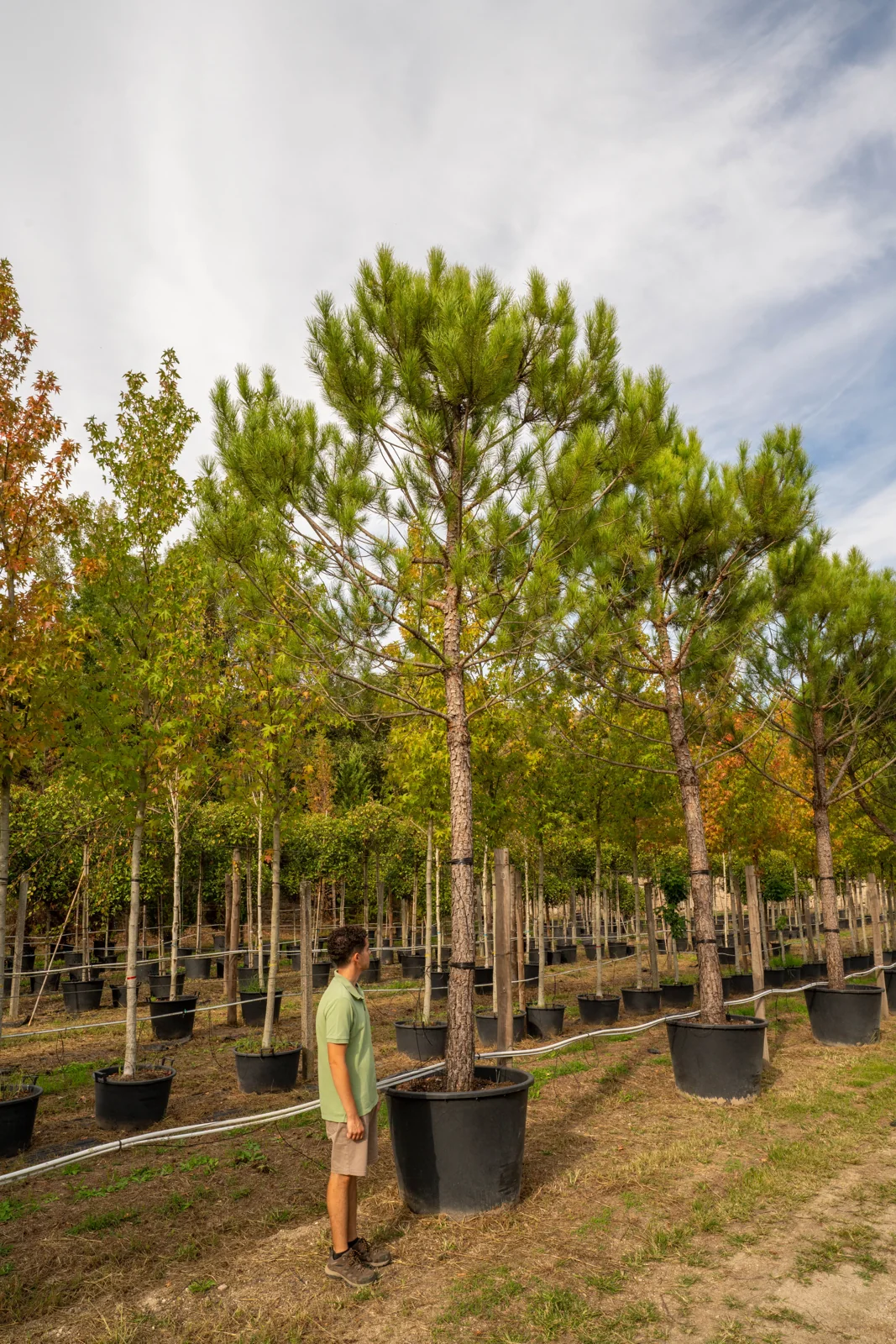
Pinus pineaStone pine
A species native to the western Mediterranean, the stone pine is specified in Portugal for large-scale settings that combine ornamental standards with tolerance of prolonged summer drought, coastal salinity and poor sandy soil.
- Broad, Chinese-hat crown outlined against the coastal horizon
- Bark in deeply fissured reddish-brown plates
- Dark green evergreen needles that filter the light
About this species
At maturity the stone pine forms a broad, low, horizontal crown on a straight trunk, outlined against the sky in the characteristic hat-shaped silhouette that explains its continued use in avenues, viewpoints and estates. The mature specimen typically reaches between 12 and 20 m in height with an equal or greater crown diameter, casting dense, stable shade…Read moreShow less
At maturity the stone pine forms a broad, low, horizontal crown on a straight trunk, outlined against the sky in the characteristic hat-shaped silhouette that explains its continued use in avenues, viewpoints and estates. The mature specimen typically reaches between 12 and 20 m in height with an equal or greater crown diameter, casting dense, stable shade throughout the year. The bark, thick, orange to reddish-brown and deeply furrowed into vertical plates, sustains visual interest in the depths of winter.
It withstands prolonged periods of summer drought without difficulty, supported by a deep taproot system that explores dry horizons beyond the reach of most deciduous broadleaves. It tolerates loose sands, poor siliceous soils and the salt exposure of the Atlantic coast, but is more demanding on drainage than its apparent hardiness suggests, losing vigour in compact chalky soils or those subject to prolonged waterlogging. It withstands lows close to -10 °C, with no winter stress documented in any production zone in the country.
In plant-health terms, it is appreciably more robust than Pinus pinaster against the pine wood nematode (Bursaphelenchus xylophilus), although it follows the DGAV survey requirements in demarcated zones. Pestalotiopsis pini has been reported in orchards and urban trees since 2020 as an emerging pathogen in Portugal; crown surveillance and the timely removal of affected branches are standard practice.
It appears on the ICNF (Portugal’s Institute for Nature Conservation and Forests) lists of native flora and meets the native species quotas required in the PDM (municipal master plans) of the centre and south of the country. The deep root system, with little surface rooting, makes it compatible with reasonably sized tree pits, although its mature scale suits it above all to wide squares, urban parks and estate settings, where the umbrella-shaped crown works at a distance. At girth size 25–30 cm, it gains project presence within three to four seasons without prolonged staking.
Advice on this species
Want to know more about Pinus pinea?
Tell us about your project and we will advise on this species — where it does well, what size makes sense and what to expect once it is planted.
- Own production
- Mature specimens
- Reply within 1–2 days
No obligation · tailored quote