

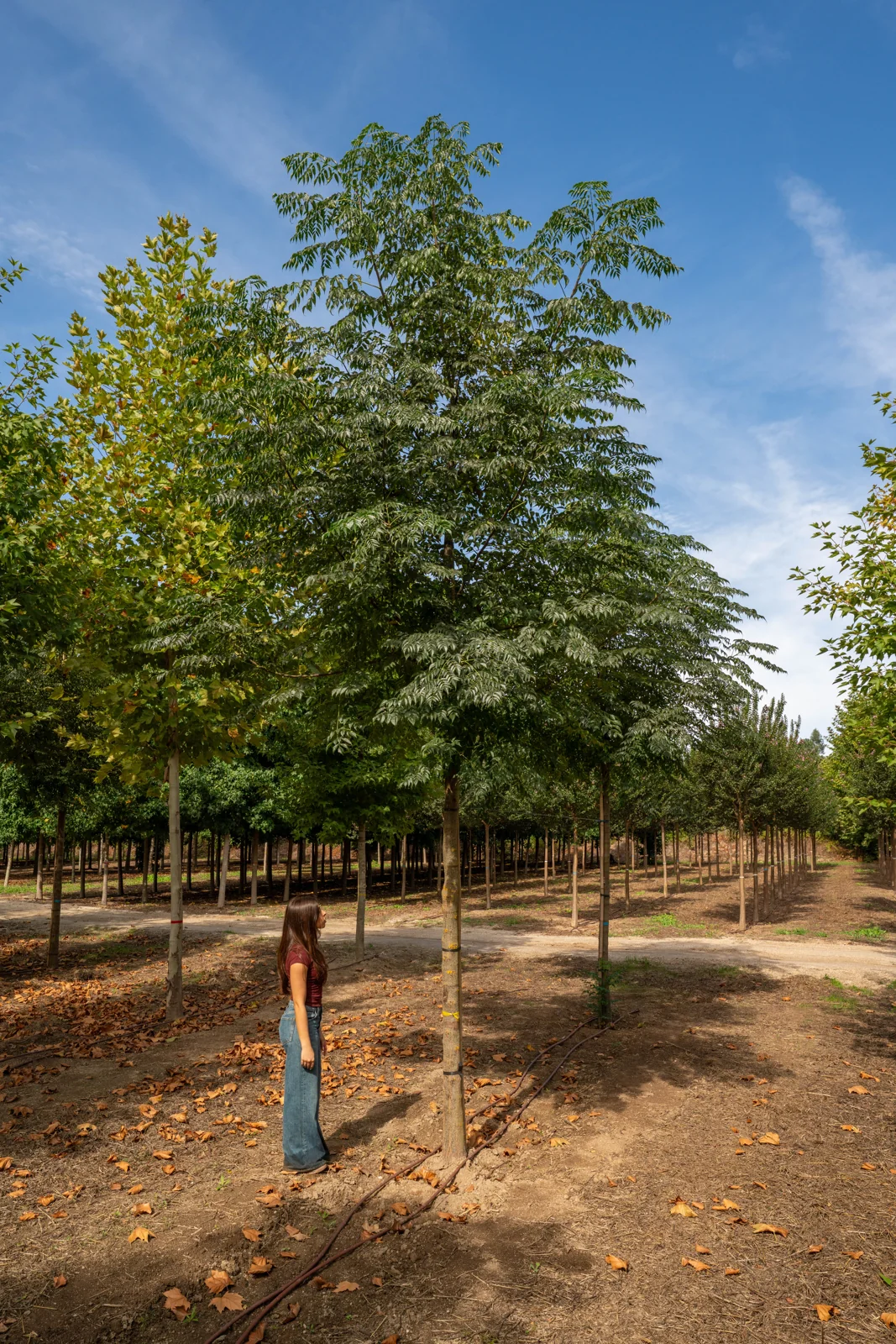
Melia azedarachBead tree
A fast-growing deciduous tree with a rounded crown, the bead tree takes the place of a shade plane in street planting or a central reservation where crown cover is wanted in under five years, with lower water demand and no susceptibility to canker stain.
- Fast growth, giving shade in a new garden in two or three years
- Scented pale lilac flowering between April and June
- Fine bipinnate foliage that filters the light without blocking it
About this species
The bead tree forms a rounded to open crown, typically between 7 and 12 m in height and 6 to 10 m in spread, with bipinnate foliage that gives a light texture and filtered shade during the growing season. The stem develops dark brown bark with narrow longitudinal furrows and pale patches at maturity. Growth is fast: in favourable conditions…Read moreShow less
The bead tree forms a rounded to open crown, typically between 7 and 12 m in height and 6 to 10 m in spread, with bipinnate foliage that gives a light texture and filtered shade during the growing season. The stem develops dark brown bark with narrow longitudinal furrows and pale patches at maturity. Growth is fast: in favourable conditions of full exposure and well-drained soil, it reaches a functional size for avenue planting three to five years after transplanting.
Flowering takes place between April and June, in axillary panicles of 20 to 40 cm with lilac flowers of intense scent, often described as chocolate-like. The fruits are yellow drupes of about 1 cm, which persist on the tree after leaf fall and extend the visual interest through the winter. The foliage turns golden yellow in autumn, giving a stable phase of colour before leaf fall.
Tolerance of heat and water stress is high: the species performs well in sandy, loamy and well-drained chalky soils, and withstands prolonged periods of summer drought once established. It withstands minimum temperatures of about -15 °C, which makes it viable throughout mainland Portugal, including situations of moderate frost in the northern interior. It is practically immune to pests and diseases in Portuguese conditions, which positions it as a functional alternative to genera under plant-health pressure. It requires full exposure; it tolerates moderate salinity.
There are, however, design constraints that must be weighed. Average longevity is around twenty years, significantly below species such as plane, lime or cork oak, which implies predictable replacement costs in the medium term. The wood is relatively brittle, with susceptibility to branch breakage in episodes of strong wind; early formative pruning to reduce heavy lateral branching is advisable in exposed avenue plantings. The fruits are toxic to mammals when eaten in quantity, a relevant fact for spaces in public use with children or pets. In addition, the species is flagged as invasive in several international contexts and naturalises readily through dispersal by birds; in a municipal project, it is important to check the local regulatory framework and to plan for the management of self-sown specimens.
Advice on this species
Want to know more about Melia azedarach?
Tell us about your project and we will advise on this species — where it does well, what size makes sense and what to expect once it is planted.
- Own production
- Mature specimens
- Reply within 1–2 days
No obligation · tailored quote