

Magnolia x soulangeanaSaucer magnolia
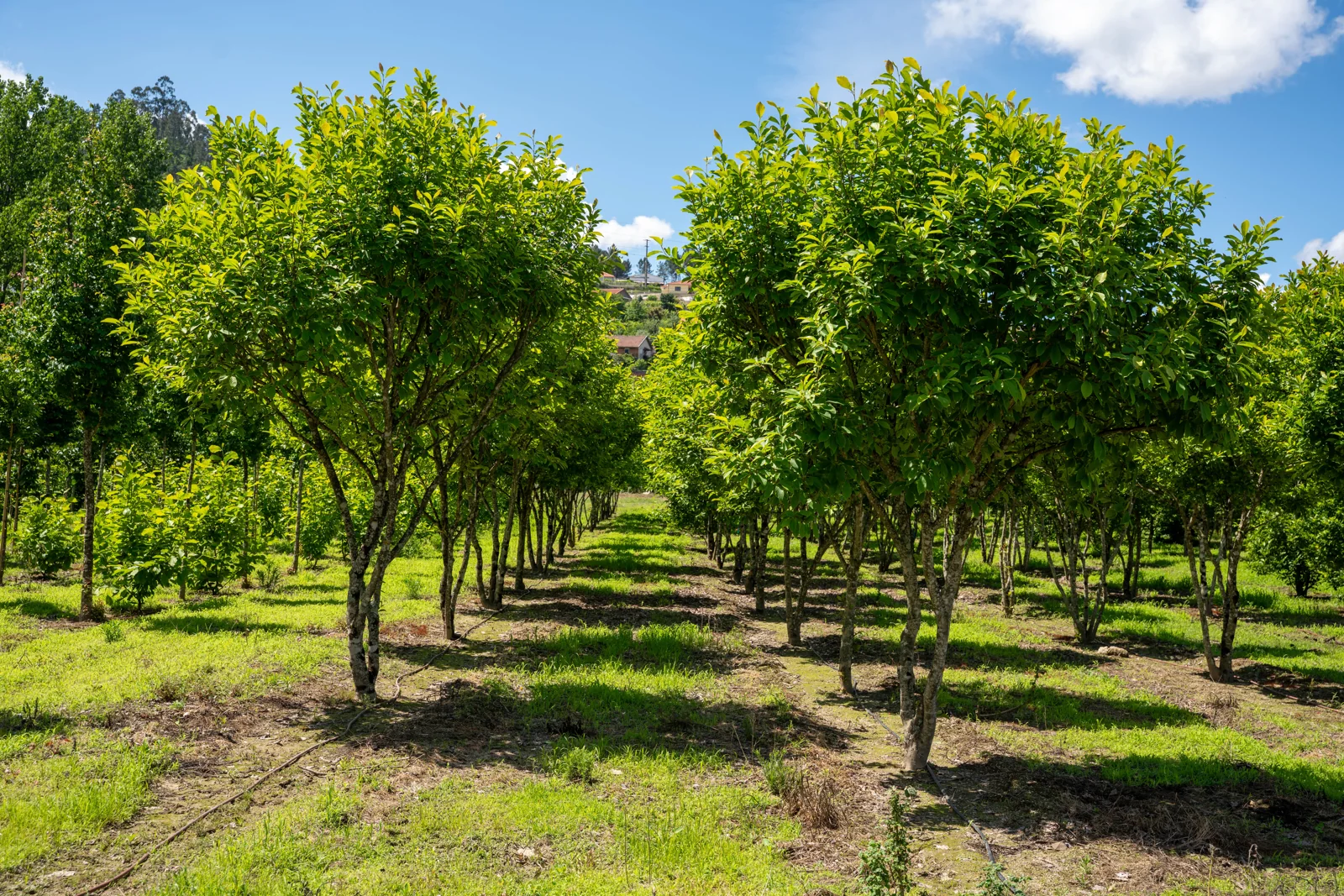
Where a project calls for a specimen with a broad crown and flowering before the leaves, it takes the central place in a lawn or courtyard, with a branched architecture that opens out horizontally as it gains size.
- Large cup-shaped flowers, white, pink and purple, that open before the leaves
- Lightly scented flowers that carry the garden in early spring
- Broad, rounded crown of 5 to 8 metres at maturity
About this species
A hybrid of M. denudata and M. liliiflora, of medium growth and deciduous, it is planted as a single specimen with a rounded to spreading crown, often multi-stem, reaching around 5 to 8 m in height and diameter in a favourable situation. It is not a tree for avenue or street planting: its value in a project lies in its solitary presence, in a lawn,…Read moreShow less
A hybrid of M. denudata and M. liliiflora, of medium growth and deciduous, it is planted as a single specimen with a rounded to spreading crown, often multi-stem, reaching around 5 to 8 m in height and diameter in a favourable situation. It is not a tree for avenue or street planting: its value in a project lies in its solitary presence, in a lawn, courtyard or framing group, where the low, broad crown reads as a structural element.
The flowering is the argument for specifying it. It opens in March and April, before the leaves, with cup-shaped flowers of up to 10 cm, white inside and pink-purple outside, lightly scented. Because it comes early, it is sensitive to late frosts, which scorch the tepals and compromise the year’s display; in places prone to unsettled springs, a sheltered position or the choice of later-flowering cultivars is justified. The leaf, obovate and dark green, turns a discreet coppery yellow in autumn.
Its soil requirements govern the choice of site. It needs moist, deep, well-drained soil, acidic to neutral in reaction and rich in organic matter; the critical point is its drought tolerance, which is low, so it does not perform without supplementary watering in a prolonged dry season, nor does it settle well on compact, dry limestone. In heavy clay soil it grows provided drainage is corrected and prolonged waterlogging avoided.
The root system is fleshy and relatively shallow, requiring room to explore: it is poorly suited to narrow tree pits, but has no documented tendency to lift paving when given open ground. It is one of the most wind-tolerant magnolias, although the early flowers benefit from shelter. There is no significant plant-health pressure in the Portuguese context, with good general resistance to pests and diseases, and it regenerates vigorously after formative or sanitary pruning, best carried out straight after flowering.
Advice on this species
Want to know more about Magnolia x soulangeana?
Tell us about your project and we will advise on this species — where it does well, what size makes sense and what to expect once it is planted.
- Own production
- Mature specimens
- Reply within 1–2 days
No obligation · tailored quote