

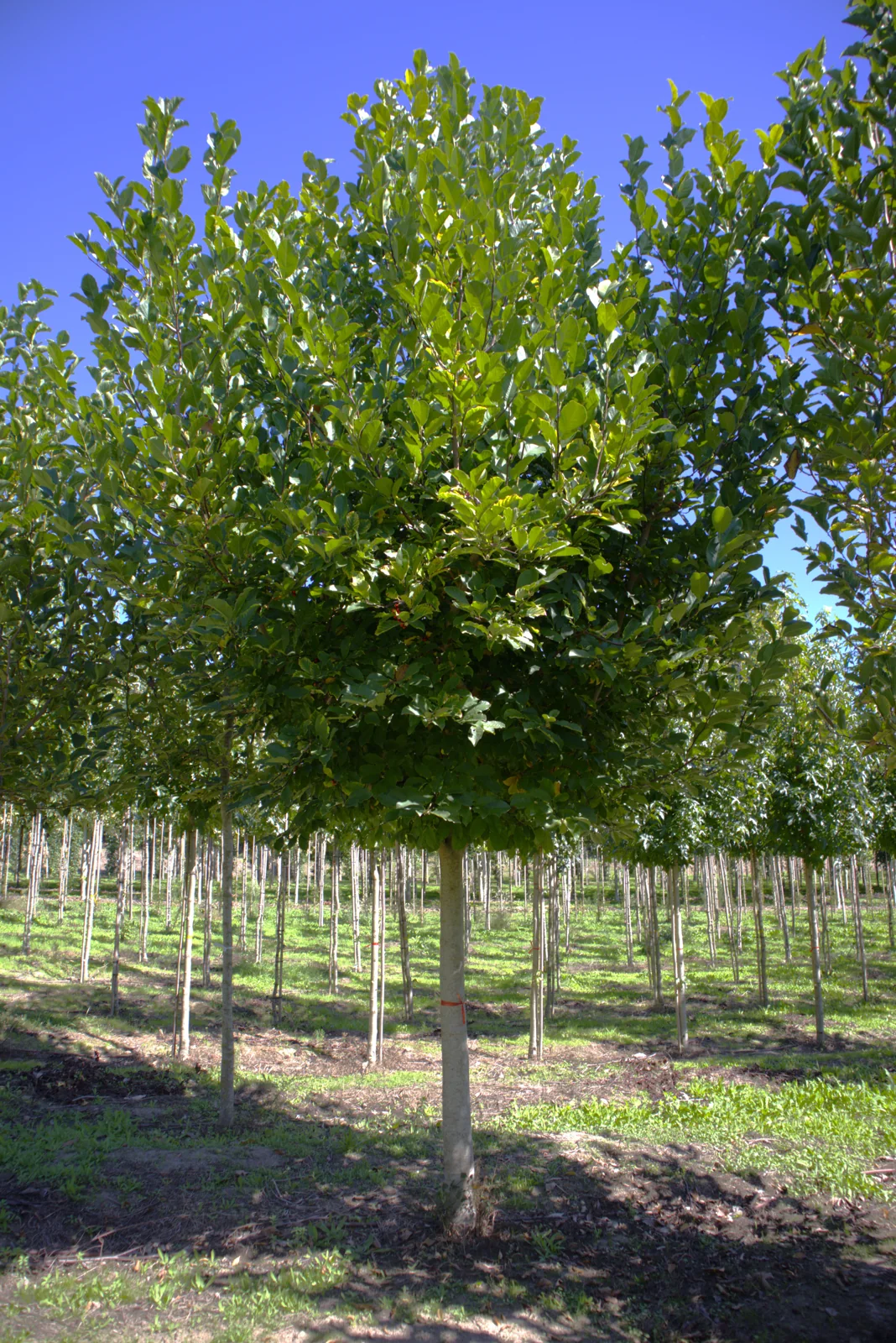
Magnolia kobusKobushi magnolia
A deciduous magnolia of tree form, among the most vigorous and hardy of the genus, flowering in March and April with white, lightly scented flowers of six tepals, before the leaves. It tolerates neutral and even slightly chalky soils, and is the basis of many of the hybrid magnolias grown in gardens.
- Scented white flowers in March and April, before the leaves
- The magnolia that best tolerates neutral soils and some chalk
- Vigorous, with a broad crown of 8 to 12 metres
About this species
Magnolia kobus reaches 8 to 12 metres in height and 6 to 10 in width, with a crown that is conical when young and broad and rounded at maturity. The flowers, of 10 centimetres, open white with a pink line at the base, in March and April, and cover the whole tree in mature specimens.
It is native to Japan and Korea and is the most soil-tolerant magnolia: it grows in neutral ground and accepts some chalk, where most magnolias suffer. The leaves, oval and dark green, yellow in autumn, and the fruits, elongated and pinkish, open to reveal red seeds.
It wants sun or partial shade, moist, deep, well-drained soil, and shelter from late frosts. It grows at a medium rate and needs no pruning. Grafted specimens flower early; seed-raised ones take years to flower fully.
Advice on this species
Want to know more about Magnolia kobus?
Tell us about your project and we will advise on this species — where it does well, what size makes sense and what to expect once it is planted.
- Own production
- Mature specimens
- Reply within 1–2 days
No obligation · tailored quote