

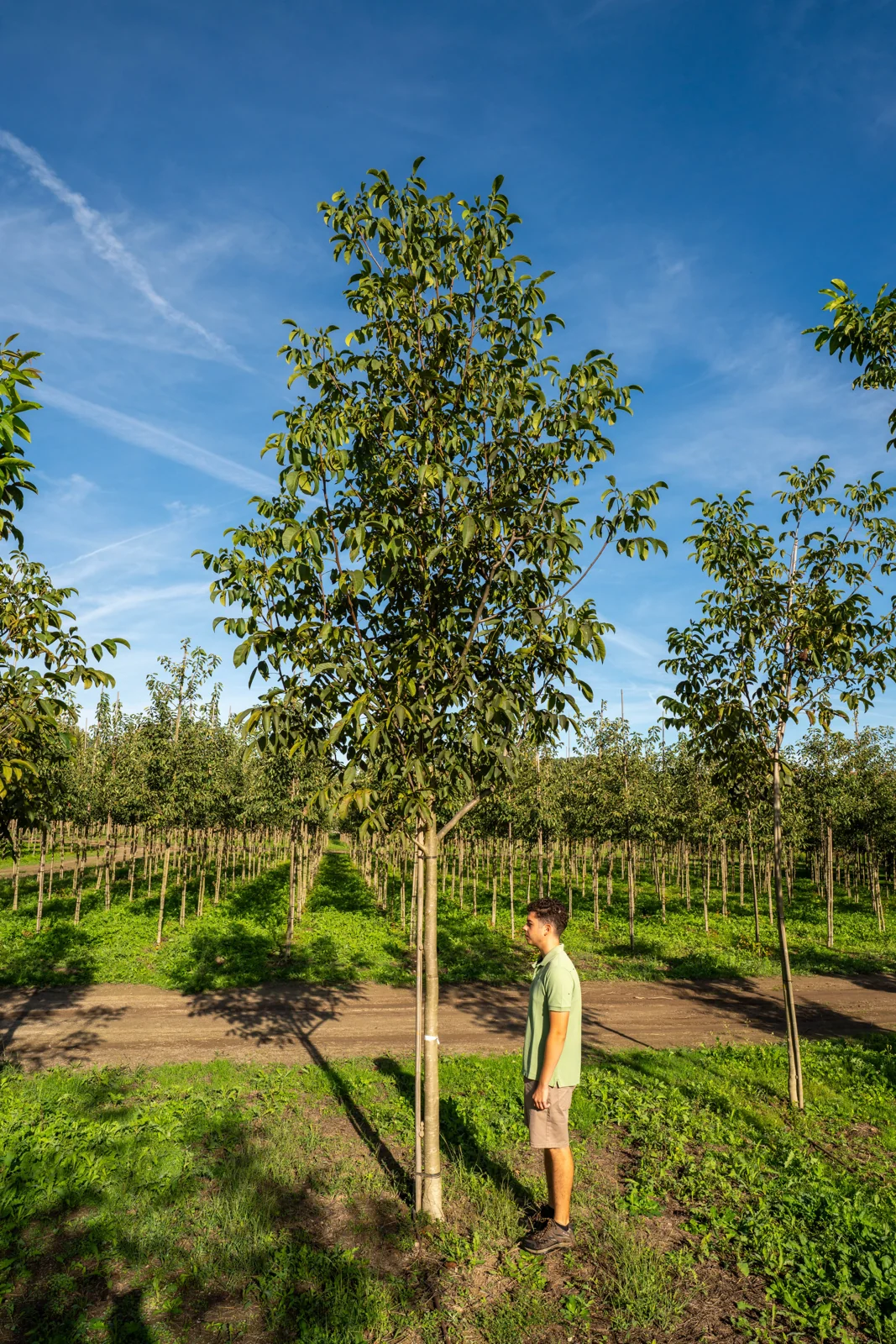
Juglans regiaWalnut
A large deciduous tree, cultivated for centuries for its timber and its nuts. Over time it forms a broad, rounded crown that gives cool shade in summer, and it asks for a place with space around it, on country estates, in parks and in large gardens.
- Broad, rounded crown that gives cool shade in summer
- Compound, aromatic leaves that come into leaf late
- Walnuts in early autumn, in a green husk that opens as it ripens
Key facts
About this species
It develops a robust trunk, with silvery-grey bark, smooth when young and fissured with age, and a broad crown, rounded to open. When mature it generally reaches 15 to 25 metres in height and 12 to 18 metres in spread, with moderate growth.Read moreShow less
It develops a robust trunk, with silvery-grey bark, smooth when young and fissured with age, and a broad crown, rounded to open. When mature it generally reaches 15 to 25 metres in height and 12 to 18 metres in spread, with moderate growth.
The leaves are compound, with five to nine oval leaflets with entire margins, and release a characteristic scent when crushed. They emerge late in spring, often with a coppery tint, and fall early in autumn. Flowering, discreet and greenish, takes place in April and May: hanging catkins bearing the male flowers and small female flowers at the tips of the new shoots.
The fruit is the walnut, enclosed in a green, fleshy husk that darkens and opens as it ripens, in early autumn.
It prefers full sun and deep, fertile, moist and well-drained soils, and does not tolerate waterlogging. Once established it withstands summer dryness to a moderate degree, but late spring frosts can scorch the shoots and flowers, and it tolerates poorly the salt of the front line by the sea. The roots release juglone, a substance that harms some sensitive plants, so it is advisable to choose carefully what is planted under the crown. It is used as a shade tree and as a single specimen.
Specimens from Diaplant arrive with the trunk and the crown structure already formed, which shortens by many years the time until the walnut gives shade and presence to the garden.
Advice on this species
Want to know more about Juglans regia?
Tell us about your project and we will advise on this species — where it does well, what size makes sense and what to expect once it is planted.
- Own production
- Mature specimens
- Reply within 1–2 days
No obligation · tailored quote