

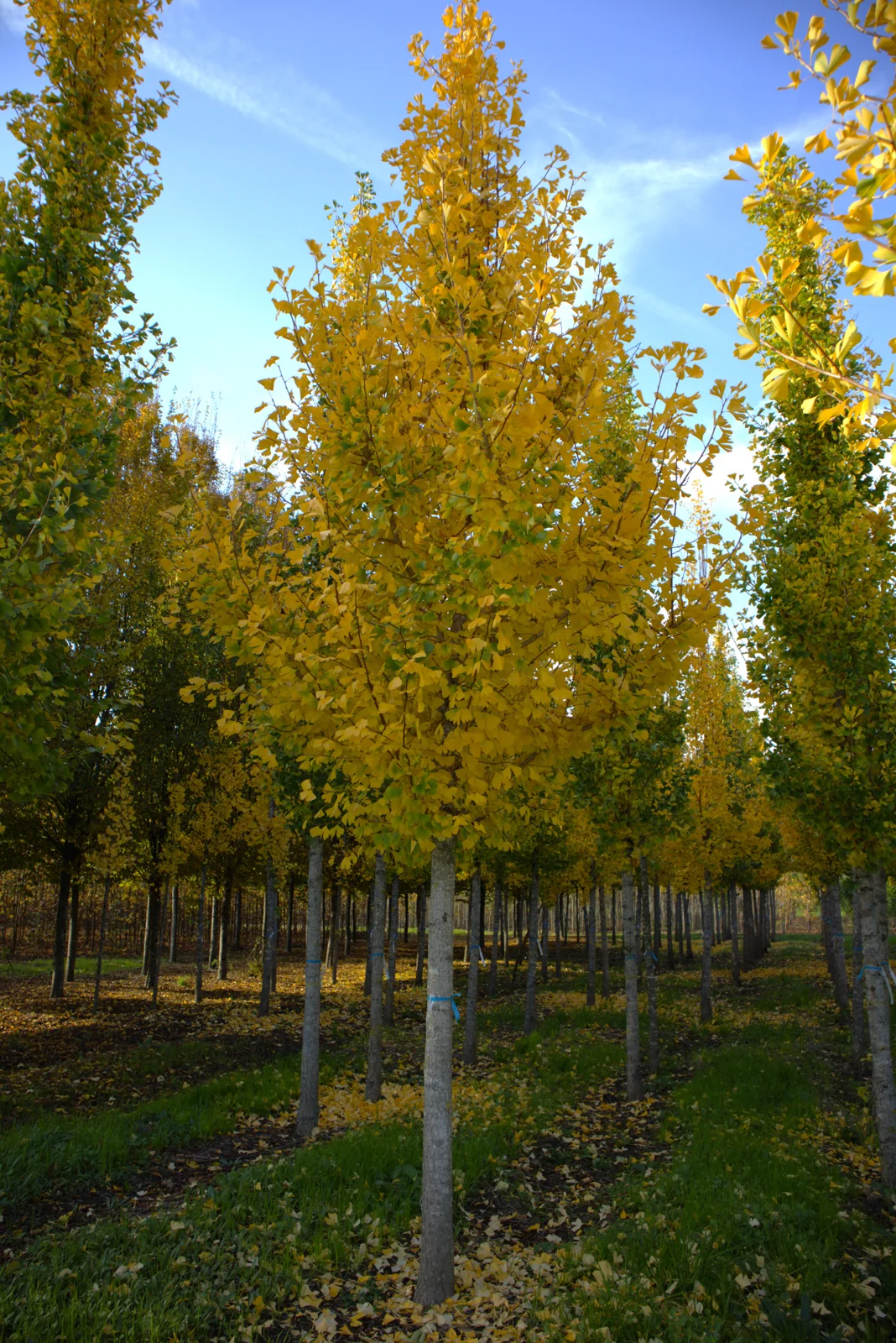
Ginkgo bilobaGinkgo
A species with a conical to pyramidal crown for urban avenue planting and single specimens in squares, chosen when the aim is a structured habit, reliable autumn colour and freedom from the plant-health pressures that now constrain plane and ash.
- Clean saffron-yellow autumn colour, with the leaf falling within one or two weeks
- Needs no watering after about three summers
- Resistant to wind, snow, pollution, pests and diseases
About this species
In a project, Ginkgo biloba takes the place of an avenue tree with a contained crown and regular silhouette, with a conical to pyramidal upright habit in the young specimen that opens into a broader crown with age. It reaches 15 to 25 m in height by 8 to 12 m of crown in favourable conditions, a size that places it in the same structural register as the shade plane…Read moreShow less
In a project, Ginkgo biloba takes the place of an avenue tree with a contained crown and regular silhouette, with a conical to pyramidal upright habit in the young specimen that opens into a broader crown with age. It reaches 15 to 25 m in height by 8 to 12 m of crown in favourable conditions, a size that places it in the same structural register as the shade plane or the lime, but without the pruning burden and without the exposure to the diseases that weigh on those genera. The fan-shaped leaf, with dichotomous venation, turns a stable golden yellow in autumn, a criterion often valued in municipal specifications.
The decisive point in specification is dioecy. Female specimens produce seeds with fleshy, foul-smelling pulp that soil paving and tree pits when they fall, so for street planting and squares grafted male clones are specified, which removes the problem from the outset. This is the first question to put to the nursery before closing the line in the specification.
On site, it tolerates prolonged summer heat, air pollution and urban compaction, with a moderate tolerance of salt spray that makes it viable in street planting on the Atlantic coast. It requires full exposure and free drainage: it performs well in clay, sandy or chalky soil as long as it drains, but does not tolerate waterlogging, a limiting condition in poorly drained soils. Drought tolerance is moderate and comes after establishment, requiring supplementary watering in the first summer seasons.
Growth is slow, especially in the first years, a fact to build into the phasing of the project: the crown takes time to make its effect from a young planting, which strengthens the case for specifying an already formed size. In return, the root system is not aggressive towards paving and the plant-health profile is clean, with no significant pests or diseases documented, which reduces sanitary maintenance over the service life of the planting.
Advice on this species
Want to know more about Ginkgo biloba?
Tell us about your project and we will advise on this species — where it does well, what size makes sense and what to expect once it is planted.
- Own production
- Mature specimens
- Reply within 1–2 days
No obligation · tailored quote