

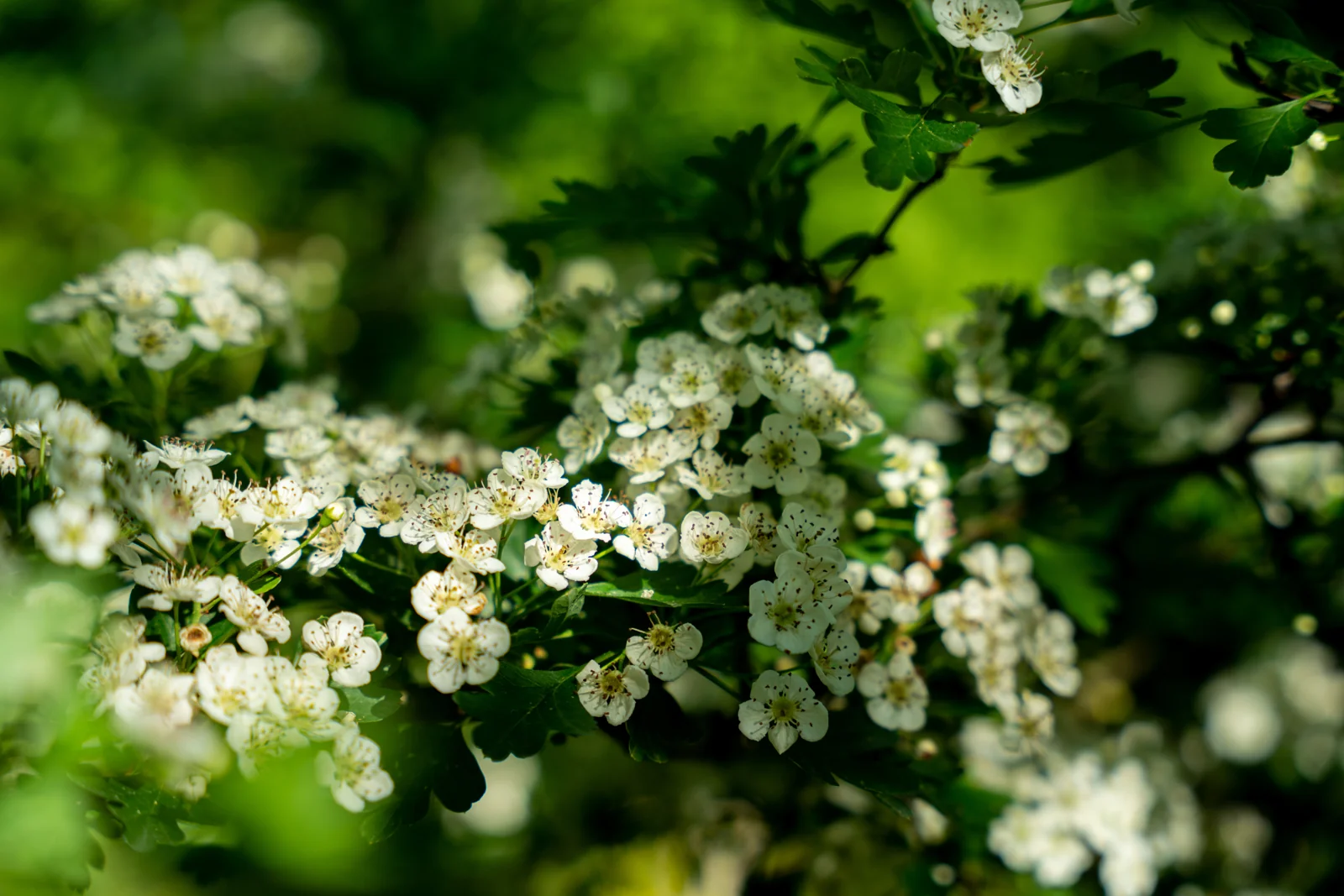
Crataegus monogynaCommon hawthorn
A small native deciduous tree with a rounded crown and naturalistic character, it stands out for its abundant white spring blossom and the numerous red fruits that persist through the autumn. Its great hardiness and its value for biodiversity make it particularly suitable for gardens, parks and landscape integration projects.
- Abundant, scented white blossom in spring
- Numerous red fruits much sought after by birds
- Native species of great resilience and ecological value
About this species
It grows as a large shrub or small tree, often branched from low down. With age, it forms a broad, compact, rounded crown, with some slightly weeping branches. It can reach approximately 6 to 8 metres in height and 4 to 6 metres in spread.Read moreShow less
It grows as a large shrub or small tree, often branched from low down. With age, it forms a broad, compact, rounded crown, with some slightly weeping branches. It can reach approximately 6 to 8 metres in height and 4 to 6 metres in spread.
The young shoots are reddish brown and carry stout thorns. The leaves are small, dark green and deeply cut into lobes, giving the crown a delicate texture. In autumn, the foliage takes on yellow tones before falling.
In spring, the tree is covered in flat inflorescences made up of numerous white flowers, with pinkish anthers and a characteristic fragrance. These are followed by haws, small red fruits produced in abundance, which extend the ornamental interest and are an important source of food for birds.
It is a species highly resistant to cold, wind and exposure, adapting to sun or partial shade and to different soil types, including relatively poor ground, provided it does not remain waterlogged. Its hardiness allows it to be used in parks, naturalistic gardens, defensive hedges, woodland edges, ecological corridors and landscape restoration projects.
Diaplant’s mature specimens turn this species, traditionally associated with hedges and scrub, into a true ornamental tree. The already formed crown, the defined trunk and the mature branching immediately bring structure, local identity and ecological value to the project.
Advice on this species
Want to know more about Crataegus monogyna?
Tell us about your project and we will advise on this species — where it does well, what size makes sense and what to expect once it is planted.
- Own production
- Mature specimens
- Reply within 1–2 days
No obligation · tailored quote