

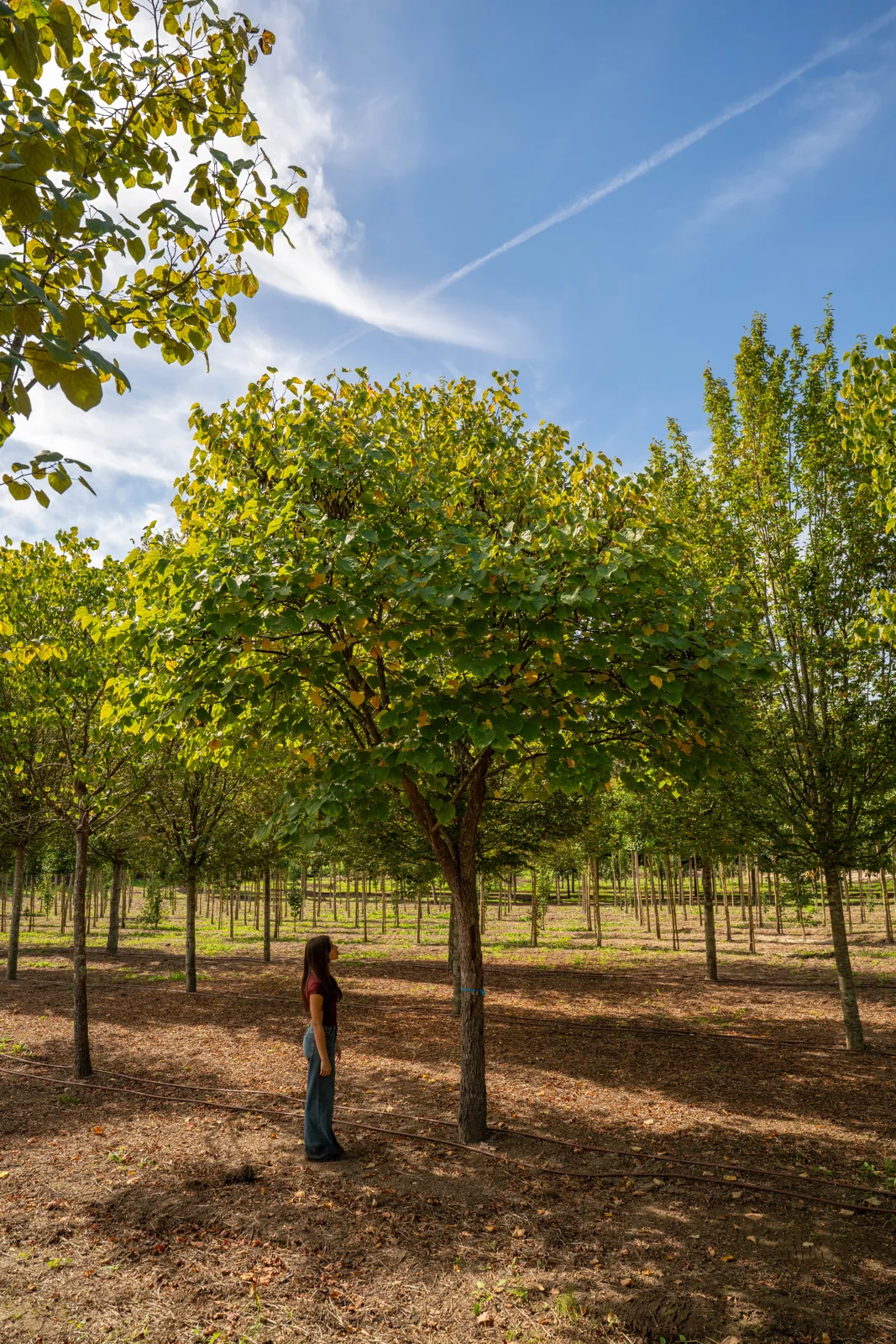
Cercis canadensisEastern redbud
A small deciduous tree of North American origin, with a rounded crown and often several stems. In early spring it covers its still bare branches with magenta-pink flowers, followed by broad heart-shaped leaves that turn yellow in autumn.
- Magenta-pink flowers on the still bare branches in early spring
- Broad heart-shaped leaves with a pointed tip, turning yellow in autumn
- Rounded crown and layered branches, with interest in winter too
About this species
It usually forms a rounded to open crown, on a short trunk or several main stems, with branches that tend to arrange themselves in almost horizontal layers. In gardens it generally reaches 6 to 9 metres in height and an equal or greater width.Read moreShow less
It usually forms a rounded to open crown, on a short trunk or several main stems, with branches that tend to arrange themselves in almost horizontal layers. In gardens it generally reaches 6 to 9 metres in height and an equal or greater width.
Flowering takes place in early spring, before the leaves. The flowers, small and pea-like, are an intense pink to magenta and cluster along the branches and, sometimes, on the trunk itself, covering the still bare silhouette of the tree. They are an early source of nectar for bees.
The leaves are broad, thin and heart-shaped, with a short, pointed tip, which distinguishes them from those of the European Judas tree, which are rounder and more leathery. They stay green through the summer and turn yellow in autumn. The flattened pods, brown when ripe, may remain on the branches through the winter.
It grows in full sun or partial shade, in deep, moist, well-drained soils, and adapts to different pH values. It withstands cold better than the European Judas tree and prolonged dryness less well: in hot, dry areas it needs regular watering in its first summers. It is used as a single specimen in gardens, courtyards and entrances, at the edge of tree groups or in small groups.
In mature specimens from Diaplant, the already formed crown and the mature wood multiply the flowering points, making it possible to bring in at once a tree with presence and a full flowering that a young plant would take many years to achieve.
Advice on this species
Want to know more about Cercis canadensis?
Tell us about your project and we will advise on this species — where it does well, what size makes sense and what to expect once it is planted.
- Own production
- Mature specimens
- Reply within 1–2 days
No obligation · tailored quote