

Amelanchier 'La Paloma'Juneberry
A small tree that combines particularly abundant white flowering with red-bronze new growth, creating a sharper contrast in spring than is usual in the genus. Edible purple fruits and intense autumn colour extend the interest of the crown through the year.
- White flowers set off against the red-bronze young foliage
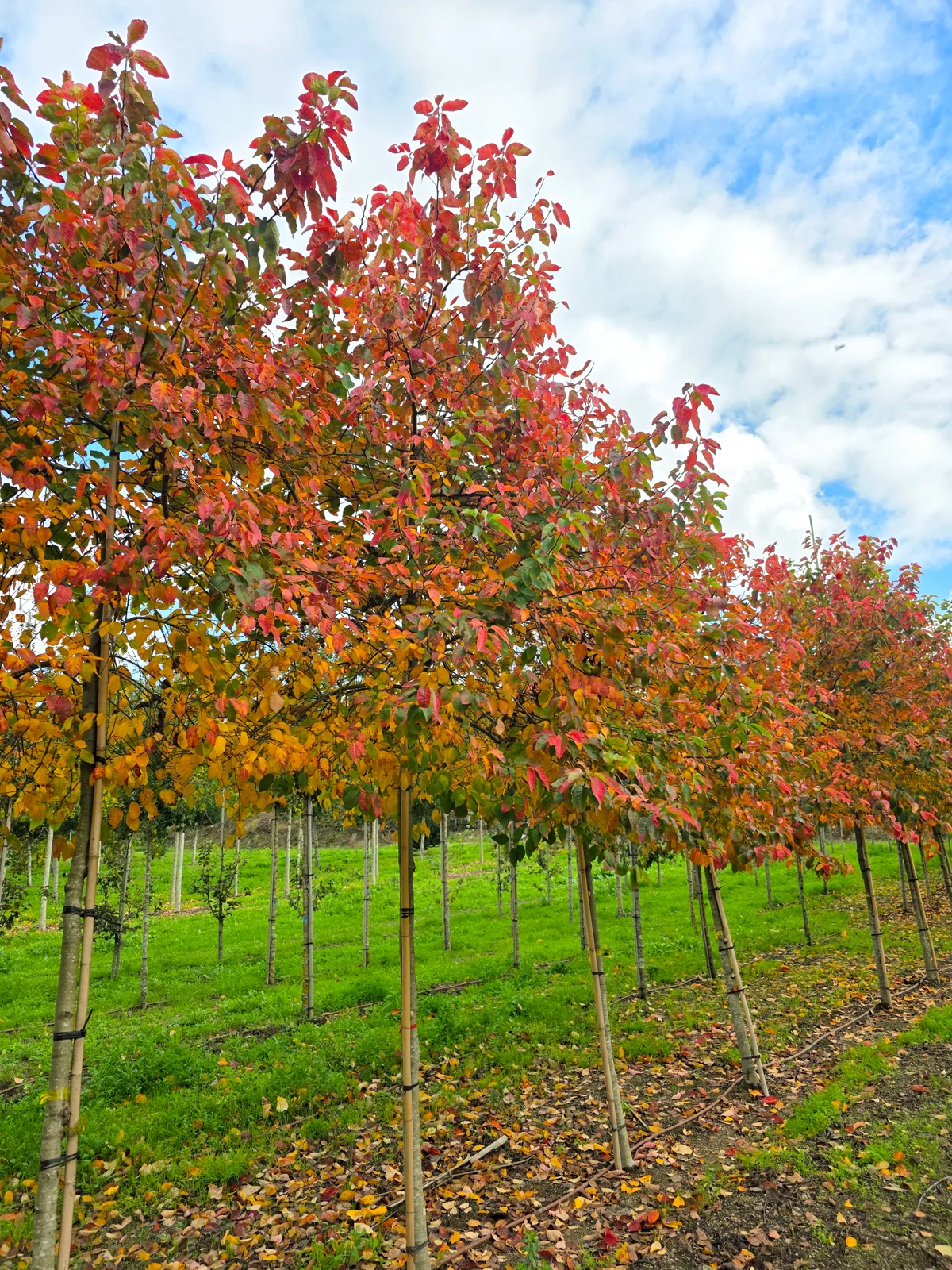
- An ornamental sequence linking flowering, purple fruits and a reddish-orange autumn
- Compact, rounded, slightly pendulous habit, especially suited to smaller-scale gardens
About this cultivar
‘La Paloma’ forms a small deciduous tree or large shrub, with initially upright branching and a crown that becomes progressively rounded. It reaches approximately 3 to 5 metres in height and 3 to 4 metres in width, keeping a scale compatible with private gardens, courtyards and spaces close to buildings.Read moreShow less
‘La Paloma’ forms a small deciduous tree or large shrub, with initially upright branching and a crown that becomes progressively rounded. It reaches approximately 3 to 5 metres in height and 3 to 4 metres in width, keeping a scale compatible with private gardens, courtyards and spaces close to buildings.
In spring, the red-bronze new growth coincides with numerous hanging clusters of lightly scented white flowers. The contrast between the pale petals and the still coppery leaves is the visual signature of the cultivar and makes the flowering clearly legible even from a distance.
Small edible fruits follow, red at first and then dark purple, sought after by birds and usable in jams or other preparations. The foliage matures to green during the summer and turns to shades of orange and red in autumn. After leaf fall, the fine branching and the light grey bark keep a delicate presence.
It prefers sun or partial shade and fertile, moist, well-drained soils, acidic to neutral in reaction. Sun exposure favours flowering, fruiting and the intensity of the autumn colour. In Portuguese regions with hot summers, it benefits from protection against the most intense afternoon sun and from deep watering during dry periods.
It is suited to use as a specimen tree, in small gardens, entrances, courtyards and naturalistic or biodiversity-friendly compositions. In multi-stem form, it creates a light structure that allows the flowering and the bark to be seen at close range. A mature specimen from Diaplant immediately brings that branched architecture and a significant amount of flowering wood, avoiding the years needed to form a balanced crown.
Advice on this species
Want to know more about Amelanchier 'La Paloma'?
Tell us about your project and we will advise on this species — where it does well, what size makes sense and what to expect once it is planted.
- Own production
- Mature specimens
- Reply within 1–2 days
No obligation · tailored quote