

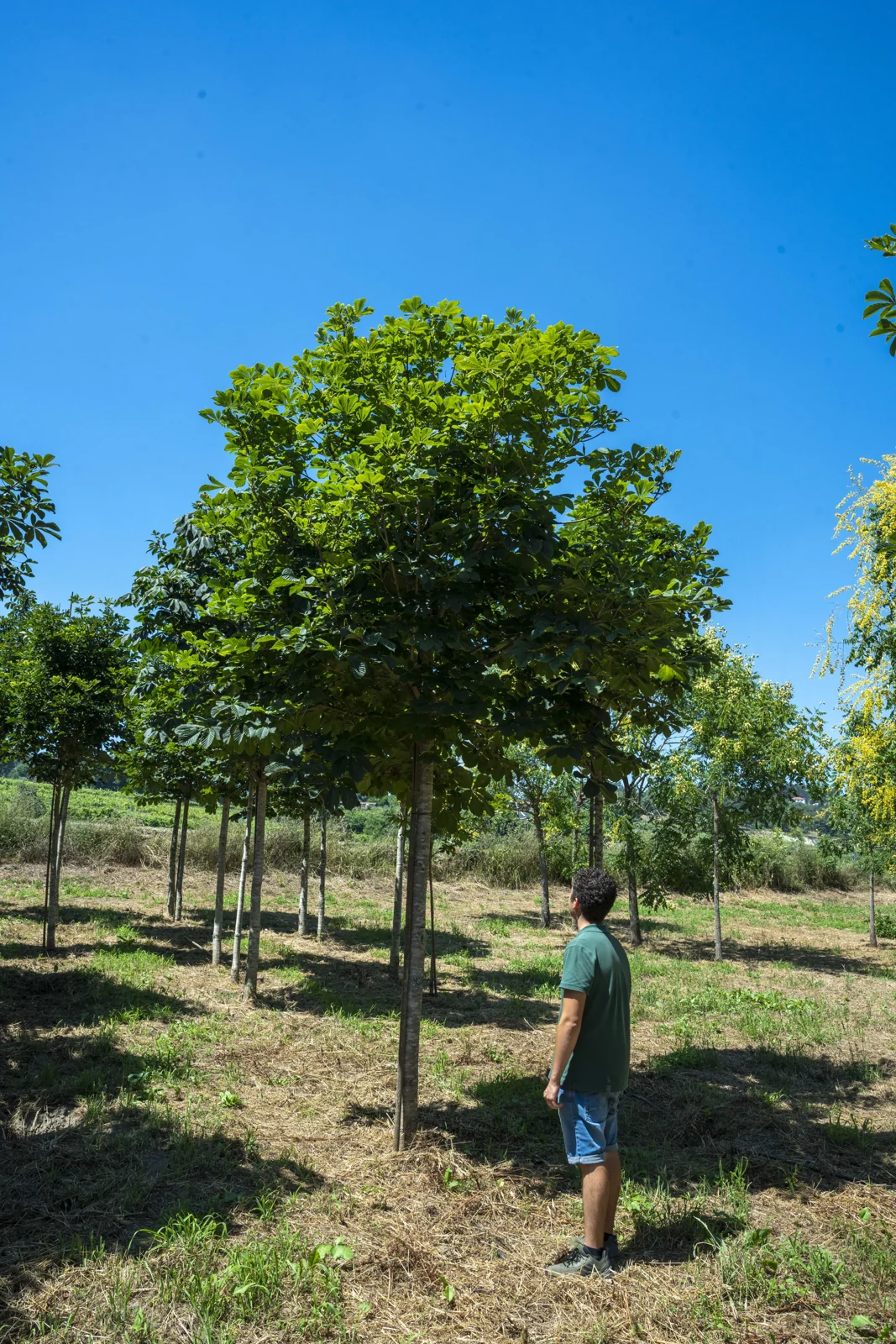
Aesculus hippocastanumHorse chestnut
A monumental tree with a broad, dense crown, recognised by its large palmate leaves and the spectacular white panicles that rise above the foliage in spring. Its scale, its capacity to cast shade and its historic presence make it especially suited to parks, large gardens and spacious avenues.
- Broad, monumental crown, able to cast an extensive area of shade
- Upright white flower panicles, marked by centres that turn from yellow to red
- Large resinous buds that precede the development of the palmate foliage
About this species
Aesculus hippocastanum grows as a large tree, with a sturdy trunk and a rounded crown that becomes progressively broad and billowing. Mature specimens can reach approximately 20 to 25 metres in height and 16 to 20 metres in spread, forming a dense, imposing structure. It is a tree that needs space to express its architecture fully.Read moreShow less
Aesculus hippocastanum grows as a large tree, with a sturdy trunk and a rounded crown that becomes progressively broad and billowing. Mature specimens can reach approximately 20 to 25 metres in height and 16 to 20 metres in spread, forming a dense, imposing structure. It is a tree that needs space to express its architecture fully.
The large, glossy, resinous red-brown buds are one of its most characteristic features in winter. In spring they open quickly, revealing leaves made up of five to seven leaflets arranged like a fan. The dark green foliage casts deep shade and takes on yellow to reddish-brown tones in early autumn.
Between May and June, the crown is covered in upright flower panicles, often 20 to 25 centimetres long. The creamy-white flowers have a blotch that is yellow at first and gradually turns red, producing an unusual colour effect and signalling different stages of the flower. The abundant flowering is also much sought after by bees.
These are followed by green capsules with small spines, which enclose the familiar glossy brown seeds. Fruit production, crown spread and dense shade make this species particularly suitable for parks, historic estates, large lawns and wide avenues, although the seasonal fall of the capsules should be taken into account in areas of heavy traffic.
It prefers sun or partial shade and deep, fertile soils with a regular supply of water, although it adapts to different textures and pH values. A mature specimen from Diaplant makes it possible to introduce a tree of landscape scale immediately, with an established trunk, a structured crown and a volume of foliage able to cast real shade from the start of the project — qualities particularly relevant in the restoration of parks and historic spaces.
Advice on this species
Want to know more about Aesculus hippocastanum?
Tell us about your project and we will advise on this species — where it does well, what size makes sense and what to expect once it is planted.
- Own production
- Mature specimens
- Reply within 1–2 days
No obligation · tailored quote