

Aesculus hippocastanum 'Baumannii'Double-flowered horse chestnut
A historic selection of the horse chestnut that combines a monumental shade-giving crown with white, double and particularly long-lasting flowers. As a sterile cultivar, it does not produce the bulky spiny fruits of the species, which makes it especially valuable for large avenues, squares and other prominent urban spaces.
- Double flowers carried in white, compact, abundant panicles
- Sterile cultivar, producing no fruit or seed
- Broad, dense crown, able to cast an extensive area of shade
About this cultivar
Introduced in France in the early 19th century, Aesculus hippocastanum ‘Baumannii’ keeps the monumental presence of the species, but has a crown that is generally more regular and slightly more restrained. It develops a sturdy trunk and a rounded structure, formed by large, almost horizontal branches with ascending tips. It can reach approximately 20 to 25 metres in height and 14 to 18 metres in spread.Read moreShow less
Introduced in France in the early 19th century, Aesculus hippocastanum ‘Baumannii’ keeps the monumental presence of the species, but has a crown that is generally more regular and slightly more restrained. It develops a sturdy trunk and a rounded structure, formed by large, almost horizontal branches with ascending tips. It can reach approximately 20 to 25 metres in height and 14 to 18 metres in spread.
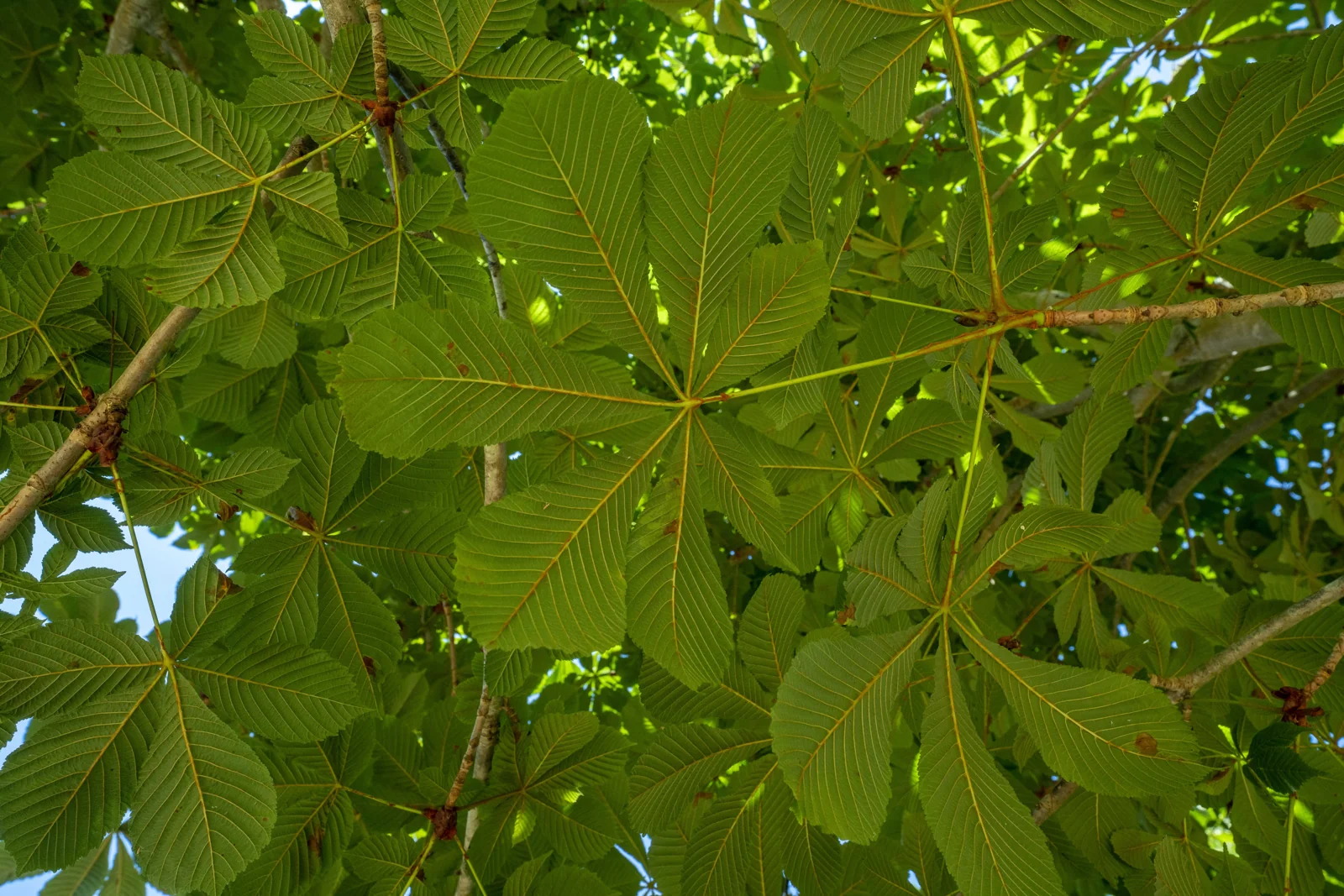
In spring, the large resinous buds open quickly, revealing palmate leaves made up of five to seven dark green leaflets. The foliage forms a dense crown, with a high capacity to cast shade, taking on yellow to golden-brown tones before autumn leaf fall.
The main feature of the cultivar is its double, sterile flowers. Between May and June numerous white panicles appear, more compact than those of the straight species and marked by yellow tones that turn red. The flowers remain decorative for longer and do not produce fruit.
The absence of the spiny capsules and the large brown seeds simplifies its use next to paving and circulation areas, making ‘Baumannii’ a more predictable choice than the straight species for wide avenues, squares, monumental entrances and urban parks. The branches, which tend towards the horizontal, should be taken into account when setting the clearance height beneath the crown and when training specimens intended for street planting.
It prefers sun or partial shade and deep, fertile soils that are moist but well drained. A mature specimen from Diaplant immediately brings a developed crown, effective shade and a scale in keeping with established public spaces, with the added benefit of an architecture already formed and selected according to stem height, crown spread and its final setting in the project.
Advice on this species
Want to know more about Aesculus hippocastanum 'Baumannii'?
Tell us about your project and we will advise on this species — where it does well, what size makes sense and what to expect once it is planted.
- Own production
- Mature specimens
- Reply within 1–2 days
No obligation · tailored quote